ScienceTechnical Deep Dive

A Planetary Birth: New Simulations Suggest the Moon Formed in Hours, Not Eons

Published
EElectricBuzz Editorial Team
A Planetary Birth: New Simulations Suggest the Moon Formed in Hours, Not Eons
3 min read552 wordsElectricBuzz Editorial Team

The Gist

Groundbreaking new research suggests the Moon may have emerged from a violent collision with early Earth in a matter of hours, challenging long-held assumptions about how our satellite was born.

Challenging the Fluid Dynamics Paradigm

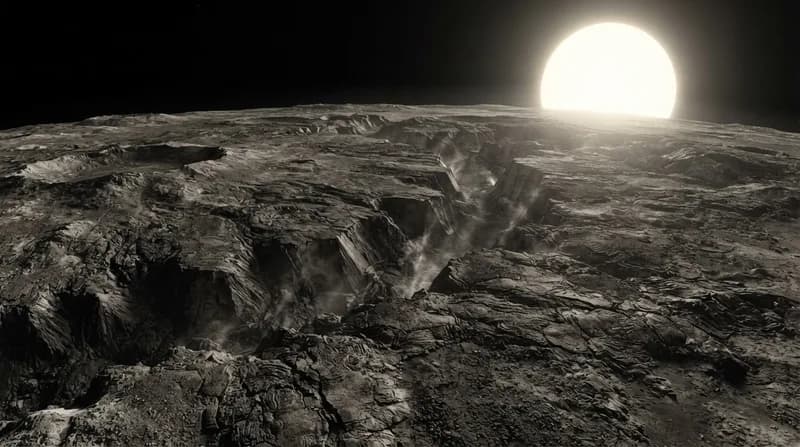
For decades, the dominant scientific consensus regarding the origin of the Moon has relied on the giant impact theory. This model posits that approximately 4.5 billion years ago, a Mars-sized proto-planet named Theia smashed into the infant Earth. Traditional simulations of this cataclysmic event have largely treated both planetary bodies as fluids, assuming the collision was so incredibly energetic that the materials would have melted and vaporized, creating a wide-reaching disk of debris. Over time, that ring of material supposedly coalesced into the satellite we see in our night sky today.

However, a team of researchers from the University of Arizona and the Southwest Research Institute is now calling those foundational assumptions into question. By utilizing advanced smoothed particle hydrodynamics (SPH) simulations that incorporate the actual material strength and geophysics of the involved bodies, scientists have discovered that the "fluid" model may be an oversimplification. This new approach accounts for how rock, metals, and even solid ice deform under extreme pressure, revealing that the internal state of these ancient worlds was a critical, yet previously overlooked, variable in the history of our solar system.

The Five-Hour Moon

The implications of this study are profound. By factoring in temperature-dependent geologic strength, researchers found that the Moon’s formation could have been a far more rapid process than previously imagined. Depending on the thermal state of Earth and Theia at the moment of impact, the simulations revealed that the collision did not always result in a sprawling debris field. In certain high-strength scenarios, an intact Moon could have been forged from the impact within just five hours.

This discovery provides a potential link between the physical properties we observe on the Moon today and the thermal history of early Earth. It suggests that the internal composition and temperature of these protoplanets determined whether the Moon was born from a slow-gathering cloud of dust or appeared nearly fully formed shortly after the impact. This transition from 'gradual assembly' to 'instantaneous capture' highlights how sensitive planetary formation is to the specific conditions of the early solar system.

Why It Matters

  • Refined Chronology: By linking the Moon's structural properties to the temperature of early Earth, scientists have a new tool to constrain the precise timeline of when this massive impact occurred.
  • Material Strength as a Variable: The study proves that assuming planetary bodies behave like fluids is insufficient. Incorporating geologic strength into future models will be essential for understanding collisions involving asteroids, dwarf planets, and other satellites.
  • Compositional Clues: While this research does not fully resolve the mystery of why the Earth and Moon share such similar chemical signatures, it offers a fresh pathway to investigate why they resemble 'fraternal twins' compared to other celestial bodies in our neighborhood.

Future Implications for Planetary Science

The shift in how researchers model these ancient collisions represents a significant step forward in our understanding of planetary evolution. By demonstrating that the geophysics of the participants—not just the raw kinetic energy of the collision—plays a pivotal role, the team has opened a new window into the chaotic early history of our solar system. As researchers continue to analyze the data, this model may eventually help solve enduring puzzles regarding the Moon's volatile content and its unique position as a disproportionately large satellite in the rocky planetary landscape.

The 5 Best Over-Ear ANC Headphones of 2026, Tested & Ranked
Editor's Pick Guide
92/100
Tech & Gadgets12 min read

The 5 Best Over-Ear ANC Headphones of 2026, Tested & Ranked

We locked five over-ear ANC picks for 2026 — Sony WH-1000XM6, Bose QuietComfort Ultra 2, Soundcore Space One, Sennheiser Momentum 5, and Apple AirPods Max 2 — then stress-tested them on lab metrics, long-term owner truth, and live street prices.

Related Stories

Semantically matched articles, ranked by topic overlap and freshness.

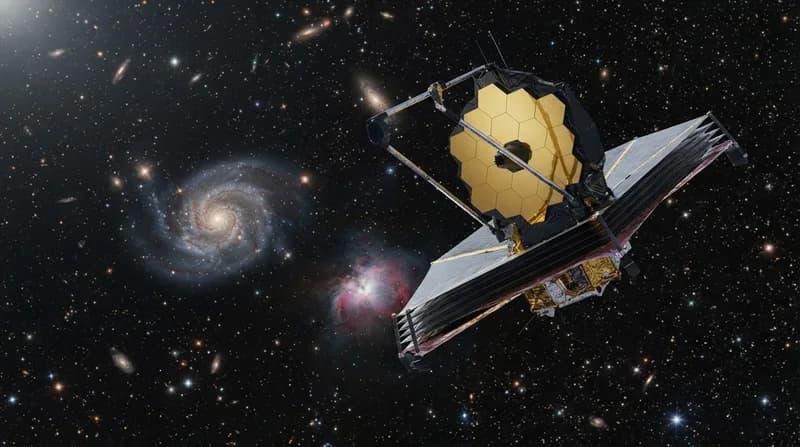
NASA's Roman Space Telescope Set for Two Decades of Cosmic Discovery
Science

NASA's Roman Space Telescope Set for Two Decades of Cosmic Discovery

Thanks to exceptional launch precision and significant fuel savings, the Nancy Grace Roman Space Telescope is poised to more than double its mission life, potentially operating for over 22 years.

Unlocking Predictive Markers: How B Cells Could Forecast Immunotherapy-Induced Colitis
Science

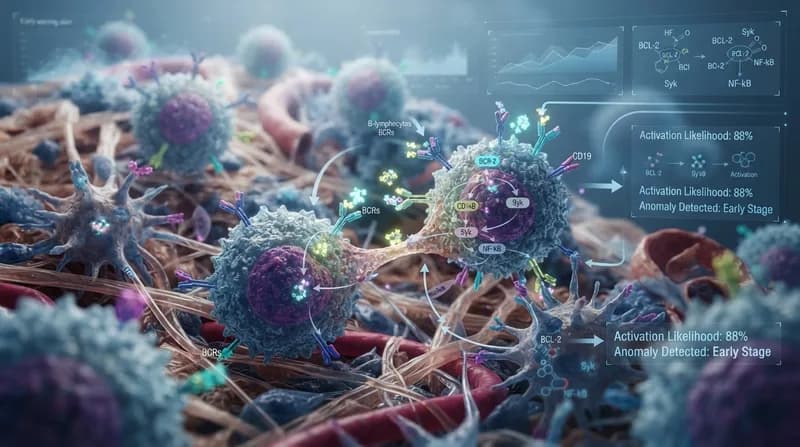
Unlocking Predictive Markers: How B Cells Could Forecast Immunotherapy-Induced Colitis

New research from MD Anderson Cancer Center suggests that B cell activity acts as a crucial early-warning system for identifying patients at risk of developing severe colitis during cancer treatment.

Could a Tiny Brain Protein Be the Master Switch for Aging?
Science

Could a Tiny Brain Protein Be the Master Switch for Aging?

Researchers have identified that declining levels of a brain protein called Menin may drive systemic aging, offering a potential new target for age-related health interventions.

Challenging Einstein: Scientists Pioneer Gravity Tests Using Exotic Muonium Atoms
Science

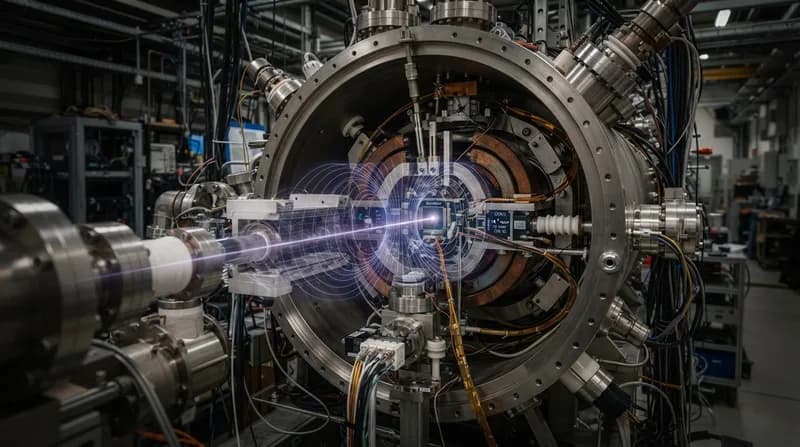
Challenging Einstein: Scientists Pioneer Gravity Tests Using Exotic Muonium Atoms

Researchers at ETH Zurich have developed a method to create controlled beams of muonium, potentially enabling the first-ever gravitational tests on second-generation particles.

Unlocking the Narrative: AI System Transforms Physician Notes into Actionable Medical Data
Science

Unlocking the Narrative: AI System Transforms Physician Notes into Actionable Medical Data

A groundbreaking study reveals how a new AI system can parse clinical prose at scale, converting hidden patient insights into verifiable, computer-readable data.

Caltech’s Femtosecond Breakthrough: Steering Light with Light
Science

Caltech’s Femtosecond Breakthrough: Steering Light with Light

Researchers have engineered a nanoscale silicon metasurface capable of redirecting light beams in just 74 quadrillionths of a second, shattering traditional speed barriers in photonic computing.

Beyond the Starch: Why Black and Green Rice Are Emerging as Metabolic Superfoods
Science

Beyond the Starch: Why Black and Green Rice Are Emerging as Metabolic Superfoods

New research from Hokkaido University reveals that pigmented rice varieties contain unique, beneficial fats that could revolutionize dietary approaches to blood sugar management.

Biological Breakthrough: Scientists 3D-Print a Functional Human Gut-on-a-Chip
Science

Biological Breakthrough: Scientists 3D-Print a Functional Human Gut-on-a-Chip

Researchers at Lawrence Livermore National Laboratory have successfully replicated the complex 3D architecture of the human small intestine on a compact, microfluidic device.