Efficiency Meets Rapid Charging Performance
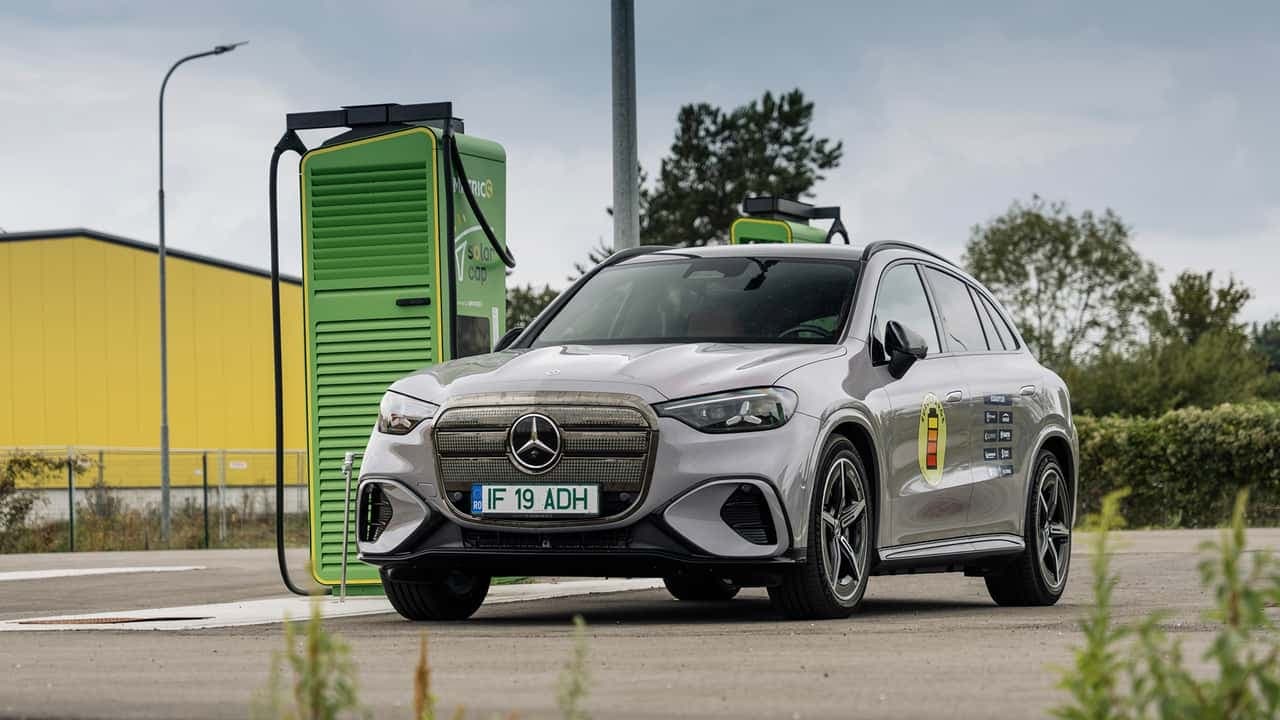
In a compelling demonstration during the Eurocharge by Schaeffler EV road trip, the Mercedes-Benz GLC 400 4Matic proved that massive battery range is not the only path to a stress-free road trip. Covering a total of 393 miles through diverse terrains—including heavy highway cruising and challenging mountain switchbacks—the vehicle required only a single, strategically timed 17-minute charging stop to reach its destination. This performance highlights a growing consensus in the EV sector: peak charging speed and power consistency are becoming just as critical for driver convenience as raw range.
During the journey, which spanned from Hungary to the Austrian Alps, the GLC 400 4Matic maintained an average energy consumption of approximately 2.9 miles per kilowatt-hour. Despite the majority of the trip taking place at highway speeds of around 80 mph, the vehicle's 94-kWh usable battery capacity ensured that charging sessions integrated seamlessly into the driver's natural schedule, specifically coinciding with a standard lunch break.
The Charging Experience
A key moment of the journey occurred at an EnBW Smatrics charging station in Melk, Austria. The Mercedes-Benz GLC 400 4Matic arrived with 31% battery remaining and managed to reach 81% charge in just 17 minutes. This rapid replenishment provided 51 kWh of energy, maintaining a very respectable average charging power of 180 kW. Even without preconditioning the battery before arrival, the system achieved a peak observed charging power of 275 kW, showcasing the vehicle's sophisticated thermal and electrical management systems.
The efficiency of the vehicle in real-world, high-speed scenarios—as opposed to idealized test conditions—suggests a calculated full-battery range of roughly 273 miles. While this figure is lower than the manufacturer's maximum estimated range, the ability to recover significant capacity during a short stop effectively eliminates the "range anxiety" often cited as a barrier to mass adoption. By the time the vehicle reached its final destination in the Austrian Alps, it still held a 7% state of charge, further cementing the car's utility for long-distance transit.
Why It Matters
- Charging Speed vs. Capacity: This road test illustrates that for modern EVs, the ability to utilize high-voltage charging networks (400kW+) is more important for long-distance travel than simply increasing battery pack size.
- Real-World Applicability: The data confirms that high-speed, long-distance road trips are now viable for EVs without excessive downtime, mirroring the convenience of traditional refueling stops in internal combustion engine vehicles.
- Infrastructure Synergy: High-performance hardware like the GLC is only as effective as the charging network, emphasizing the critical need for continued investment in high-power charging stations along major travel corridors.
Outlook and Implications
As the automotive industry pivots toward mass-market electrification, the focus is clearly shifting toward "charging throughput." Manufacturers are increasingly optimizing chassis dynamics and drive efficiency, as seen in the GLC’s balanced performance on mountain roads, alongside battery chemistry that can withstand rapid replenishment cycles. Future EV generations will likely continue to prioritize this harmony between motor efficiency and high-voltage architecture, signaling a shift where the "long-range" spec sheet becomes secondary to how quickly a driver can get back on the road.