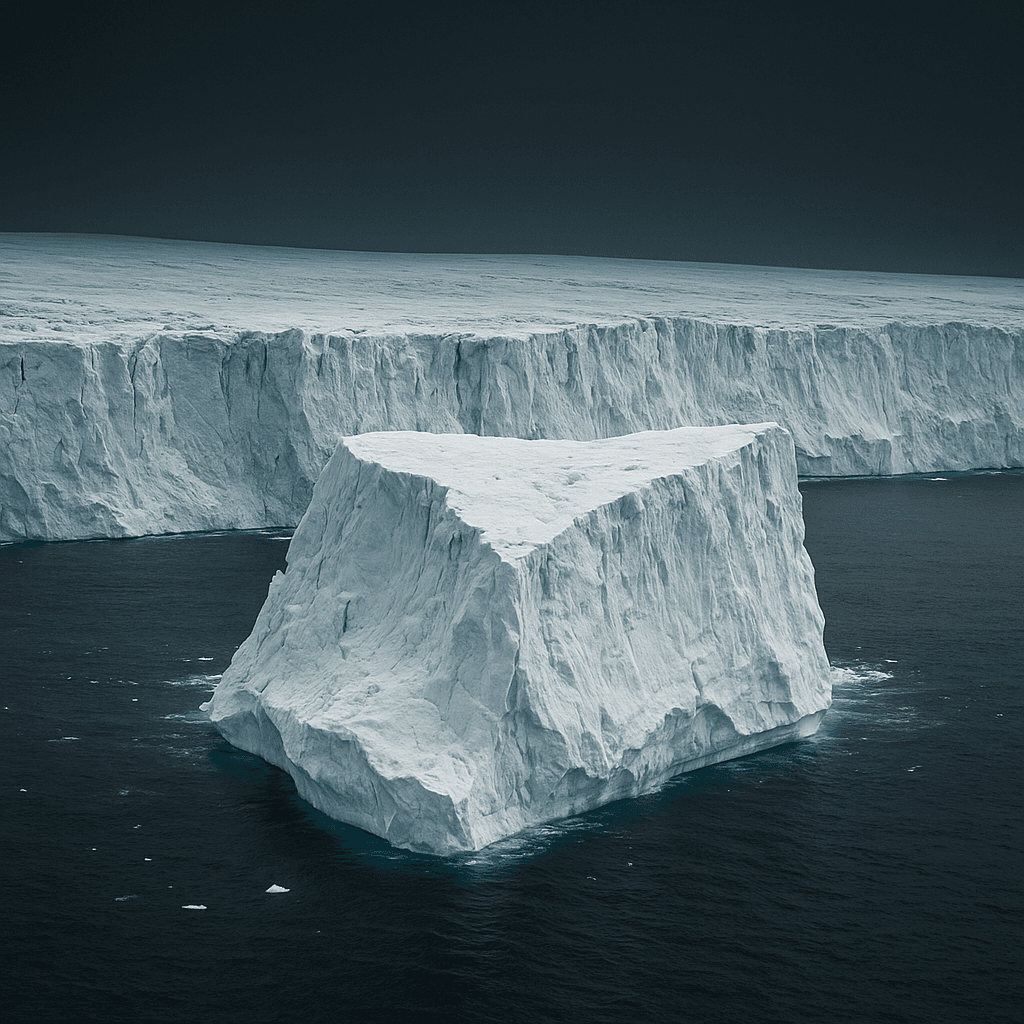
On August 4, 2026, a massive ice island measuring 76.4 km², comparable to the size of Manhattan, broke free from Greenland's Petermann Glacier. This event stands out as the largest loss of ice from the glacier since 2012 and marks the most significant calving event in the Arctic since 2020. Researchers from the University of Ottawa have expressed concerns that two additional sections, approximately 94 km² and 84 km², may also separate soon, possibly resulting in a cumulative loss of about 254 km².
Satellite observations from the European Space Agency’s Sentinel-1 mission indicate that the ice tongue has been rapidly deteriorating for years. This decline has allowed scientists to expect this calving event, which could reduce the glacier's floating ice tongue by as much as 22%. The Petermann Glacier has long been a major feature of Greenland's ice landscape, and these changes underscore the glacier's vulnerability to climate change.
Key Facts
- The newly broken-off ice island is up to 150 meters thick.
- Satellite data shows long-term deterioration of the ice tongue, foreshadowing the event.
- Potential cumulative loss could reach 254 km² if two projected ice islands detach.
- Large, tabular icebergs like this are uncommon in the Arctic.
- The Canadian Ice Service is actively monitoring the ice island for risks to shipping and marine infrastructure.
The occurrence of these large icebergs presents researchers with a unique opportunity to analyze glacier dynamics and the broader impacts of climate change on Polar regions. The Canadian Ice Service is also keeping close tabs on the situation, considering the implications for marine navigation safety. As these ice masses drift, they could pose hazardous conditions for vessels operating in the area.