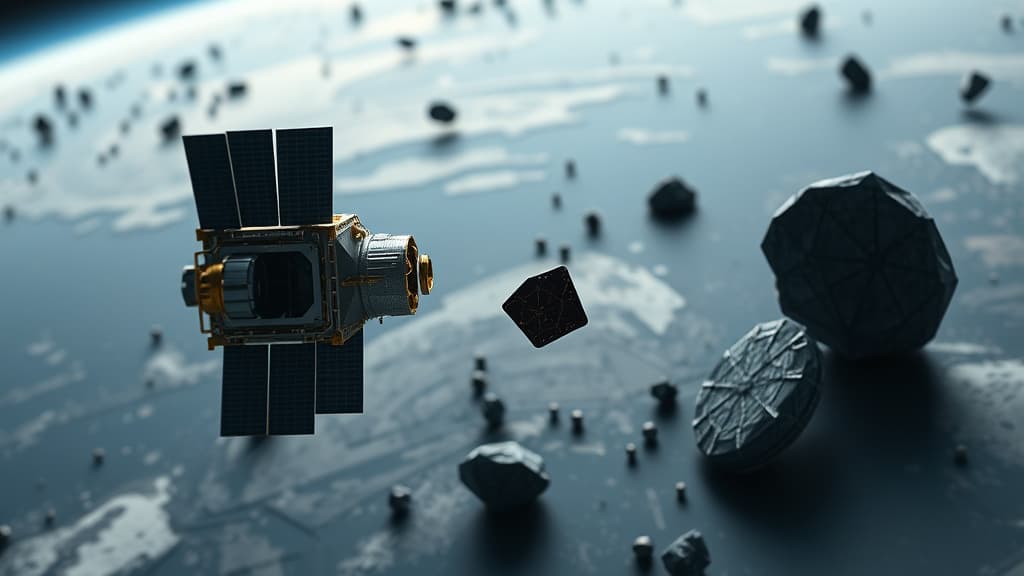
NAVIGATING IN SPACE just became more independent. NASA has successfully tested the FALCON system, allowing satellites to autonomously navigate without GPS by using other spacecraft and debris as reference points. Over three days, this technology significantly improved the orbits of more than 200 objects, highlighting its potential for future space missions.
Key Facts
- The FALCON system employs onboard star tracking for GPS-independent navigation and uses existing space objects as reference points.
- During the three-day test, FALCON autonomously enhanced the orbital data for over 200 space objects, outperforming current catalog estimates.
- Developed in collaboration with EraDrive, which originated from Stanford University, FALCON combines advanced algorithms with high-performance sensors.
- This technology is particularly significant for missions beyond Earth, where GPS signals may be weak or unavailable, especially around the Moon and in deep space.
- FALCON is expected to facilitate better space traffic management and collision avoidance, reducing reliance on ground-based tracking systems.
This advancement is pivotal as space exploration expands. The challenges of navigating through dense debris fields and the absence of GPS signals in remote regions underscore the importance of such systems for future lunar and deep-space missions.