ScienceTechnical Deep Dive

Magnetic Clues Rewrite the Tectonic History of the Americas

Published
EElectricBuzz Editorial Team
Magnetic Clues Rewrite the Tectonic History of the Americas
3 min read469 wordsElectricBuzz Editorial Team

The Gist

New geological research in the Northern Andes suggests the monumental collision between Central and South America occurred millions of years earlier than previously assumed.

A Shift in the Geologic Timeline

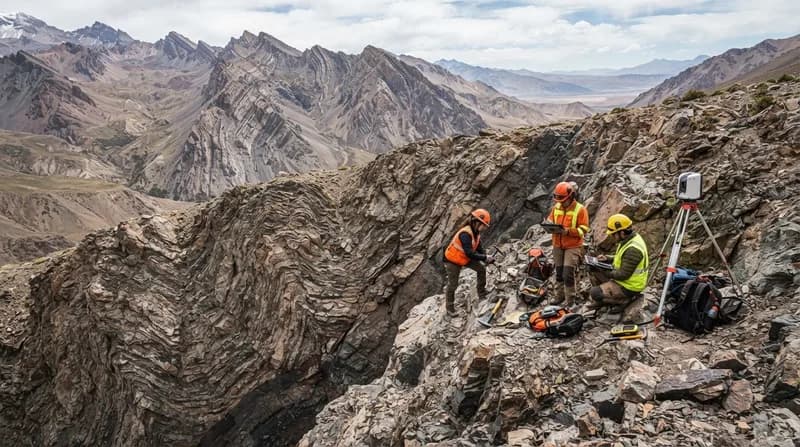
The geological history of the Western Hemisphere is undergoing a significant revision. A recent study published in the journal Earth and Planetary Physics has unveiled evidence suggesting that the tectonic collision between the South American Plate and the Central American landmass reached its peak intensity much earlier than traditional models had proposed. By analyzing volcanic formations within Colombia’s Combia Volcanic Province, an international team of geoscientists has successfully pushed back the timeline of this transformative event, suggesting the most violent phase of the collision had concluded by the early stages of the late Miocene period, roughly 10 million years ago.

The Methodology of Magnetic Fabric Analysis

At the heart of this discovery is the precise application of magnetic fabric analysis. Researchers led by Dr. Victor A. Piedrahita and J. Li focused on late Miocene volcanic rocks, which date back to between 12 and 6 million years. By examining the orientation of magnetic minerals embedded within these igneous samples, the team could distinguish between the original magnetic signatures created during the cooling of magma and the subsequent structural distortions caused by tectonic pressure.

This technique allows geologists to effectively peer into the past, determining whether a rock mass was subjected to intense tectonic strain while it was forming or if it remained stable in the aftermath. The findings showed that the vast majority of these volcanic rocks retained their primary magnetic fabric, indicating they were deposited in a relatively quiescent tectonic environment. This provided a clear, observable contrast to the intense deformation that would be expected if the primary collision had been ongoing during that specific epoch.

Why It Matters

  • Refining Plate Tectonic Models: The data suggests that the most significant crustal shortening occurred during the Oligocene to middle Miocene, rather than later as previously theorized.
  • Advanced Geological Diagnostics: The study highlights the effectiveness of magnetic fabric analysis as a tool for reconstructing ancient tectonic events in volcanic regions where traditional stratigraphic evidence might be ambiguous.
  • Understanding Mountain Building: By narrowing the window of the most intense compression, scientists can now create more accurate models of how the Northern Andes were constructed and how the interplay between plates influenced the continental landscape.

Implications for Future Research

The conclusion that major tectonic deformation had already subsided by the late Miocene offers a new lens through which to view the geological evolution of the Americas. As the scientific community looks to reconcile these findings with broader tectonic datasets, the research provides a vital anchor point for future studies. By confirming that the most significant collisional events concluded well before the 10-million-year mark, geologists are now equipped with a clearer timeline to understand how the diverse geography of the Andes was shaped, offering a more nuanced narrative of the forces that built the foundation of the continent.

The 5 Best Over-Ear ANC Headphones of 2026, Tested & Ranked
Editor's Pick Guide
92/100
Tech & Gadgets12 min read

The 5 Best Over-Ear ANC Headphones of 2026, Tested & Ranked

We locked five over-ear ANC picks for 2026 — Sony WH-1000XM6, Bose QuietComfort Ultra 2, Soundcore Space One, Sennheiser Momentum 5, and Apple AirPods Max 2 — then stress-tested them on lab metrics, long-term owner truth, and live street prices.

Related Stories

Semantically matched articles, ranked by topic overlap and freshness.

NASA's Roman Space Telescope Set for Two Decades of Cosmic Discovery
Science

NASA's Roman Space Telescope Set for Two Decades of Cosmic Discovery

Thanks to exceptional launch precision and significant fuel savings, the Nancy Grace Roman Space Telescope is poised to more than double its mission life, potentially operating for over 22 years.

Unlocking Predictive Markers: How B Cells Could Forecast Immunotherapy-Induced Colitis
Science

Unlocking Predictive Markers: How B Cells Could Forecast Immunotherapy-Induced Colitis

New research from MD Anderson Cancer Center suggests that B cell activity acts as a crucial early-warning system for identifying patients at risk of developing severe colitis during cancer treatment.

Could a Tiny Brain Protein Be the Master Switch for Aging?
Science

Could a Tiny Brain Protein Be the Master Switch for Aging?

Researchers have identified that declining levels of a brain protein called Menin may drive systemic aging, offering a potential new target for age-related health interventions.

Challenging Einstein: Scientists Pioneer Gravity Tests Using Exotic Muonium Atoms
Science

Challenging Einstein: Scientists Pioneer Gravity Tests Using Exotic Muonium Atoms

Researchers at ETH Zurich have developed a method to create controlled beams of muonium, potentially enabling the first-ever gravitational tests on second-generation particles.

Unlocking the Narrative: AI System Transforms Physician Notes into Actionable Medical Data
Science

Unlocking the Narrative: AI System Transforms Physician Notes into Actionable Medical Data

A groundbreaking study reveals how a new AI system can parse clinical prose at scale, converting hidden patient insights into verifiable, computer-readable data.

Caltech’s Femtosecond Breakthrough: Steering Light with Light
Science

Caltech’s Femtosecond Breakthrough: Steering Light with Light

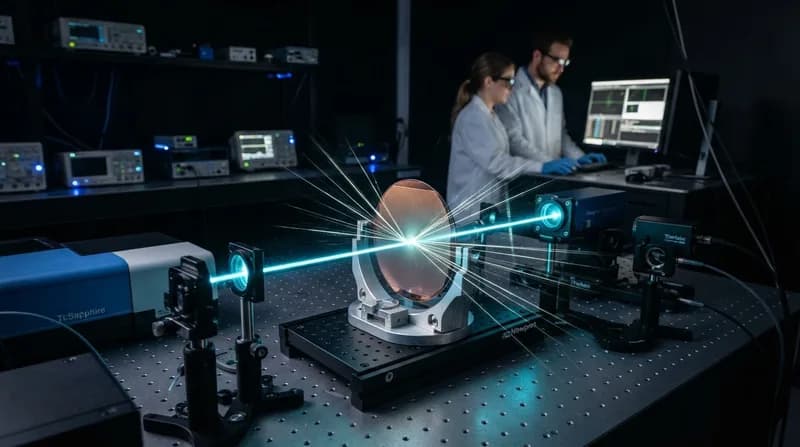
Researchers have engineered a nanoscale silicon metasurface capable of redirecting light beams in just 74 quadrillionths of a second, shattering traditional speed barriers in photonic computing.

Beyond the Starch: Why Black and Green Rice Are Emerging as Metabolic Superfoods
Science

Beyond the Starch: Why Black and Green Rice Are Emerging as Metabolic Superfoods

New research from Hokkaido University reveals that pigmented rice varieties contain unique, beneficial fats that could revolutionize dietary approaches to blood sugar management.

Biological Breakthrough: Scientists 3D-Print a Functional Human Gut-on-a-Chip
Science

Biological Breakthrough: Scientists 3D-Print a Functional Human Gut-on-a-Chip

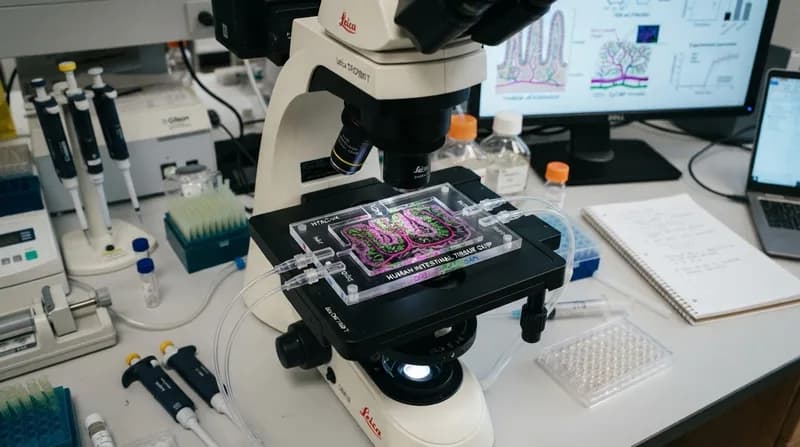
Researchers at Lawrence Livermore National Laboratory have successfully replicated the complex 3D architecture of the human small intestine on a compact, microfluidic device.