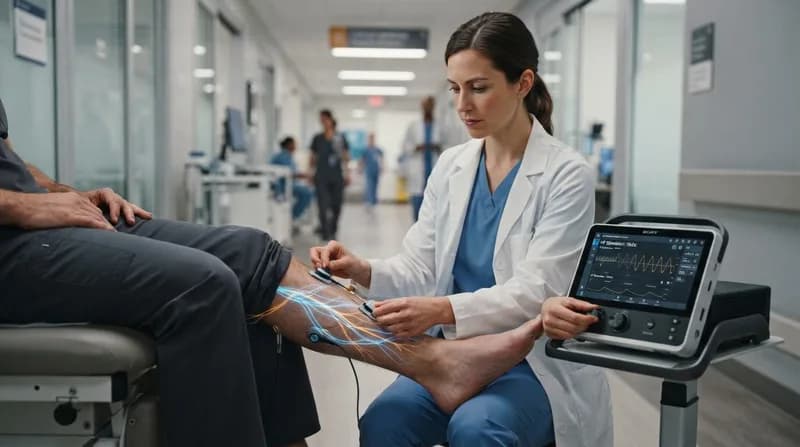
A New Frontier for Diabetic Neuropathy
For millions living with diabetes, painful diabetic neuropathy (PDN) is a debilitating reality, characterized by persistent burning pain, numbness, and a loss of sensation in the feet and legs. As the condition advances, it often leads to severe complications, including balance issues, chronic ulcers, and an increased risk of amputation. Traditional medical management has largely focused on symptomatic relief rather than restorative care, leaving a massive gap in treatment efficacy. However, a landmark multicenter randomized clinical trial led by the Wake Forest University School of Medicine has unveiled a promising new path forward: 10-kHz spinal cord stimulation.
The study, recently published in the journal Diabetes Care, indicates that this advanced neurostimulation technique not only mitigates chronic pain but may also contribute to improved sensory function and an increase in small nerve-fiber density in the lower limbs. Unlike traditional approaches, this intervention offers a glimpse into potential disease-modifying benefits that could change the standard of care for patients who have previously been resistant to conventional therapies.
The Technology Behind the Relief
The intervention utilizes a 10-kHz spinal cord stimulation system, a sophisticated hardware-based medical device. The procedure involves the surgical implantation of thin leads near the spinal cord, connected to a compact pulse generator placed under the skin. The system functions by delivering mild, high-frequency electrical pulses that disrupt the transmission of pain signals to the brain. Notably, this 10-kHz approach avoids the disruptive, tingling paresthesia associated with older stimulation systems, providing a more discreet and comfortable user experience.
By targeting the underlying pain pathways with such precision, the device allows patients to regain a degree of physical autonomy that was previously lost. The clinical trial focused on 91 adults across 13 U.S. centers who had exhausted other treatment options, providing a rigorous test of the device's capabilities in the most challenging cases of nerve damage.
Clinical Outcomes and Sensory Restoration
The trial's results were statistically significant. Among participants who underwent the intervention, approximately 79.4% experienced a minimum 50% reduction in lower-limb pain during the temporary phase of the study. For those who opted for a permanent implant, that success rate climbed to an impressive 93.1% after six months. In stark contrast, participants receiving only conventional medical management saw only a 4% success rate in achieving similar pain relief.
Perhaps most revolutionary was the impact on sensory perception. Over 55% of the stimulation group showed meaningful improvements in their ability to detect temperature, touch, vibration, and body position, compared to just 25% in the control group. Furthermore, skin biopsies revealed a 56% average increase in small nerve-fiber density in the lower calf, a metric that remained unchanged in the control group. While the research team emphasizes that further study is required to determine the exact biological mechanism and long-term durability of these nerve improvements, these preliminary findings suggest that spinal cord stimulation may offer restorative potential rather than just acting as a simple pain mask.
Looking Ahead: Implications and Limitations
- Targeted Relief: The 10-kHz stimulation provides pain management without the uncomfortable tingling associated with legacy stimulators.
- Objective Gains: Beyond subjective pain scores, the study recorded objective improvements in sensory testing and histological nerve density.
- Cautious Optimism: While the results are encouraging, the trial was halted early after meeting efficacy milestones, and future research must confirm whether these improvements are sustained over the long term.
- Next Steps: The research team plans to continue tracking participants for 12 months to better understand the regenerative potential of the nerves and the biological pathways involved in these therapeutic effects.