ScienceTechnical Deep Dive

Dual-Drug Strategy Targets Aggressive, Treatment-Resistant Prostate Cancer

Published
EElectricBuzz Editorial Team
Dual-Drug Strategy Targets Aggressive, Treatment-Resistant Prostate Cancer
3 min read498 wordsElectricBuzz Editorial Team

The Gist

Researchers have discovered a breakthrough combination therapy that forces treatment-resistant prostate cancer cells to shed their defensive 'identity,' potentially paving the way for more effective clinical treatments.

A New Front Against Metastatic Resistance

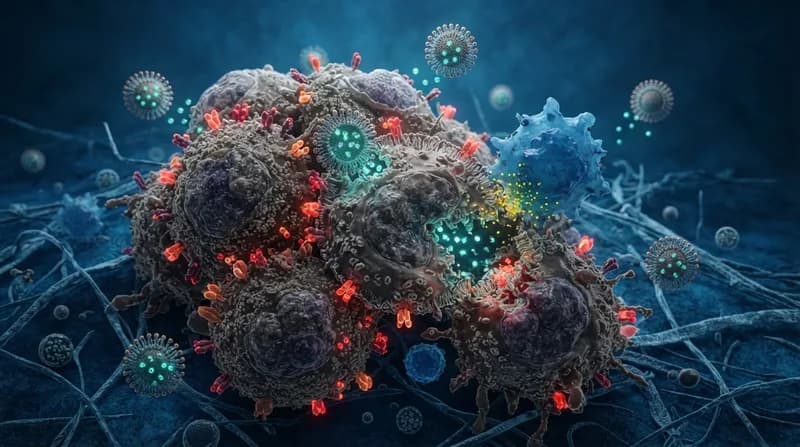
Prostate cancer remains a formidable challenge in modern oncology, particularly when it evolves beyond standard hormone-blocking therapies. While many patients respond well to initial androgen receptor inhibitors, a significant portion of tumors eventually develop resistance by undergoing a process known as transdifferentiation. In this biological pivot, cancer cells abandon their original glandular identity, effectively morphing into a more aggressive form that no longer relies on typical hormonal drivers for growth.

A recent study led by the University of Michigan has identified a novel two-drug combination designed to disrupt this transformation. By targeting the dual pathways that facilitate this cellular identity switch, researchers believe they have found a way to stop—and potentially reverse—the progression of these highly treatment-resistant tumors. The findings, published in JCI Insight, offer a glimmer of hope for patients facing advanced, metastatic disease, while also suggesting potential applications for other aggressive cancers like lung and pancreatic tumors.

The Dual-Targeting Mechanism

The research focuses on two specific sides of the cancer cell's survival strategy. When tumors lose key genes—specifically TP53 and RB1—they lose their structural integrity and adopt stem cell-like programs to survive. The research team found that by inhibiting only one side of this transition, previous efforts failed to provide long-term remission. The new strategy combines two distinct classes of pharmaceuticals to neutralize the threat:

  • BET Bromodomain Inhibitors: These drugs interfere with the cellular programs that allow prostate cancer cells to activate alternative, more aggressive identities.
  • DNA Methyltransferase (DNMT) Inhibitors: These agents work by reactivating dormant genes, specifically targeting the restoration of essential glandular functions that the cancer cells had suppressed during their mutation.

By pairing these therapies, scientists effectively attacked the cancer's ability to maintain its new, evasive identity while simultaneously forcing it back toward a state that is more susceptible to treatment. In preclinical trials involving mice, this combination successfully suppressed tumor growth, even when administered at dosages significantly lower than standard clinical thresholds, suggesting a high level of efficacy with a manageable profile.

Implications for Future Cancer Care

The success of this two-drug approach opens up a new paradigm in cancer research. Beyond merely slowing growth, the ability to reverse gene expression changes within a tumor could shift how oncologists handle treatment-resistant cases. The researchers are now focused on identifying specific biomarkers that could determine which patients would gain the most from this therapeutic combination. This precision medicine approach is intended to distinguish early on between patients whose tumors are likely to undergo this dangerous transition and those who may not.

Looking ahead, the goal is to transition these findings into human clinical trials. Preventing transdifferentiation from occurring in the first place remains the ultimate objective, as catching the transformation early could significantly extend patient survival rates. Because DNMT inhibitors are already FDA-approved for other conditions, the path to clinical integration may be more accelerated than for entirely new drug classes, providing a timely opportunity to tackle one of the most persistent hurdles in prostate cancer care.


The 5 Best Over-Ear ANC Headphones of 2026, Tested & Ranked
Editor's Pick Guide
92/100
Tech & Gadgets12 min read

The 5 Best Over-Ear ANC Headphones of 2026, Tested & Ranked

We locked five over-ear ANC picks for 2026 — Sony WH-1000XM6, Bose QuietComfort Ultra 2, Soundcore Space One, Sennheiser Momentum 5, and Apple AirPods Max 2 — then stress-tested them on lab metrics, long-term owner truth, and live street prices.

Related Stories

Semantically matched articles, ranked by topic overlap and freshness.

NASA's Roman Space Telescope Set for Two Decades of Cosmic Discovery
Science

NASA's Roman Space Telescope Set for Two Decades of Cosmic Discovery

Thanks to exceptional launch precision and significant fuel savings, the Nancy Grace Roman Space Telescope is poised to more than double its mission life, potentially operating for over 22 years.

Unlocking Predictive Markers: How B Cells Could Forecast Immunotherapy-Induced Colitis
Science

Unlocking Predictive Markers: How B Cells Could Forecast Immunotherapy-Induced Colitis

New research from MD Anderson Cancer Center suggests that B cell activity acts as a crucial early-warning system for identifying patients at risk of developing severe colitis during cancer treatment.

Could a Tiny Brain Protein Be the Master Switch for Aging?
Science

Could a Tiny Brain Protein Be the Master Switch for Aging?

Researchers have identified that declining levels of a brain protein called Menin may drive systemic aging, offering a potential new target for age-related health interventions.

Challenging Einstein: Scientists Pioneer Gravity Tests Using Exotic Muonium Atoms
Science

Challenging Einstein: Scientists Pioneer Gravity Tests Using Exotic Muonium Atoms

Researchers at ETH Zurich have developed a method to create controlled beams of muonium, potentially enabling the first-ever gravitational tests on second-generation particles.

Unlocking the Narrative: AI System Transforms Physician Notes into Actionable Medical Data
Science

Unlocking the Narrative: AI System Transforms Physician Notes into Actionable Medical Data

A groundbreaking study reveals how a new AI system can parse clinical prose at scale, converting hidden patient insights into verifiable, computer-readable data.

Caltech’s Femtosecond Breakthrough: Steering Light with Light
Science

Caltech’s Femtosecond Breakthrough: Steering Light with Light

Researchers have engineered a nanoscale silicon metasurface capable of redirecting light beams in just 74 quadrillionths of a second, shattering traditional speed barriers in photonic computing.

Beyond the Starch: Why Black and Green Rice Are Emerging as Metabolic Superfoods
Science

Beyond the Starch: Why Black and Green Rice Are Emerging as Metabolic Superfoods

New research from Hokkaido University reveals that pigmented rice varieties contain unique, beneficial fats that could revolutionize dietary approaches to blood sugar management.

Biological Breakthrough: Scientists 3D-Print a Functional Human Gut-on-a-Chip
Science

Biological Breakthrough: Scientists 3D-Print a Functional Human Gut-on-a-Chip

Researchers at Lawrence Livermore National Laboratory have successfully replicated the complex 3D architecture of the human small intestine on a compact, microfluidic device.