The Strategic Shift Toward Vertical Integration
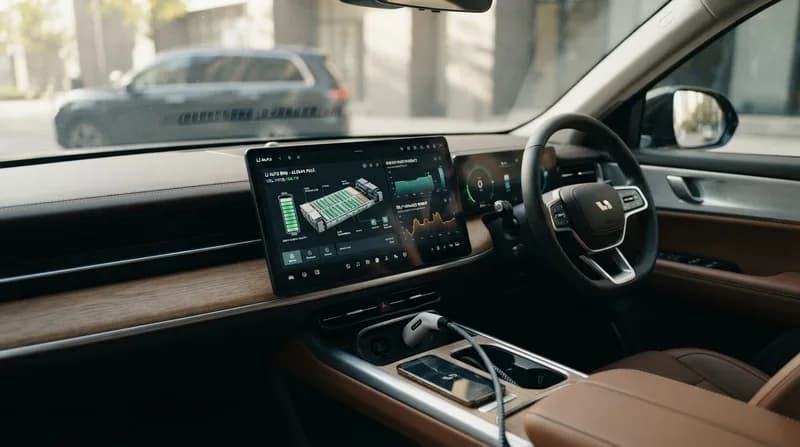
In a major shift for the Chinese automotive landscape, Li Auto has announced an aggressive transition away from reliance on industry titan CATL. The automaker is now pivoting to its own proprietary battery cell designs, a move that signals a deeper commitment to vertical integration. By taking control of cell material chemistry, structural engineering, and battery management systems, Li Auto aims to streamline its supply chain and optimize performance across its entire lineup.
This transition is not a sudden departure but a methodical rollout. Current models such as the L6, L8, and i8 have already begun incorporating these in-house cells. As production capacity scales, this new technology is set to replace legacy suppliers entirely, with the flagship Mega Home electric van expected to receive its first batch of proprietary 5C ternary cells this November.
Deepening Ties with Sunwoda
At the core of this hardware evolution is a reinforced partnership with Sunwoda EVB. Li Auto recently solidified its influence by injecting approximately $390 million into the manufacturer, effectively securing an 11.17 percent stake. This investment makes Li Auto the second-largest shareholder, granting the automaker greater control over manufacturing processes.
While Li Auto handles the intellectual property—defining specifications and material research—Sunwoda acts as the production partner. This arrangement allows Li Auto to maintain its design philosophy while leveraging Sunwoda's manufacturing expertise, effectively bypassing the need to source off-the-shelf cells from external giants like CATL.
Global Implications for the Li 6
The implications of this strategy extend far beyond China’s borders, particularly with the upcoming European debut of the Li 6. Unlike the company’s domestic portfolio, which is heavily reliant on range-extended electric vehicles, the European version of the Li 6 will arrive as a strictly battery-electric vehicle (BEV). This move positions the brand to compete directly in the European market using its latest 5C battery technology and new in-house Mach-Chip architecture.
Why it Matters
- Supply Chain Sovereignty: Developing in-house cells reduces vulnerability to price fluctuations and supply constraints from major third-party vendors.
- Technical Synergy: Designing both the cells and the battery management system (BMS) in-house allows for tighter integration, theoretically leading to faster charging and improved thermal management.
- European Expansion: By standardizing its own hardware, Li Auto can offer a more consistent, proprietary technological experience to international customers, starting with the European launch at the Paris Motor Show.
As the company prepares to transition its remaining models, such as the i9, to the new standard as soon as production permits, it is clear that Li Auto is evolving from a traditional automotive manufacturer into a vertically integrated technology firm. With delivery timelines for the new 2026 hardware already set for early November, the industry is watching closely to see if this pivot pays off in the competitive global EV market.