The Future of Airport Mobility
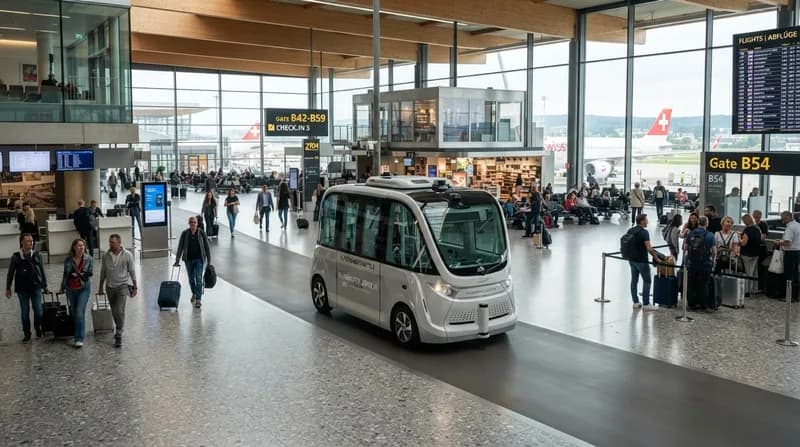
Zurich Airport has quietly revolutionized its ground operations by deploying two fully automated, all-electric shuttles that operate without any drivers or security personnel on board. This pilot program, which kicked off in early September 2026, positions the airport as a pioneer in European transport innovation. These minibuses navigate designated routes across the airport grounds, successfully managing complex logistical tasks while remaining entirely detached from active aircraft taxiways.
The project represents the culmination of an intensive development phase that began in March 2025 in collaboration with Chinese autonomous driving specialist WeRide. By achieving Level 4 automation—a standard where vehicles can handle all aspects of driving without human intervention in specific conditions—Zurich Airport is demonstrating how mature autonomous technology has become for specialized industrial environments.
Human Oversight in an Automated World
While the vehicles operate independently, they are not left to their own devices. Safety remains paramount; the shuttles are under constant surveillance from a remote control center. Employees from partners Swissport and Krummen Kerzers have been retrained to act as remote operators, utilizing a specialized cockpit to monitor the live feed and intervene immediately should the software encounter an unpredictable scenario.
This shift in human roles highlights a broader transition in workforce management. Rather than eliminating human involvement, the technology is evolving the nature of these jobs. By shifting from physical driving to remote monitoring, a single operator can eventually manage an entire fleet of shuttles simultaneously, significantly boosting efficiency and helping to address the critical shortage of skilled logistics personnel currently facing the aviation industry.
Why it Matters
- Level 4 Autonomy: The shuttles handle navigation and obstacle detection without a safety driver on board, representing a major leap forward for airport-wide logistical systems.
- Addressing Labor Shortages: With high demand for ground staff, automation allows for more efficient workforce allocation, enabling one monitor to oversee multiple vehicles at once.
- Sustainability and Efficiency: The transition to all-electric, optimized shuttle routes reduces the overall carbon footprint of airport ground operations while providing predictable, reliable transit for employees.
- Regulatory Precedent: Meeting the rigorous safety and technical standards required for this trial provides a framework for other major European transport hubs to follow suit.
The Path Forward
The pilot program is currently slated to run until the conclusion of 2026. During this period, the airport and its project partners will collect extensive data on the reliability, safety, and operational efficiency of the system. While the initial run is limited to these two vehicles, there is already talk of extending the pilot and integrating further automated solutions across the airport's sprawling campus.
As Zurich Airport continues to refine its autonomous infrastructure, the lessons learned here will likely dictate how large-scale logistics centers around the world integrate self-driving hardware in the coming decade. The goal isn't just to replace a driver with a computer; it is to create a safer, more responsive, and more flexible transportation ecosystem that can adapt to the rapid demands of modern air travel.