The Steering Revolution Goes Virtual
The Tesla Cybercab represents a radical departure from traditional automotive engineering. By eliminating the steering wheel, pedals, and mechanical stalks, Tesla has fully committed to a future defined by autonomous transit. However, the complete removal of physical driving interfaces has raised significant questions regarding manual vehicle recovery and emergency navigation. Recent reports suggest that Tesla has addressed these concerns by embedding a hidden, software-based control interface directly within the vehicle's expansive infotainment display.
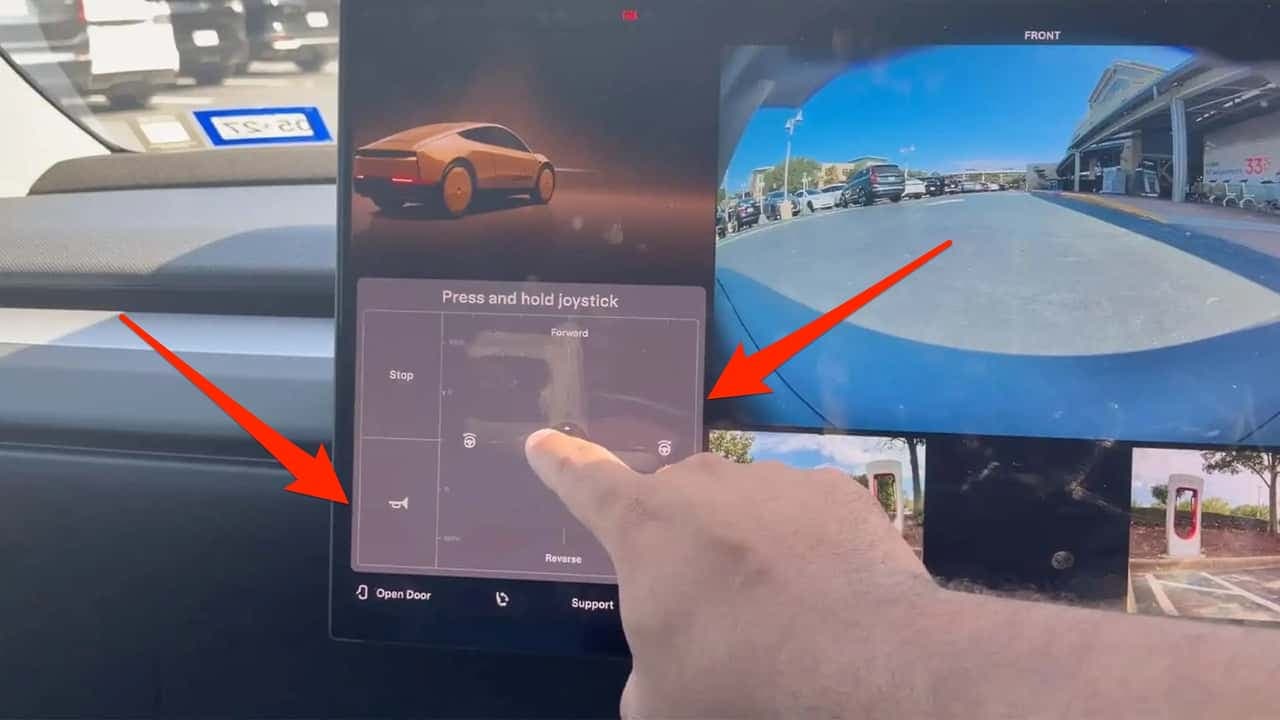
The interface, discovered by a passenger who encountered an inadvertently left-open service menu, functions as a virtual joystick. This digital control pad is designed specifically for low-speed maneuvering, capping the vehicle’s velocity at approximately 7 mph. By utilizing the touchscreen, an operator can dictate directional movement and acceleration, providing a critical redundancy for scenarios where the autonomous system might be compromised or when the vehicle needs to be repositioned in tight quarters, such as at a Supercharger station.
Functional Design and Technical Reality
The virtual controller appears to be a sophisticated, touch-sensitive implementation of drive-by-wire logic. In the observed interface, the driver drags a directional pad on the screen to influence the vehicle's heading while simultaneously managing forward or reverse movement. This design philosophy aligns with Tesla’s broader strategy of hardware-minimalism, shifting the burden of vehicle interaction from mechanical linkages to high-level software commands.
While this tool is highly effective for maintenance and emergency services, its accessibility remains a point of intense curiosity. Official documentation for first responders confirms that Tesla provides specific protocols for accessing these manual controls, involving verification procedures via Tesla’s support team and onboard camera authentication. Despite these safeguards, the accidental exposure of such a menu to the public highlights the tension between user-friendly serviceability and the stringent security required for a vehicle that lacks traditional fail-safes.
Why It Matters
- Operational Flexibility: The existence of this interface confirms that even fully autonomous vehicles require "human-in-the-loop" overrides for non-driving situations like maintenance, parking, or emergency towing.
- Safety Protocols: The implementation of software-gated manual controls provides a blueprint for how future autonomous pods will manage liability and safety without traditional hardware.
- Redundancy Without Complexity: By utilizing the existing infotainment screen rather than external diagnostic tools, Tesla avoids the need for specialized service hardware, simplifying the fleet management process.
As the Cybercab begins its rollout, this virtual joystick represents a critical layer of the vehicle's operational infrastructure. It serves as a reminder that even in a world of self-driving machines, there is still a necessity for human oversight, proving that the steering wheel hasn't disappeared—it has simply evolved into a line of code.