The Challenge of Real-World Efficiency
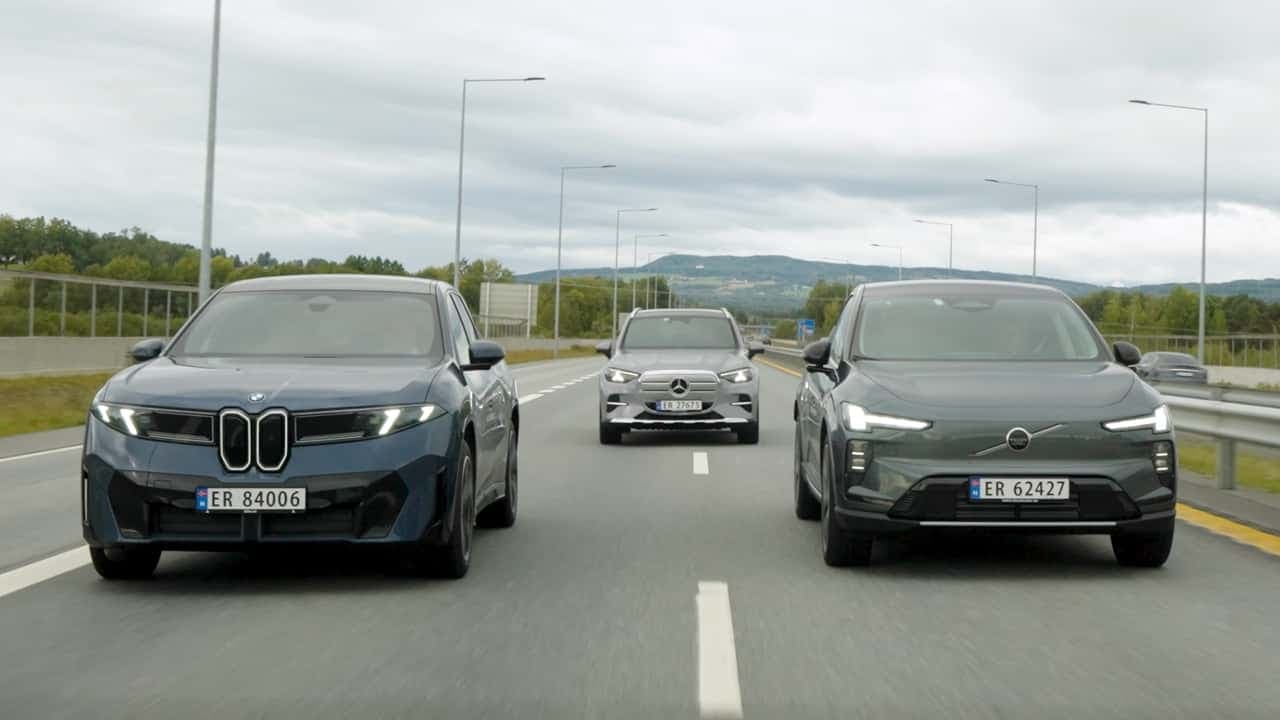
In the evolving premium electric SUV segment, manufacturers are locked in an intense battle to maximize range while maintaining comfort. While on-paper specifications often highlight battery capacity, the true measure of an EV's road-trip viability is how effectively it manages that energy under sustained, high-speed conditions. A recent comparative study conducted on a motorway north of Oslo put three of the industry's most prominent contenders—the BMW iX3, the Mercedes-Benz GLC Electric, and the Volvo EX60—to the test to see how they perform in real-world highway environments.
To ensure fairness, the test maintained a constant speed of 120 km/h (roughly 75 mph) in temperatures ranging from 57°F to 63°F. Drivers rotated vehicles throughout the journey to negate the effects of lead-position wind resistance, and the route was performed as a round trip to account for elevation changes. By utilizing the most efficient driving modes, the test aimed to isolate the inherent energy consumption characteristics of each vehicle platform.
1. The BMW iX3
The BMW iX3 emerged as the clear leader in efficiency. It recorded a consumption rate of 19.4 kWh/100 kilometers, which translates to approximately 3.2 miles per kWh. This efficiency, paired with a substantial 108.7 kWh usable battery capacity, allowed the iX3 to secure a calculated range of 338 miles. The result reinforces BMW’s engineering focus on aerodynamics and powertrain optimization, allowing the vehicle to extract more distance from every kilowatt-hour of stored energy compared to its German and Swedish counterparts.
2. The Mercedes-Benz GLC Electric
The Mercedes-Benz GLC Electric followed closely behind, demonstrating strong performance despite consuming slightly more energy than the BMW. It recorded a consumption figure of 20.3 kWh/100 kilometers, or 3.06 miles per kWh. With these efficiency metrics, the GLC achieved a calculated total range of 279 miles. While it trailed the iX3 in raw range, the GLC continues to be recognized for its balanced approach, offering a premium cabin experience and sophisticated ride quality that aligns with its heritage in the luxury market.
3. The Volvo EX60
The Volvo EX60 faced a tougher challenge in this specific comparison, finishing with a consumption rate of 21.1 kWh/100 kilometers, or 2.94 miles per kWh. This resulted in a calculated range of 260 miles for the model tested. It is worth noting that the EX60 was equipped with 22-inch wheels, which likely contributed to its higher energy consumption compared to the 20-inch wheels found on the BMW and Mercedes. Despite ranking lower in efficiency metrics, the Volvo secured the top spot in the drivers' subjective evaluations, praised for its exceptional cabin silence and superior highway comfort.
Why it Matters
This comparison highlights a critical dichotomy in the EV market: the difference between raw efficiency and overall user experience. While the BMW iX3 proves that superior drivetrain management is essential for long-distance travel, the feedback regarding the Volvo EX60 illustrates that buyers often prioritize noise suppression, seat ergonomics, and ride stability as much as, if not more than, the final range figure. As battery technology reaches a level of maturity where most premium EVs can comfortably cover long distances, these "human-factor" elements are becoming the new battleground for automotive differentiation.