Shifting the Diagnostic Horizon
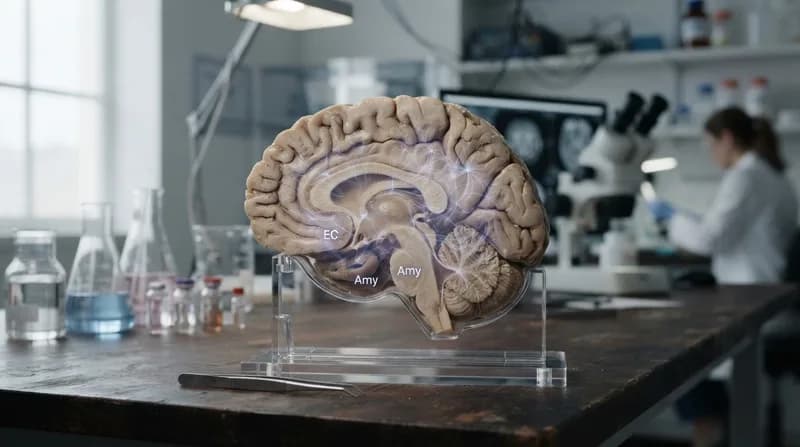
In a significant breakthrough for neurological research, scientists at Johns Hopkins University have identified critical biomarkers that appear as early as a decade before the first signs of Alzheimer’s disease emerge. While the medical community has long focused on the hippocampus as the primary site of early damage, this new study suggests that two other brain regions—the entorhinal cortex and the amygdala—undergo structural deterioration significantly sooner. This discovery offers a vital window for early clinical intervention, potentially allowing for treatments long before cognitive decline becomes irreversible.
The study, recently published in NeuroImage: Reports, analyzed a vast array of magnetic resonance imaging (MRI) and positron emission tomography (PET) scans. By tracking individuals across the full spectrum of Alzheimer’s progression, researchers established a clear pattern: the entorhinal cortex, responsible for memory retrieval, and the amygdala, which processes emotional memories, begin to lose tissue well in advance of the hippocampus. This shift in focus could fundamentally change how doctors screen for neurodegenerative risks in the future.
The Role of Tau Protein
The research team also solidified the link between regional brain atrophy and the buildup of tau, a protein known to form toxic tangles within nerve cells. Through advanced digital pathology and PET imaging, the study revealed that the areas exhibiting the most significant gray matter shrinkage correlated directly with regions affected by abnormal tau accumulation. This finding is essential because it moves the scientific understanding of Alzheimer’s beyond simple observation of mass loss to a molecular explanation of why that loss occurs.
Why it Matters
- Early Intervention: Current treatments are often administered too late, once cognitive symptoms are already apparent. Identifying early biomarkers could enable interventions 5-to-10 years earlier.
- Redefining Risk: By moving the focus away from the hippocampus, clinicians may be able to identify at-risk patients in their 30s or 40s, specifically those with a family history or genetic predispositions.
- Molecular Targeting: Understanding the "molecular neighborhoods" where tau accumulates provides pharmaceutical researchers with concrete targets for developing future therapies to interrupt the disease process.
Looking Toward the Future
While the prospect of identifying Alzheimer’s a decade in advance is revolutionary, the research team emphasizes that this is a foundation for future diagnostic tools rather than an immediate clinical test. The next phase of this research involves a deeper investigation into the micro-scale molecular changes that lead to tissue atrophy. As brain imaging technology becomes more accessible and cost-effective, the hope is to transition from observational studies to active screening protocols.
Ultimately, this research suggests that Alzheimer’s is a slow, silent process that leaves structural fingerprints long before a patient experiences forgetfulness. By shifting the clinical gaze to the entorhinal cortex and the amygdala, researchers believe they have found the "canary in the coal mine" for the disease. If these findings hold up in larger clinical trials, they could provide the necessary roadmap to move from managing dementia symptoms to preventing them altogether.