A New Diagnostic Frontier in Cardiology
Sudden cardiac death remains one of medicine’s most persistent and tragic mysteries. Unlike a heart attack, which is caused by a blockage, sudden cardiac arrest occurs when the heart’s internal electrical system experiences a catastrophic failure. For the hundreds of thousands of people who succumb to this annually—including seemingly healthy young athletes and older adults alike—there is often no warning. Now, researchers at the University of California, Berkeley, have leveraged the power of artificial intelligence to unveil a hidden biological "red flag" buried within routine electrocardiograms (EKGs) that could serve as a life-saving early warning system.
The Power of Deep Learning
The breakthrough was made possible by training an AI model on a massive dataset of 440,000 EKG records sourced from Sweden’s healthcare system. By correlating these electrical heart patterns with death certificate data, the AI learned to distinguish between healthy hearts and those at high risk for a terminal electrical malfunction. To ensure the model’s accuracy, the research team validated the technology across diverse patient populations in both the United States and Taiwan, confirming that the identified patterns were not merely local anomalies but universal indicators of cardiac risk.
Why It Matters: Bridging the Predictive Gap
- Beyond Ejection Fraction: Traditional screening relies heavily on measuring the heart's pumping efficiency, an invasive and often inaccurate predictor of sudden arrest. The AI system uses non-invasive, standard EKG data, making it highly scalable.
- Higher Sensitivity: The AI identified high-risk groups with an annual sudden death rate of 7%, significantly outperforming the 4.6% rate flagged by conventional clinical metrics.
- Preventive Potential: Many patients who currently receive prophylactic defibrillators never actually require them. This AI tool could help physicians target these life-saving devices toward the patients who truly need them, reducing unnecessary invasive procedures.
- Standardized Integration: Because the tool functions on existing EKG infrastructure, hospitals could theoretically integrate the software into existing systems without requiring new patient testing procedures.
The Future of Proactive Cardiac Care
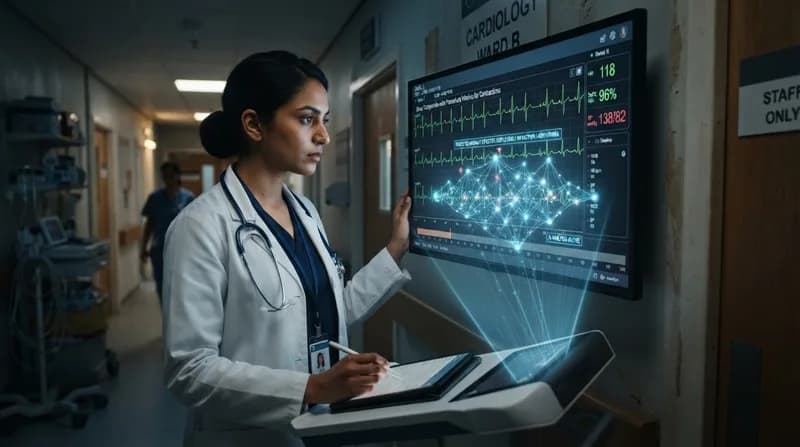
The implications of this technology extend far beyond simple patient sorting. As the researchers continue to collaborate with global medical systems, they are moving toward a clinical trial model where the AI flags high-risk EKG results in real-time. Patients identified by the software may then be offered wearable monitoring patches to provide a more detailed, long-term picture of their cardiac electrical health. This could lead to a fundamental shift in cardiology, moving from reactive emergency intervention to proactive, data-driven prevention.
Ultimately, this research signifies a transition in how medical science approaches complex, systemic threats. By identifying patterns that have eluded human clinicians for decades, the AI is not just functioning as a diagnostic tool, but as a scientific instrument for discovery. It is prompting researchers to investigate the underlying biological causes of these newly identified electrical signals, potentially uncovering entirely new mechanisms of heart failure. As the project moves from the laboratory to the bedside, it offers a glimpse into a future where the most dangerous medical events can be predicted—and prevented—long before they occur.