A Circular Revolution in Battery Manufacturing
General Motors has officially moved beyond the experimental phase of electric vehicle battery recycling, marking a significant milestone by delivering production vehicles to customers equipped with battery cells that utilize 100% recycled cathode active material (CAM). This achievement, realized through a collaborative pilot project with recycling specialist Cirba Solutions, proves that the automotive industry can successfully "close the loop" on battery production by repurposing nickel, cobalt, and manganese recovered from end-of-life battery packs.
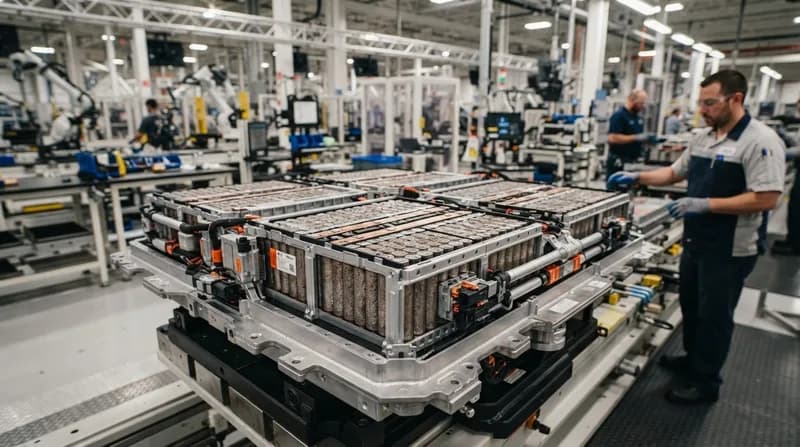
Unlike previous industry trials that often remained confined to lab settings or prototype vehicles, GM’s latest initiative sees these high-performance cells installed in flagship models currently rolling off the assembly line. The process involves collecting decommissioned high-voltage batteries from GM’s diverse EV fleet, including Chevrolet, Cadillac, and GMC brands. Once collected, the batteries undergo mechanical processing to extract "black mass," which is then refined into high-grade cathode materials that meet the same stringent performance, safety, and durability standards as virgin-mined minerals.
Vehicle Integration and Scalability
The transition into series production is being handled by Ultium Cells, GM’s joint venture with LG Energy Solution. These advanced cells are integrated into modules and packs at GM’s high-tech manufacturing hubs, specifically the Factory ZERO and Spring Hill plants. Consumers taking delivery of several key luxury and utility models are now among the first to drive vehicles utilizing these secondary raw materials.
- Cadillac: Lyriq, Lyriq-V, Vistiq, Escalade IQ, and Escalade IQL.
- Chevrolet: Silverado EV Trail Boss.
- GMC: Sierra EV AT4.
The successful deployment across such a wide range of architectures demonstrates the scalability of GM’s recycling workflow. The company reports that current recovery processes allow for the retrieval of up to 95% of nickel, cobalt, and manganese, and up to 80% of lithium. As the population of aging EVs grows, GM expects a massive influx of secondary material, which will stabilize supply chains and reduce reliance on newly mined resources.
Why It Matters
The implications of this breakthrough extend far beyond the environmental benefits. By establishing a localized, circular supply chain within North America, GM is shielding itself from the volatility of global commodity markets and the geopolitical risks associated with mining rare earth metals. This vertical integration is a strategic hedge against long-term cost fluctuations in battery production.
Furthermore, GM’s multi-stage sustainability strategy emphasizes longevity. The company plans to prioritize keeping batteries in service for as long as possible through refurbishment or repurposing for stationary energy storage—such as their planned work with Redwood Materials—before finally resorting to full-scale recycling. This phased approach ensures that every kilowatt-hour of battery life is maximized before the raw materials are reclaimed for the next generation of electric mobility.
Industry Context and Outlook
While competitors like Porsche are also making strides in this arena—recently partnering with Cylib to produce recycled-material cells—GM has currently taken the lead in market integration. While Porsche is still performing essential validation on prototype vehicles, GM’s decision to move directly into the customer-facing market highlights a high level of confidence in the quality and safety of their recycled material. As recycling technology matures and the volume of processed material increases, these closed-loop systems are poised to become the standard, rather than the exception, in the global race toward sustainable transportation.