Scaling Intelligent Infrastructure
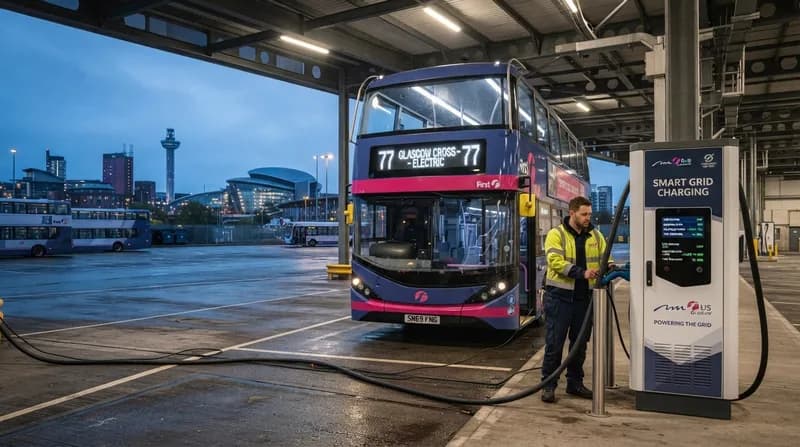
In a significant move for heavy-duty electric vehicle adoption, UK transport giant First Bus has announced the full-scale deployment of a smart charging system at its Caledonia depot in Glasgow. Following a successful pilot program that originally involved just 34 charging points, the system has been expanded to manage all 172 outlets. This transition signals a pivot from simple EV charging to sophisticated energy asset management, leveraging proprietary technology from energy specialists Optimo Energy.
The core objective is to balance the demanding operational needs of a massive electric bus fleet with the volatile realities of the electrical grid. By utilizing predictive algorithms, the system forecasts the specific energy requirements for each individual vehicle based on its duty cycle. This ensures that every bus is adequately charged for its scheduled route, while simultaneously creating a dynamic buffer that allows the depot to react to real-time grid conditions.
Why Grid Balancing Matters
The Caledonia facility serves as a primary example of how fleet operators can navigate grid constraints. While the depot commands a massive potential charging load of 12 megawatts, it is restricted by a 5-megawatt grid connection. Without an intelligent management layer, the simultaneous charging of buses would easily overwhelm the site's power capacity. Optimo’s solution avoids these bottlenecks by modulating charging speeds and timing, effectively smoothing out power consumption spikes.
Furthermore, the system transforms the depot into a participant in energy flexibility markets. When renewable energy generation is high or grid demand is low, the system can ramp up charging. Conversely, during periods of peak demand, it can throttle consumption, or even sell stored energy back to the grid. This capability effectively turns a traditional cost center—fleet charging infrastructure—into a potential revenue-generating asset that benefits both the operator and the local utility infrastructure.
Technical Integration and Benefits
- Full Coverage: The system now monitors and manages all 172 charging stations at the Caledonia site.
- Constraint Optimization: Operates efficiently within a 5MW grid connection despite a 12MW peak load requirement.
- Dynamic Scheduling: Charging priority is determined by route requirements, electricity market pricing, and grid stress levels.
- Grid Services: Enables the depot to participate in flexibility markets, supporting grid stability during high-demand events.
By treating its fleet as an interconnected energy system, First Bus is setting a benchmark for future urban transport electrification. This proof-of-concept demonstrates that large-scale electric transitions do not necessarily require massive upgrades to physical power grids, provided that intelligence and software are deployed to manage energy flow effectively.