The Rising Tide of Driver Negligence
The intersection of advanced driver-assistance systems and human behavior has reached a critical flashpoint. U.S. Representative Raja Krishnamoorthi has officially petitioned the Department of Transportation and the National Highway Traffic Safety Administration (NHTSA) to launch a rigorous inquiry into the misuse of Tesla’s Full Self-Driving (FSD) software. This legislative push follows a troubling investigation that uncovered at least 43 documented instances of drivers caught sleeping behind the wheel, with 13 additional citations issued in California alone, highlighting a pattern of dangerous complacency among vehicle owners.
As Tesla’s software continues to improve, some users have increasingly treated the Level 2 driver-assistance system as a fully autonomous chauffeur, ignoring the company’s explicit instructions and the law. This trend of “lackadaisical” driving has sparked a heated debate regarding whether Tesla’s current monitoring hardware is sufficiently robust to detect and deter such behavior, or if the marketing of these systems has fundamentally misled the public regarding their actual capabilities.
The Technological Tug-of-War
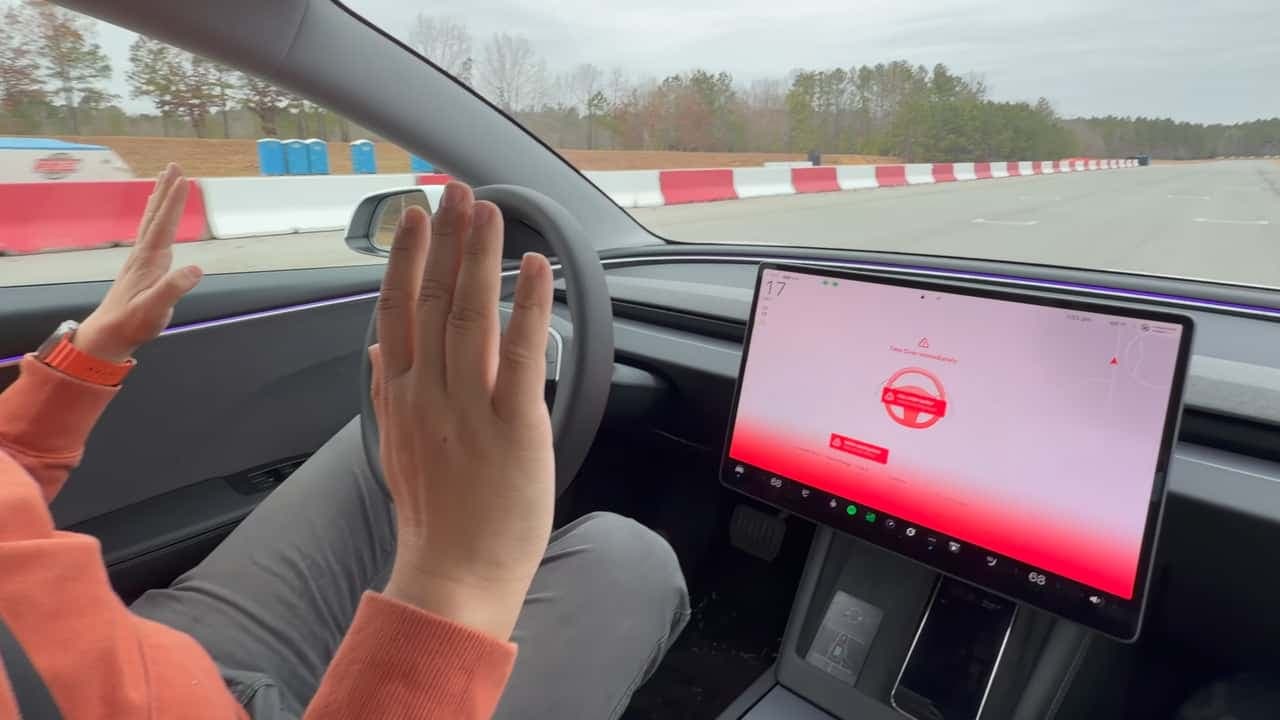
Tesla currently employs a multi-faceted approach to driver monitoring. The system utilizes a cabin-facing camera to track eye gaze and head movement, while simultaneously sensing torque inputs on the steering wheel to ensure the driver remains engaged. When the vehicle detects a lack of attention, it issues a series of audible and visual “nags” to prompt a response. However, this has devolved into a high-stakes game of cat-and-mouse, as some users have developed sophisticated, albeit dangerous, workarounds. Reports indicate that drivers have utilized everything from sunglasses and photographic cutouts to specific hardware modifications designed to fool the interior sensors.
This creates a complex dilemma for the automaker: the “nag” must be frequent enough to ensure safety, yet unobtrusive enough to keep the feature appealing for the millions of subscribers who pay a monthly fee for the service. Critics argue that the prioritization of a frictionless user experience—potentially tied to corporate performance incentives—might be compromising critical safety redundancies that are supposed to keep drivers focused on the road.
Why It Matters
- Regulatory Oversight: The demand for an investigation forces the NHTSA to define the threshold for acceptable driver-assistance monitoring versus active negligence.
- Liability and Safety: As manufacturers push for higher levels of autonomy, the burden of proof for system effectiveness and safety, even in Level 2 systems, is shifting toward the automakers themselves.
- Safety Defect Potential: A key aspect of the current inquiry is whether the widespread bypass of safety features constitutes a broader systemic defect that could necessitate a recall or a fundamental software overhaul.
Outlook and Future Implications
While the NHTSA is already engaged in an active, wider investigation into millions of FSD-equipped vehicles, Rep. Krishnamoorthi’s specific focus on driver misuse adds a layer of urgency to the regulatory dialogue. The congressman is seeking transparency on the data collected by the agency regarding these incidents and is pushing for a clear assessment of whether current deterrents are sufficient. As the industry advances toward more capable autonomous driving, the pressure is mounting on regulators to establish ironclad standards that prevent drivers from delegating their safety to software that, at its current stage, still demands constant, undivided human supervision.