The Path to Hydrogen Integration
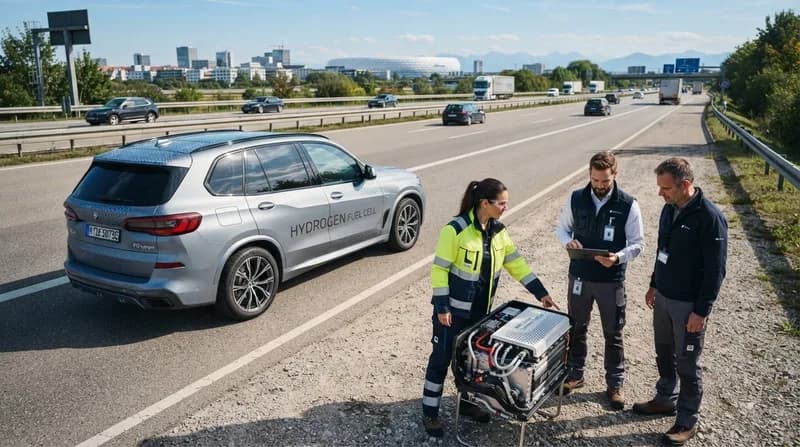
BMW is doubling down on its commitment to a "technology-open" strategy, officially launching the testing phase for its next-generation iX5 Hydrogen SUV. While the global automotive landscape is heavily skewed toward battery-electric vehicles (BEVs), BMW continues to advocate for hydrogen fuel cell technology as a viable alternative for high-performance, long-distance motoring. The new model, based on the fifth generation of the iconic X5 (internally designated G65), is currently undergoing rigorous evaluation at BMW’s specialized testing facility in Aschheim, near Munich.
This development follows a previous pilot program that utilized 100 converted fourth-generation X5 models. By deploying that initial fleet, engineers were able to gather critical real-world data on fuel cell performance, which is now being funneled into the refinement of the upcoming production-ready 2028 model. BMW has confirmed that the industrialization process is moving forward in tandem with testing, with assembly efforts currently underway at the company’s Hydrogen Competence Centre in Munich and its engine plant in Steyr, Austria.
Engineering the 'Energy Master'
A core component of this project is the sophisticated orchestration of the fuel cell system, the high-voltage battery, and the electric drivetrain. To manage these complex components, BMW has developed a central control unit known as the "Energy Master." Pre-series production of this critical hardware has already commenced at the BMW plant in Landshut, ensuring that the necessary infrastructure for volume manufacturing is in place well before the vehicle hits the market.
The Bavarian automaker is supported in these efforts by a €273 million funding package from the German federal government and the Free State of Bavaria. This investment, tied to the HyPowerDrive project, underscores the strategic importance of domestic fuel cell industrialization. By building out a complete supply chain for hydrogen components, BMW aims to ensure that the iX5 Hydrogen delivers the same level of reliability and driving engagement expected of any vehicle bearing the BMW badge.
Why it Matters
- Performance Parity: BMW is targeting a 0-100 km/h sprint time of under five seconds, aiming to match the acceleration and driving dynamics of its battery-electric counterparts.
- Strategic Diversity: By offering petrol, diesel, plug-in hybrid, BEV, and hydrogen fuel cell options, BMW is hedging its bets against infrastructure bottlenecks and varying regional energy policies.
- Range Capabilities: The hydrogen variant is projected to offer an impressive 750 km range, targeting the long-haul segment where rapid refueling is a competitive advantage over slower plug-in charging times.
The Road Ahead
As the automotive industry evolves, the role of hydrogen in passenger vehicles remains a subject of intense debate. Critics often point to the comparative scarcity of hydrogen refueling infrastructure versus the growing density of high-speed charging networks. BMW, however, views these technologies as complementary rather than mutually exclusive. With a target launch date of 2028, the iX5 Hydrogen serves as a proof-of-concept for the viability of hydrogen in a premium SUV package. Whether this strategy will resonate with the mass market remains to be seen, but the ongoing prototype testing suggests that BMW is prepared to bring fuel cell technology to the mainstream on its own terms.