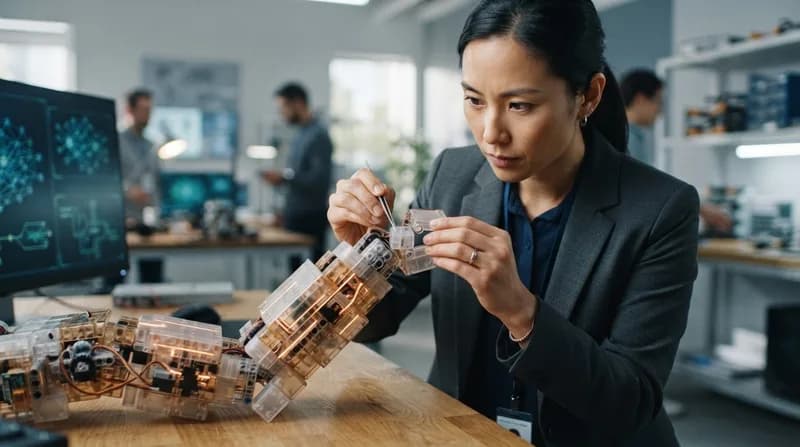
The Building Blocks of a New Era
For years, the technology sector has been searching for the elusive 'ChatGPT moment' for robotics—that singular breakthrough where machines suddenly bridge the gap between niche automation and ubiquitous utility. According to Amulya Vishwanath, founder of Techable Ventures, we aren't quite there yet. Instead, the industry is currently navigating what she describes as the 'LEGO era' of physical AI.
Vishwanath, who spent seven years at the helm of product marketing at Nvidia before transitioning into venture capital, emphasizes that we are currently in a phase of foundational reconfiguration. Just as the internet era required a massive infrastructure of protocols and hardware before the consumer web could flourish, modern robotics is undergoing a total rethinking of its building blocks. Companies are moving away from monolithic designs to focus on perfecting individual components, such as sophisticated robotic hands and advanced actuators, which will eventually serve as the interoperable pieces of a more complex future.
Why it Matters: The Scaling Challenge
- Modular Innovation: By treating robotics like LEGOs, developers can iterate on specific functions—like tactile sensing or fluid motion—without having to overhaul entire systems, allowing for faster R&D.
- Infrastructure Over Hype: While the public waits for a single revolutionary robot, the real value is being built in the 'boring' foundational software and hardware layers that provide the necessary reliability for scaling.
- The Talent War: With giants like Nvidia and Anthropic absorbing top-tier engineering talent, smaller startups are facing a competitive squeeze. Specialized firms are now prioritizing human capital as much as technical breakthroughs to stay relevant.
Strategic Implications for Founders
The transition into this modular landscape is not just a hardware trend; it is a fundamental shift in how robotics startups are being valued. Vishwanath suggests that the companies winning in this market are those that recognize they are not just building a product, but contributing to an ecosystem. This is why connecting founders with elite talent has become the primary 'moat' for firms like Techable Ventures. The ability to recruit specialized engineers who understand both software logic and physical actuation is the critical hurdle that separates companies poised for long-term growth from those struggling in the lab.
As these specialized components continue to advance, the path toward general-purpose robotics looks increasingly certain. History has shown us this pattern before during the Industrial Revolution and the early internet boom, where fragmented innovations eventually coalesced into a unified, transformative platform. For robotics, the wait for a 'ChatGPT moment' might be a distraction from the reality that the real revolution is happening in the methodical assembly of its core components.