Expanding the Biotech Ecosystem
OpenAI has officially announced the acquisition of Orchestra Bio, a specialized four-year-old startup that has carved out a niche in the intersection of artificial intelligence and biotechnology. While the financial details of the deal remain undisclosed, the move marks a significant shift in OpenAI’s strategy as it pivots from general-purpose foundation models to highly verticalized, industry-specific AI solutions. Prior to this integration, Orchestra Bio had garnered roughly $20 million in venture funding, supported by notable firms including Andreessen Horowitz, Atria, and 8VC.
Orchestra Bio’s primary contribution to the field involves the development of specialized AI agents designed to handle the often cumbersome operational logistics of drug discovery. Rather than focusing solely on molecular simulation, the startup focused on the administrative and operational "minutiae" that often slow down clinical trials, such as complex financial tracking, resource allocation, and scheduling bottlenecks. By folding this technology into its corporate structure, OpenAI is looking to streamline the end-to-end lifecycle of pharmaceutical research.
Boosting the Rosalind Platform
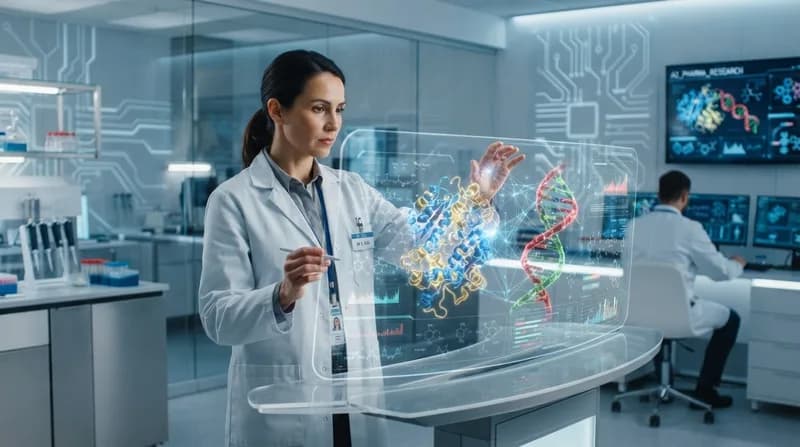
The acquisition is aimed directly at accelerating the development of "Rosalind," OpenAI’s proprietary AI model for life sciences. The company intends to integrate Orchestra Bio’s technology into both the Rosalind model and the accompanying Rosalind Workbench. This suite acts as an all-encompassing research harness, designed to help scientists plan experimental workflows and synthesize large, complex data sets more efficiently.
The timing of the acquisition appears strategic, following OpenAI's successful recruitment of high-profile industry partners. With major pharmaceutical powerhouses like Moderna and Novo Nordisk already utilizing the Rosalind platform, OpenAI is clearly positioning itself to become the backbone of modern pharmacological R&D. By absorbing a company that knows the granular pain points of researchers, OpenAI is attempting to reduce the friction that often exists between software developers and laboratory scientists.
Why It Matters
- Vertical Integration: This deal highlights a broader trend where frontier model labs are moving beyond foundational software to build vertical-specific platforms that serve heavy industry.
- Strategic Consolidation: Instead of launching competing software and forcing startups to pivot or fold, OpenAI is opting to acquire specialized expertise, effectively buying its way into institutional workflows.
- Enterprise Adoption: By solving operational problems like clinical trial scheduling, OpenAI is making its AI models indispensable to the actual business of science, not just the experimental phase.
The move also addresses the persistent fear among early-stage companies that large AI labs will eventually cannibalize their market share. In this instance, Orchestra Bio is moving under the OpenAI umbrella, ensuring its core technology will be integrated into the industry’s most sophisticated research tools rather than being rendered obsolete by new feature releases from the parent company.