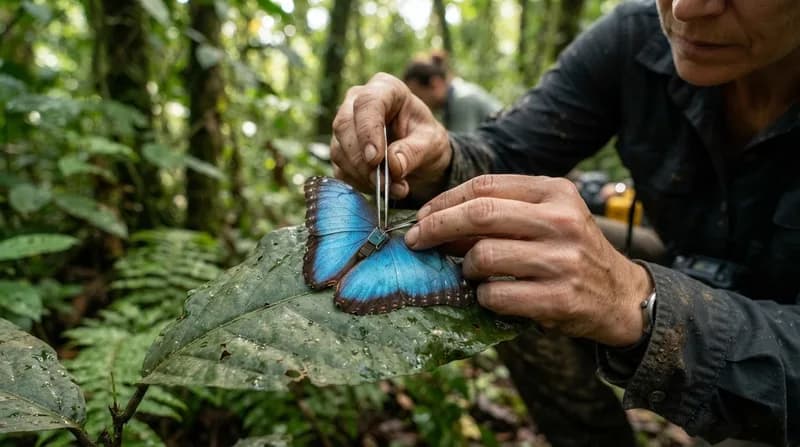
The Crisis of Invisible Diversity
Insects are the hidden architects of our natural world, performing essential services that range from pollinating over 80 percent of wild plant species to anchoring the food webs that sustain birds and mammals. Despite their foundational importance, these creatures face a silent extinction crisis. The global scientific community has largely relied on data from temperate regions, which account for only 20 percent of global insect diversity. This geographical bias leaves the tropics—home to over 80 percent of all insect species—in a dangerous blind spot for conservation policy.
Led by Dr. Shawan Chowdhury at Monash University’s Global Change Ecology Lab, an international research consortium has identified a major culprit for this imbalance: 'parachute science.' This model, wherein researchers from developed nations enter tropical regions to collect data and return home without fostering local scientific capacity or equitable partnership, has left major gaps in our knowledge. To bridge this divide, researchers have published a new global framework in the journal BioScience that moves away from extraction-based research toward a collaborative, multi-source strategy.
The Four Pillars of Conservation Failure
The research team pinpointed four critical barriers that have historically throttled progress in tropical insect conservation: poor visibility of existing local research, significant gaps in geographical data, inadequate physical and scientific infrastructure, and a lack of direct conservation action. Currently, the Global Biodiversity Information Facility receives roughly 26 percent of its insect distribution data from the United Kingdom alone, a stark testament to the data imbalance that leaves tropical ecosystems largely unmonitored.
To dismantle these hurdles, the new framework advocates for a democratic approach to data. Instead of relying solely on high-impact international journals, the strategy emphasizes the inclusion of non-English publications, grey literature, regional museum collections, and even unconventional data sources. By integrating citizen science initiatives and social media observations with traditional biological monitoring, the researchers believe we can map species distributions more accurately than ever before, even in resource-limited environments.
Lessons from the Bangladesh Case Study
Bangladesh serves as a living laboratory for this new methodology. As a densely populated tropical nation, it faces significant challenges in documenting its biodiversity. In analyzing studies concerning local butterfly populations, researchers found that out of 111 relevant scientific papers, only 34 were published in international journals. The remaining research, often trapped in local reports, contained vital clues regarding species presence and ecological health.
Perhaps most strikingly, the study highlighted the utility of social media as an untapped repository of scientific value. Researchers discovered that records shared on Facebook by citizens covered 167 out of 169 threatened butterfly species identified in the country. This finding proves that by synthesizing disparate sources—local expertise, digital citizen contributions, and traditional academic rigor—nations can begin to make informed conservation decisions immediately, rather than waiting for large-scale funding or perfect data sets to materialize.
Toward a Sustainable Future
The core objective of this framework is to replace the antiquated 'parachute' model with a focus on locally-led initiatives. By prioritizing investment in regional taxonomic expertise, permanent collection facilities, and long-term monitoring infrastructure, the strategy seeks to empower local communities. This ensures that the benefits of conservation research accrue to the regions where the insects reside, ultimately linking scientific output more effectively to actionable policy.
Protecting these insects is not merely an academic exercise in cataloging biology; it is a critical requirement for global food security, ecosystem resilience, and human well-being. As Dr. Chowdhury and his colleagues emphasize, if international biodiversity targets are to be met, the tropics must transition from being a passive source of data to being the lead actors in their own ecological preservation.