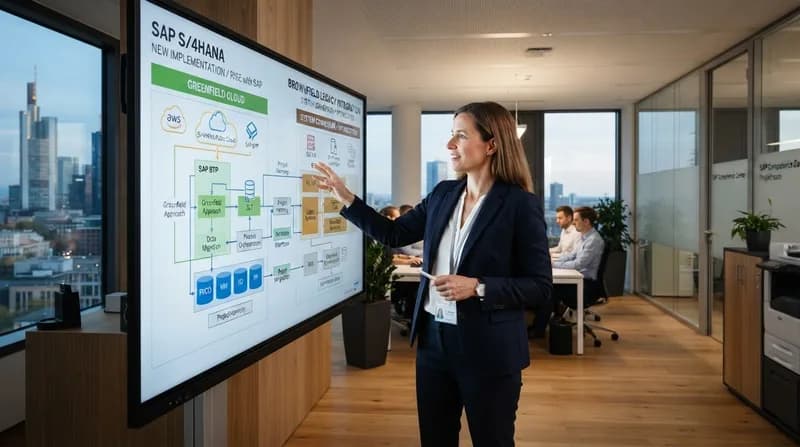
The Shift from Greenfield to Brownfield
German industrial giant Zeiss Group has officially abandoned its ambitious “greenfield” migration strategy to SAP’s modern S/4HANA platform. For years, the company had been attempting a clean-slate overhaul of its outdated R/3 ERP system, which dates back to the early 1990s. The move marks a significant pivot in corporate IT strategy, as the company transitions toward a “brownfield” migration—a process that focuses on moving existing system landscapes into the new environment rather than rebuilding them from the ground up.
This strategic realignment comes after years of intensive effort to modernize core business operations. While a greenfield approach promised to strip away decades of accumulated technical debt and messy customizations, it proved to be a formidable, costly, and time-consuming endeavor. By opting for a brownfield path, Zeiss aims to achieve faster progress while still benefiting from the updated S/4HANA architecture, effectively prioritizing velocity over the idealized “clean-core” model long promoted by SAP.
Why It Matters
The challenges faced by Zeiss highlight a broader industry trend where major corporations struggle to modernize legacy software without disrupting complex, mission-critical business processes. SAP’s S/4HANA, while technically superior with its in-memory processing capabilities, often presents a massive barrier to entry for firms reliant on deep-seated R/3 or ECC systems.
- Technical Debt: Decades of unique, bespoke customizations make “starting over” with standard processes highly disruptive to established workflows.
- Rising Costs: The financial pressure of maintaining dual environments, combined with high consulting and implementation fees, has led to visible spikes in administration expenses for companies like Zeiss.
- Legacy Deadlines: With mainstream support for SAP’s older ECC systems set to expire in 2027, the pressure on global enterprises to find a viable, non-catastrophic migration path is becoming critical.
A Hybrid Path Forward
Under the new, realigned project plan, Zeiss will migrate its current ERP landscape to the S/4HANA foundation directly. Once the core system is established, the company plans to layer on individually configured solutions tailored to the specific needs of its diverse business segments. This hybrid strategy is intended to provide a unified group-wide core while allowing for the necessary flexibility that individual segments require to maintain operational efficiency.
The company maintains that this approach will better reflect both the similarities and the unique differences in their processes, ultimately serving their various segments more effectively. While Zeiss has declined to comment on the specific financial investment poured into the initial greenfield attempt, the pivot serves as a cautionary tale for global firms attempting to balance modernization with the harsh reality of enterprise-scale software deployment.