The Rise of Carbon-Capturing Infrastructure
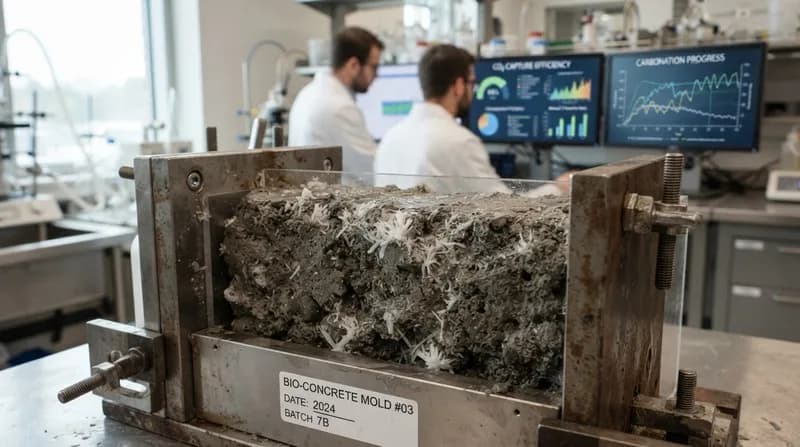
Concrete is the backbone of modern civilization, but its production is notoriously carbon-intensive. Now, researchers at Mepco Schlenk Engineering College have unveiled a promising solution that turns this ubiquitous construction material into an environmental asset. By integrating specific natural additives into standard M35 grade concrete, the team has created a composite that not only surpasses conventional building standards in durability but also actively scrubs carbon dioxide from the surrounding environment.
The Secret Ingredients: Zeolite and Bamboo Biochar
The innovation relies on the synergy between two natural, porous materials: zeolite and bamboo biochar. Zeolite, a mineral known for its complex, microporous alumina-silicate structure, acts as a molecular sieve. When paired with bamboo biochar—a carbon-rich material created through the thermal decomposition of bamboo—the resulting concrete matrix gains a significantly larger surface area, allowing it to trap gas molecules efficiently.
In experimental testing, the researchers evaluated various formulations, ultimately identifying the 'ZB5' mixture—consisting of 50% zeolite replacement and 1% bamboo biochar—as the optimal balance. This specific ratio created a denser internal matrix, which the team believes is responsible for the material's superior mechanical properties. The interaction between the mineral structure and the biochar particles appears to reinforce the binding process, resulting in a more resilient final product.
Performance and Environmental Impact
The technical results of the ZB5 formulation are striking for a material that also functions as a carbon sink. Compared to standard concrete, the modified version showed a 7.48% increase in compressive strength, reaching 38.49 MPa, and a 15% improvement in split tensile strength at 4.39 MPa. These metrics confirm that the addition of eco-friendly materials does not necessitate a compromise in structural integrity.
Beyond strength, the material demonstrated measurable climate benefits. In a carbonation chamber setting, the concrete captured 1.2 grams of CO2 per day. Over a week-long observation period, researchers noted that the captured gas penetrated 15 mm into the material's surface. This suggests that as structures age, they continue to pull CO2 from the atmosphere, effectively turning roads, highway barriers, and pipelines into passive air-cleansing agents.
Why It Matters
- Dual Utility: It proves that construction materials can perform a secondary function as environmental remediation tools.
- Sustainability: By utilizing natural additives like bamboo biochar, the process aligns with broader goals of reducing the carbon footprint of the building sector.
- Infrastructure Versatility: The material is specifically designed for high-emission areas such as urban roadways and industrial zones where CO2 concentration is highest.
The Road to Commercialization
While these findings represent a significant proof of concept, the transition from laboratory to job site requires further validation. Future research efforts will focus on the long-term durability of the material, assessing whether the concrete maintains its strength and carbon-uptake capacity over several years. Additionally, the team plans to explore other variations of biochar and investigate whether pre-soaking the biochar can further enhance the concrete's performance. As the industry faces increasing pressure to move toward carbon-neutral construction, this breakthrough offers a glimpse into a future where our buildings might play an active role in healing the climate.