Scaling the Sustainable Last Mile
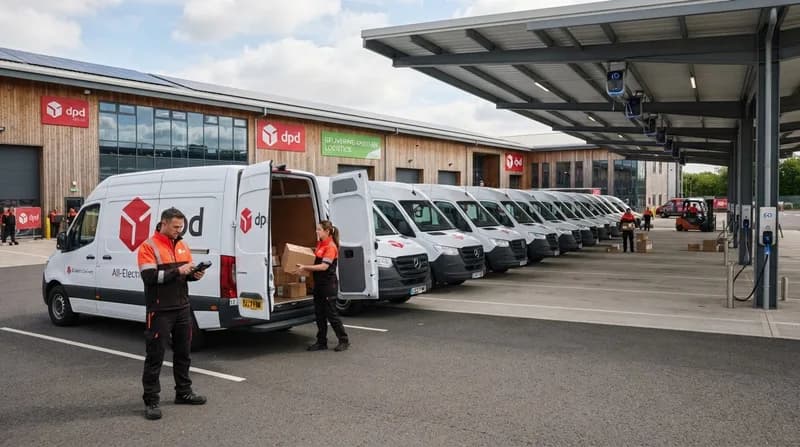
As the holiday shipping season approaches, DPD UK is significantly bolstering its logistics capabilities with a massive infusion of new hardware. The parcel giant has finalized an order for 341 Mercedes-Benz eSprinter vans, a move designed to push their total electric vehicle count past the 4,000-unit threshold. These vehicles, slated for full deployment by the end of October, represent a critical pivot from localized city-center operations to broader, regional distribution routes.
The procurement was managed through eStar, a prominent Mercedes-Benz commercial dealer, and underscores a shift in how fleet operators evaluate electrification. According to company leadership, the decision was not merely about purchasing zero-emission hardware; it was a holistic calculation involving the entire service lifecycle, maintenance protocols, and operational reliability. By selecting the eSprinter, DPD aims to ensure that their ambitious sustainability targets are met without compromising the intense delivery demands of the UK market.
Expanding Operational Boundaries
Historically, electric commercial vehicles were often relegated to short-range urban routes due to battery constraints. However, the modern eSprinter is engineered to break these limitations. By utilizing advanced battery configurations—which in the UK market can reach up to 113 kWh—these transporters are now capable of handling routes that extend well beyond the M25 orbital motorway. This leap in range allows DPD to effectively transition larger, heavy-duty logistics tasks from fossil-fuel-burning engines to electric drivetrains.
A major technical advantage in the UK market is the regulatory allowance that permits electric vans to have a gross vehicle weight of up to 4.25 tonnes for holders of standard car driving licenses. This effectively offsets the weight penalty of large battery packs, allowing the eSprinter to maintain payload parity with traditional 3.5-tonne diesel vans. This regulatory environment is crucial for logistics firms, as it ensures that the shift to electric power does not result in a reduction of daily parcel capacity.
Context and Future Outlook
- Total Fleet Growth: With this new influx, DPD’s electric fleet is projected to exceed 4,300 vehicles, a testament to years of steady, if occasionally revised, electrification efforts.
- Strategic Partnership: The involvement of eStar as a dedicated service partner highlights the growing importance of maintenance networks in the EV era, where uptime is as vital as the vehicle itself.
- Broadening Scope: Beyond serving London and other dense urban centers, the eSprinter’s performance characteristics allow the carrier to bring electric delivery to more diverse regional areas.
Looking ahead, the integration of these 341 units serves as a barometer for the logistics industry's broader transition. While DPD has faced challenges in meeting early, aggressive fleet-growth targets, the steady adoption of industry-leading hardware like the eSprinter demonstrates a commitment to long-term carbon reduction. As battery technology continues to mature, it is likely that the remaining diesel segments of the company’s last-mile operations will face increasing pressure to modernize, further cementing the role of high-capacity electric vans in the global supply chain.