Revolutionizing the Production Pipeline
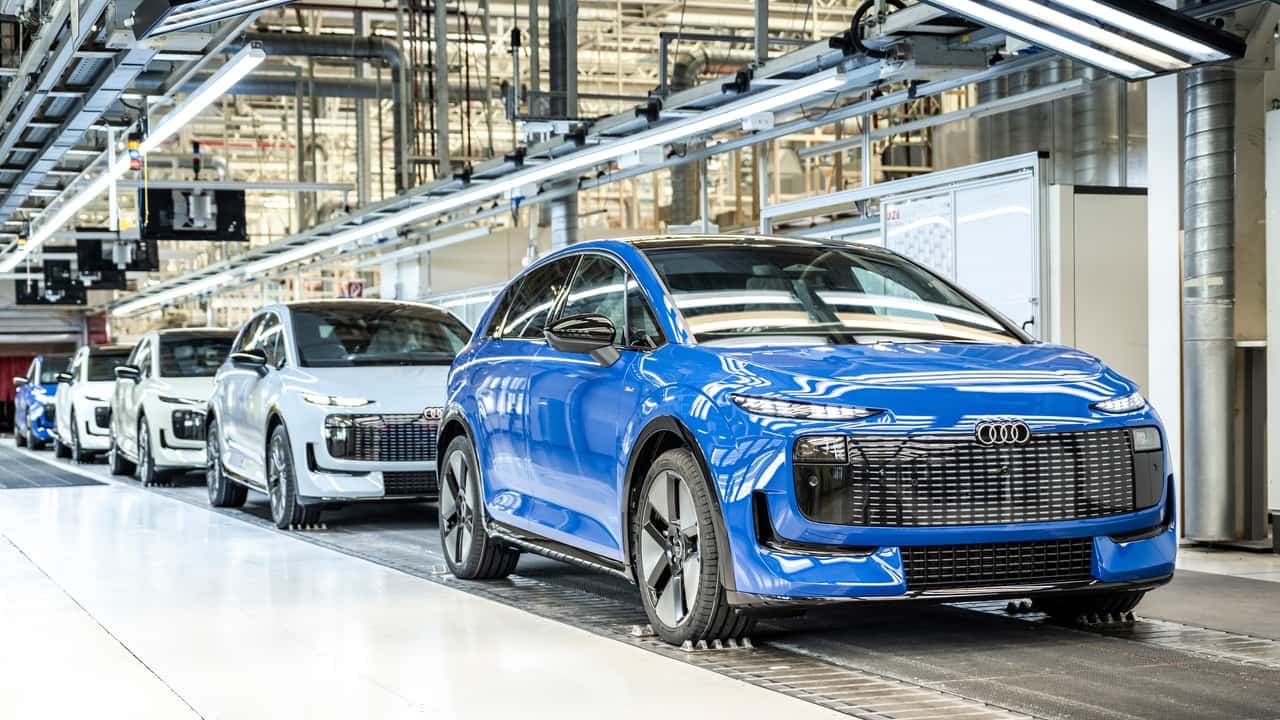
In a major shift for the automotive industry, Audi has unveiled the new A2 e-tron, a model that reached production readiness an astonishing 21 months faster than its predecessors. Historically, traditional automakers have required a gestation period of five to seven years to take a concept from the drawing board to the assembly line. By fundamentally rethinking how cars are built, Audi has successfully closed that gap, signaling a new era of agility at its historic Ingolstadt headquarters.
Rather than simply increasing staff or hiring more engineers, Audi focused on aggressive process optimization. The company reduced the total number of parts required for the build and restricted the number of vehicle versions, which significantly lowered the complexity of the logistics chain. This streamlining ensures that the assembly line maintains a blistering pace, free from the bottlenecks that typically plague large-scale vehicle launches.
The "String-of-Pearls" and Advanced Automation
A core component of this success is the implementation of the "string-of-pearls" production principle. Originally trialed at the Neckarsulm facility, this system synchronizes customer orders with supplier logistics six days prior to assembly. By forcing suppliers to ship components in the exact sequence in which the vehicles are built, Audi has minimized warehouse inventory and ensured a seamless flow of materials directly to the line.
The physical assembly process at Ingolstadt has also seen a digital and mechanical upgrade. Audi now shares body production facilities between the A2 e-tron and the A3 hatchback, reusing over 1,200 components—including heavy-duty welding arms and nearly 250 robots. By upgrading existing hardware rather than commissioning bespoke tools for every new project, the automaker has created a flexible, highly efficient environment that can adapt to new models with minimal downtime.
Why it Matters
- Operational Efficiency: By cutting development time by nearly two years, Audi is positioning itself to respond to market shifts with the speed of newer, EV-native rivals.
- Capital Reinvestment: Leveraging existing infrastructure and robots allows the company to focus resources on software and battery tech rather than repetitive physical tooling.
- Logistical Precision: The "string-of-pearls" system reduces the physical footprint required for on-site parts storage, turning the factory into a more streamlined, productive space.
The Future of Manufacturing
Beyond the logistical gains, Audi has pushed deeper into automation to replace manual labor in critical areas. A standout advancement is the fully automated wheel installation process. Previously, chassis preassembly for front and rear axles relied on semi-automated bolting stations; the new system removes the need for manual oversight in this high-frequency task, ensuring tighter tolerances and faster cycle times.
As the electric vehicle market continues to evolve, Audi’s ability to meld legacy production expertise with the agility of "China speed" will be a critical benchmark. The A2 e-tron serves as a tangible proof-of-concept that demonstrates how traditional giants can modernize their operations to compete effectively, proving that long-standing experience, when paired with modern automation and intelligent sequencing, remains a formidable advantage in the global EV arms race.