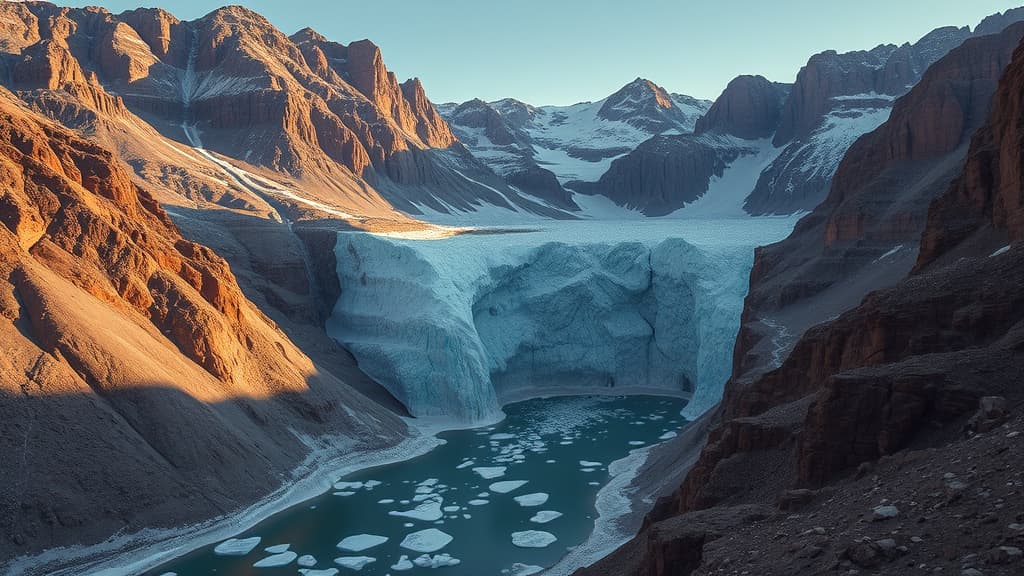
Researchers from the University of Utah have made a groundbreaking discovery of a glacier hidden beneath Mount Timpanogos. This glacier is largely composed of ice, holding enough water to fill approximately 600 Olympic swimming pools. The findings highlight the glacier's unique structure and underscore its potential as a significant water reservoir, revealing hidden ice reserves throughout the Wasatch and Uinta mountain ranges.
Key Findings
- The Timpanogos Rock Glacier consists of 83% ice and 17% loose rock, with an estimated volume of about 1.5 million cubic meters of frozen water.
- Gravity measurements taken at 232 locations demonstrated notable density differences between the surrounding rock and the concealed ice, aiding in the creation of a 3D map of the glacier.
- This discovery underscores a broader awareness about the estimated 48 gigatons of ice found in about 50,000 rock glaciers worldwide, with Utah alone estimated to contain around 1 gigaton.
- The research suggests that rock glaciers are modern ice reserves formed after the Ice Age, challenging previous beliefs that they are merely remnants from the last glacial period.
- Additionally, a predictive model correlating rock glacier surface area to ice volume has been developed, enhancing our understanding of mountain hydrology.
This study adds a new dimension to our comprehension of freshwater reserves in mountainous regions, emphasizing the importance of monitoring rock glaciers as climate change affects their stability and volume. Such findings not only contribute to academic research but also have implications for local water management strategies.