ScienceTechnical Deep Dive

Cosmic Powerhouses: Supermassive Black Hole Winds Are 100 Times Stronger Than Previously Estimated

Published
EElectricBuzz Editorial Team
Cosmic Powerhouses: Supermassive Black Hole Winds Are 100 Times Stronger Than Previously Estimated
3 min read534 wordsElectricBuzz Editorial Team

The Gist

New observations from the XRISM satellite reveal that supermassive black holes unleash titanic winds capable of reshaping the cosmic landscape on a massive scale.

Unveiling a New Understanding of Quasars

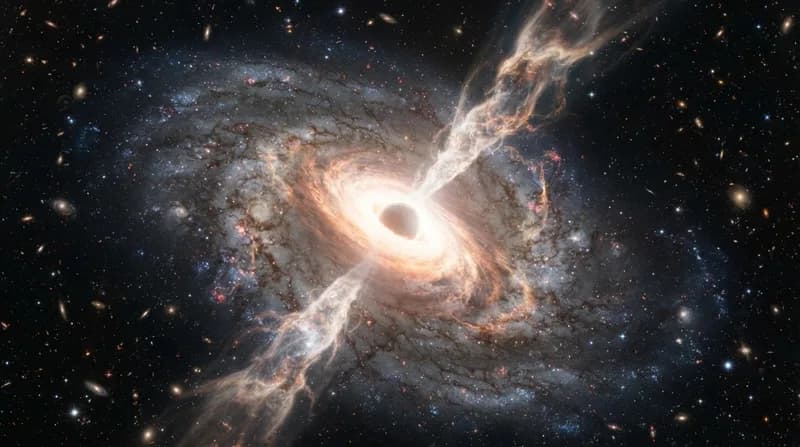
For decades, the scientific community has held a somewhat narrow view of supermassive black holes: cosmic vacuum cleaners that exist solely to pull in surrounding matter. However, recent observations conducted by an international team led by researchers at Tohoku University have shattered this perception. By studying the distant quasar H1821+643, located 3.4 billion light-years away in the constellation Draco, astronomers have discovered that these celestial titans are also prolific engines of destruction and expansion, capable of ejecting winds 100 times more powerful than previous models suggested.

This revelation comes from precise data captured by the X-ray Astronomy Satellite (XRISM). By monitoring the iron ion emission lines within the hot, X-ray-emitting gas surrounding the quasar, researchers mapped the movement of energy within the galaxy cluster. The data indicated that the black hole is not merely consuming gas, but is instead acting as a violent agitator, stirring the environment into a state of extreme turbulence that radiates far beyond the confines of its host galaxy.

The Scale of Galactic Turbulence

The sheer magnitude of these findings is difficult to overstate. Researchers discovered that the turbulence driven by the black hole’s winds extends across a staggering 300,000 light-years. To put this into perspective, the impact zone of these winds dwarfs the galaxy that hosts the black hole itself, effectively influencing the surrounding cosmic environment and the structure of the entire galaxy cluster.

The energy required to sustain this level of widespread turbulence is astronomical. According to the study, the power output of these winds is equivalent to the combined energy release of several billion supernova explosions. This discovery confirms that black holes act as primary architects of the universe, transporting vast amounts of matter and energy that shape the evolution of galaxies and the distribution of elements across the cosmos.

Why It Matters

  • Redefining Galactic Evolution: Previously, it was believed that black hole winds were contained within the host galaxy. This finding proves that their influence extends into intergalactic space, potentially preventing or promoting star formation in neighboring regions.
  • Energy Transport: The study provides the first concrete evidence that black holes serve as a primary transport mechanism for energy across the cosmic web, moving gas and heat far from their point of origin.
  • Scientific Validation: This discovery highlights the critical importance of the XRISM satellite, which offers the high-resolution X-ray spectroscopy needed to measure gas dynamics at such immense distances.

Implications for Future Astrophysics

The publication of these findings in Nature Astronomy marks a turning point in our understanding of 'quasar-mode feedback.' As we move forward, these results suggest that our models of galaxy cluster development must account for these powerful, far-reaching winds. Future observations are expected to investigate whether this level of energy output is a universal trait of all supermassive black holes or if it is specific to highly active quasars.

By fundamentally changing how we perceive the relationship between a black hole and its host environment, this research invites a complete reassessment of how matter and energy circulate through the universe. As observational technology improves, the next chapter of astrophysics will likely focus on mapping these invisible, high-energy rivers that sustain and transform the structure of space itself.

The 5 Best Over-Ear ANC Headphones of 2026, Tested & Ranked
Editor's Pick Guide
92/100
Tech & Gadgets12 min read

The 5 Best Over-Ear ANC Headphones of 2026, Tested & Ranked

We locked five over-ear ANC picks for 2026 — Sony WH-1000XM6, Bose QuietComfort Ultra 2, Soundcore Space One, Sennheiser Momentum 5, and Apple AirPods Max 2 — then stress-tested them on lab metrics, long-term owner truth, and live street prices.

Related Stories

Semantically matched articles, ranked by topic overlap and freshness.

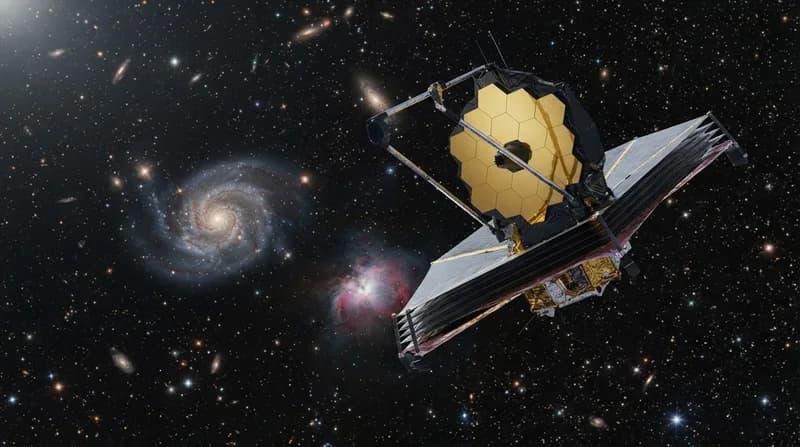
NASA's Roman Space Telescope Set for Two Decades of Cosmic Discovery
Science

NASA's Roman Space Telescope Set for Two Decades of Cosmic Discovery

Thanks to exceptional launch precision and significant fuel savings, the Nancy Grace Roman Space Telescope is poised to more than double its mission life, potentially operating for over 22 years.

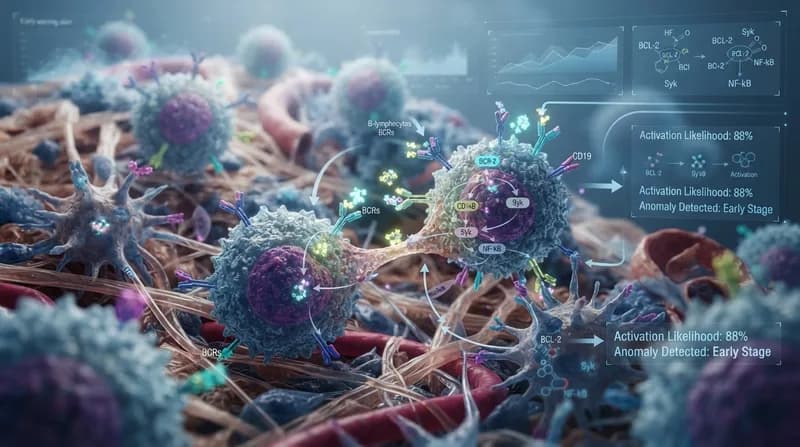
Unlocking Predictive Markers: How B Cells Could Forecast Immunotherapy-Induced Colitis
Science

Unlocking Predictive Markers: How B Cells Could Forecast Immunotherapy-Induced Colitis

New research from MD Anderson Cancer Center suggests that B cell activity acts as a crucial early-warning system for identifying patients at risk of developing severe colitis during cancer treatment.

Could a Tiny Brain Protein Be the Master Switch for Aging?
Science

Could a Tiny Brain Protein Be the Master Switch for Aging?

Researchers have identified that declining levels of a brain protein called Menin may drive systemic aging, offering a potential new target for age-related health interventions.

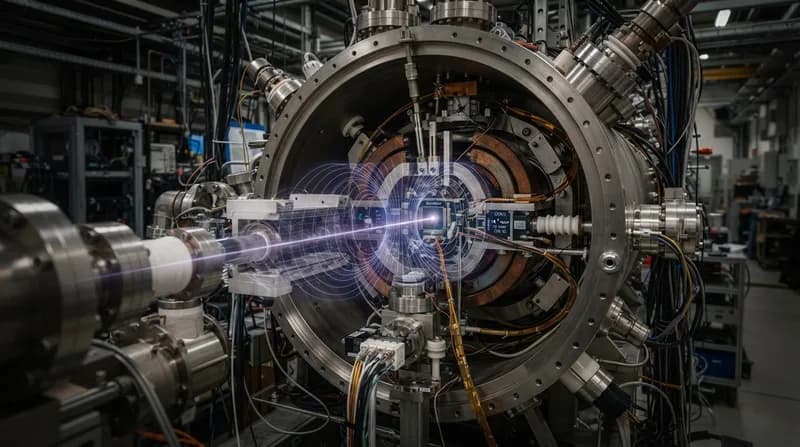
Challenging Einstein: Scientists Pioneer Gravity Tests Using Exotic Muonium Atoms
Science

Challenging Einstein: Scientists Pioneer Gravity Tests Using Exotic Muonium Atoms

Researchers at ETH Zurich have developed a method to create controlled beams of muonium, potentially enabling the first-ever gravitational tests on second-generation particles.

Unlocking the Narrative: AI System Transforms Physician Notes into Actionable Medical Data
Science

Unlocking the Narrative: AI System Transforms Physician Notes into Actionable Medical Data

A groundbreaking study reveals how a new AI system can parse clinical prose at scale, converting hidden patient insights into verifiable, computer-readable data.

Caltech’s Femtosecond Breakthrough: Steering Light with Light
Science

Caltech’s Femtosecond Breakthrough: Steering Light with Light

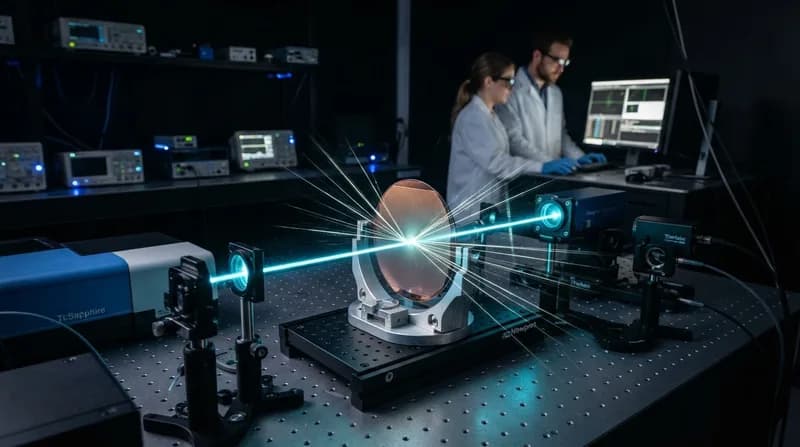
Researchers have engineered a nanoscale silicon metasurface capable of redirecting light beams in just 74 quadrillionths of a second, shattering traditional speed barriers in photonic computing.

Beyond the Starch: Why Black and Green Rice Are Emerging as Metabolic Superfoods
Science

Beyond the Starch: Why Black and Green Rice Are Emerging as Metabolic Superfoods

New research from Hokkaido University reveals that pigmented rice varieties contain unique, beneficial fats that could revolutionize dietary approaches to blood sugar management.

Biological Breakthrough: Scientists 3D-Print a Functional Human Gut-on-a-Chip
Science

Biological Breakthrough: Scientists 3D-Print a Functional Human Gut-on-a-Chip

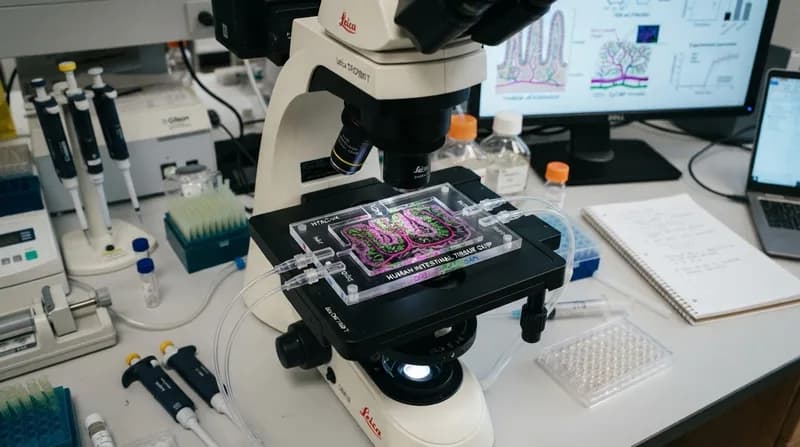
Researchers at Lawrence Livermore National Laboratory have successfully replicated the complex 3D architecture of the human small intestine on a compact, microfluidic device.