A Leap Forward in Neurological Care
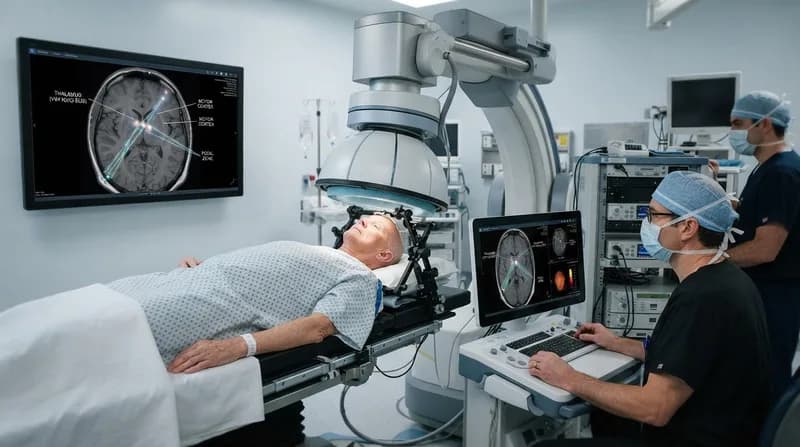
In a significant milestone for movement disorder treatment, the Advanced Therapies in Movement Disorders (ATMD) Program at the CU Anschutz Medical Campus has successfully completed the first dual-target high-intensity focused ultrasound (HIFU) procedures for patients suffering from advanced Parkinson’s disease. By targeting two specific brain tracts—separated by a mere six to nine millimeters—clinicians were able to address not just tremors, but also the debilitating rigidity and slowness of movement that frequently plague those in the later stages of the condition.
The procedures involved two primary targets: the dentatorubral thalamic tract (DRTT) and the pallidothalamic tract (PTT). While the DRTT has been the standard target for tremor-dominant Parkinson’s for some time, the inclusion of the PTT in a single outpatient session represents a sophisticated evolution in how doctors can recalibrate neurological circuitry without invasive surgery. For the patients involved, the results were almost immediate, with reports of fluid gait restoration and the regained ability to manage daily tasks like eating independently.
The Dual-Target Advantage
The innovation lies in the surgical strategy of combining two distinct ablative targets in a single 90-minute outpatient session. Historically, Parkinson's patients struggling with severe motor complications often faced limited options if they were deemed unsuitable for traditional deep brain stimulation (DBS) due to infection risks or other medical contraindications. The dual-target HIFU approach provides a non-incisionless alternative, effectively interrupting the neural pathways responsible for various motor symptoms simultaneously.
During the clinical application, the DRTT targeting provided significant relief for rest tremors, while the subsequent PTT targeting addressed the remaining rigidity and bradykinesia. The clinical team observed that patients achieved a cumulative benefit, with one patient reporting a 70% improvement in both stiffness and movement speed. Because the procedure is guided by real-time MRI, surgeons can confirm the efficacy of the disruption while the patient is still on the operating table, ensuring precise placement within the brain's complex circuitry.
Why It Matters
- Non-Invasive Precision: Unlike deep brain stimulation, HIFU requires no surgical implants or incisions, significantly lowering the risk of infection.
- Comprehensive Symptom Management: By targeting both the DRTT and PTT, clinicians can address a broader spectrum of symptoms, including tremors, stiffness, and slowness of movement.
- Outpatient Efficiency: The procedure lasts roughly 90 minutes, allowing patients to undergo complex neurological intervention without the recovery time associated with traditional neurosurgery.
- New Hope for High-Risk Patients: This technique opens a therapeutic pathway for individuals who were previously ineligible for traditional surgical interventions.
Future Outlook and Research
While these initial results are highly encouraging, the medical community remains cautious regarding the long-term implications of bilateral brain treatments. Current FDA guidelines for unilateral HIFU necessitate a six-month waiting period before attempting a procedure on the opposite side of the brain. The research team at CU Anschutz emphasizes that further studies are essential to evaluate the durability of these dual-target outcomes, potential cognitive side effects, and the overall merits of proceeding with a bilateral approach in future patients. As clinical experience grows, this non-invasive ultrasound technique may redefine the standard of care for the 1.2 million Americans currently living with Parkinson’s disease.