The Enigma of the Little Red Dots
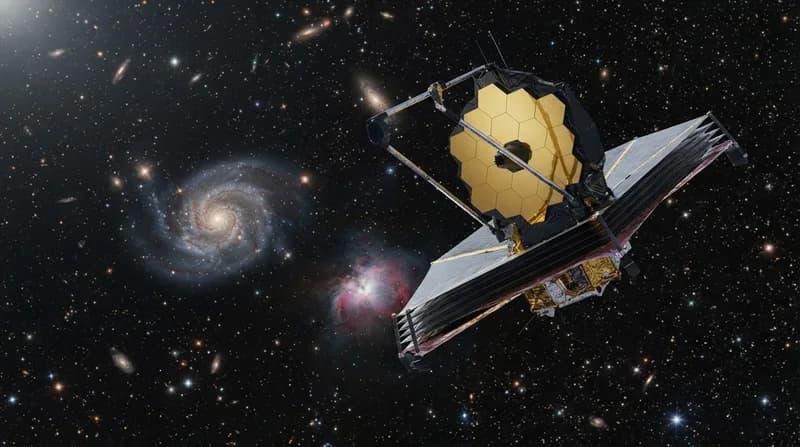
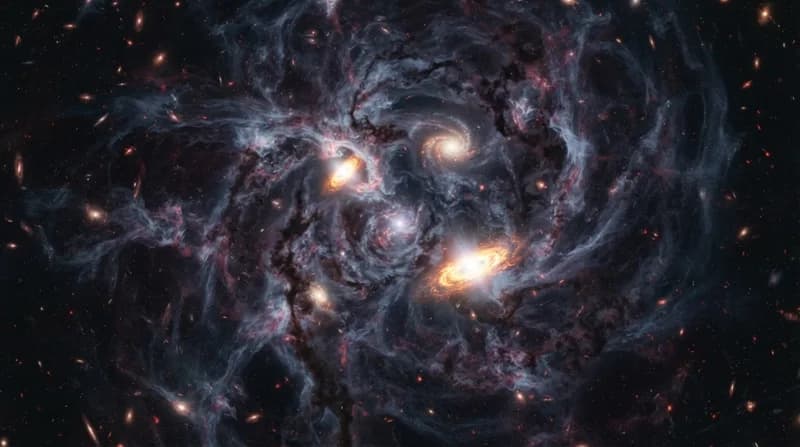
Since the James Webb Space Telescope (JWST) began peering into the furthest reaches of the cosmos, it has sent back data that challenged our understanding of galactic evolution. Among the most perplexing discoveries are the 'Little Red Dots' (LRDs)—compact, intensely crimson objects that appeared far too early in cosmic history to align with established models of black hole formation. These objects have left researchers struggling to explain how they could possess such massive signatures so shortly after the Big Bang.
Now, a research team led by Sunmyon Chon of the Max Planck Institute for Astrophysics has utilized the ATERUI III supercomputer at the National Astronomical Observatory of Japan to provide a compelling answer. Their findings suggest that these dots are not anomalous errors in our understanding, but rather the natural byproduct of a unique environmental state that existed only in the infancy of the universe.
Supercomputing the Early Universe
To unravel the mystery, researchers performed high-resolution simulations that began at the scale of entire young galaxies before zooming into the specific gas clouds where these objects reside. The simulation revealed that intense far-ultraviolet (FUV) radiation from surrounding galaxies played a critical role. In the early cosmos, this radiation inhibited the standard formation of stars, forcing the gas clouds to collapse into singular, massive star structures instead of fracturing into multiple smaller stellar bodies.
These massive progenitor stars eventually collapsed, creating massive black hole 'seeds' at an unprecedented rate. Unlike modern black holes, which are often limited by their surrounding environments, these early seeds found themselves encased in incredibly dense gas disks. This configuration acted as a trap for radiation, enabling the black holes to consume surrounding material at a speed dozens of times faster than what is possible under current cosmic conditions.
Why It Matters
- Solving the Growth Puzzle: The study explains how supermassive black holes achieved millions or billions of solar masses in less than 600 million years.
- Natural Evolution: The model shows that these extreme black holes formed through natural physical processes rather than requiring 'exotic' or 'unlikely' physics.
- Validating JWST Data: The simulation results mirror the visual and spectral characteristics of the LRDs captured by the JWST, providing a robust theoretical framework for the telescope's most puzzling observations.
Implications for Cosmic History
The success of the ATERUI III simulations signals a major step forward in reconciling the observations of the early universe with the standard cosmological model. By demonstrating that the Little Red Dots are essentially the 'cradles' of supermassive black holes, astronomers now have a clear roadmap for future research. As the JWST continues to capture even more distant, older light from the early universe, this simulation provides the necessary context to determine how these massive objects helped seed the structures of the modern cosmos. Rather than rewriting the laws of physics, this research highlights how the unique, volatile conditions of the early universe naturally accelerated the growth of the largest structures in existence.