The Growing Threat to EV Infrastructure
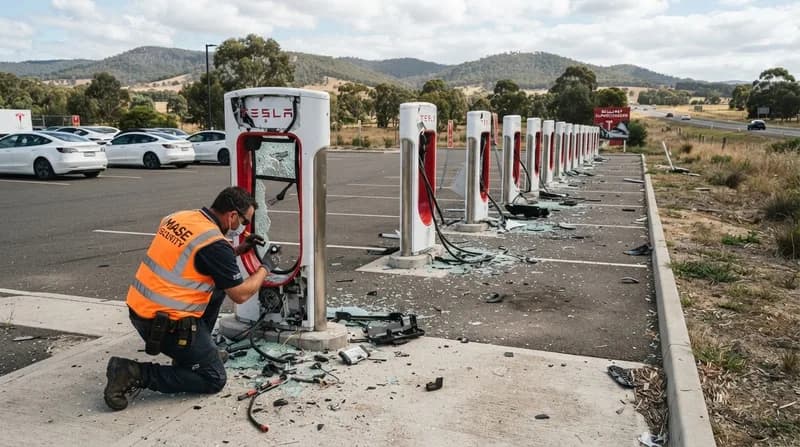
In a troubling development for Australia’s expanding electric vehicle network, two major Tesla Supercharger sites in Ballarat, Victoria, have been rendered completely inoperable following a wave of targeted vandalism. A total of 28 charging bays were compromised, with all of their heavy-duty charging cables severed. The incident, which occurred just days after the opening of one of the locations, has highlighted an escalating struggle between the rapid deployment of charging infrastructure and a rise in opportunistic crime.
While public frustration and online discourse have occasionally framed these acts as ideological attacks against electric mobility, industry experts maintain that the motive is strictly economic. The surge in copper prices—which have climbed nearly 38% over the past year to exceed $14,000 per tonne—has turned critical public infrastructure into a prime target for thieves. According to sector observers, these charging stations are joining telecommunications pits and rail corridors on a list of high-value sites being picked apart for their raw material value.
Why it Matters
- Operational Impact: Each incident of cable theft costs between $2,000 and $5,000 AUD per bay to repair, placing a significant financial burden on charging network operators.
- User Confidence: Frequent vandalism erodes public trust in the reliability of the charging map. When drivers cannot guarantee that a station listed as "available" is actually functional, the incentive to transition to an EV decreases.
- Broader Trends: This is not an isolated Australian phenomenon; the global race for electrification is driving up scrap metal values, making copper a lucrative target for criminal syndicates worldwide.
Countermeasures and Industry Response
As the frequency of these attacks grows, charging infrastructure providers are being forced to adapt their designs and security protocols. Experts suggest that the most effective way to combat this trend is to target the root of the problem: the secondary market for stolen goods. By working closely with law enforcement to monitor the scrap metal trade, operators hope to make it significantly harder for thieves to offload stolen material.
On the hardware side, companies are experimenting with more robust security features. These include the installation of active CCTV monitoring, high-decibel alarms, and improved lighting at high-risk sites. Furthermore, engineers are looking into mechanical defenses, such as cable protection meshes and metal shielding, to prevent quick access to the internal wiring. In some instances, operators are exploring the use of alternative materials, such as aluminum cabling, which holds less value on the black market. As Australia continues to push toward an electrified future, these security upgrades are expected to become standard requirements for all future public charging installations.