The Shift Toward All-Solid-State Batteries
China has officially unveiled a comprehensive development plan for its battery sector, spanning from 2026 to 2030. At the heart of this strategy is the rapid industrialization of all-solid-state batteries. By 2030, the Chinese Ministry of Industry and Information Technology, alongside six other government agencies, intends to move beyond pilot programs and reach large-scale manufacturing for these next-generation power cells.
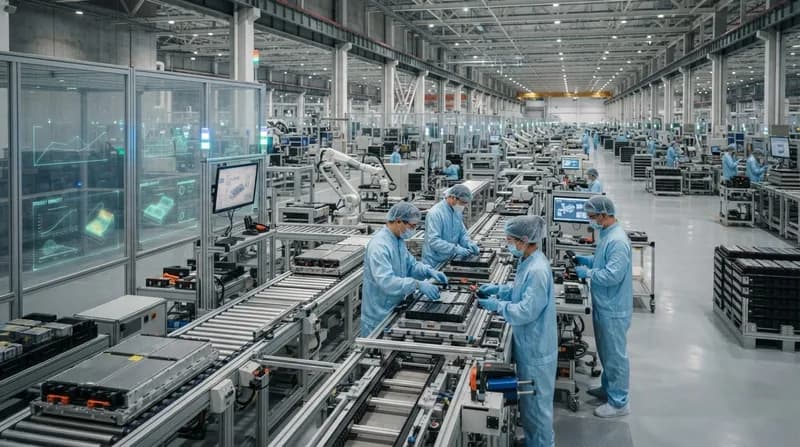
To achieve this, the government is prioritizing key technical milestones, including enhancing ionic conductivity and ensuring long-term cycle stability. The roadmap highlights the development of high-voltage, high-capacity cathodes paired with advanced lithium-metal or anode-free configurations. By investing in specialized production hardware like isostatic presses, China aims to solve the cost and efficiency hurdles that have long kept solid-state tech confined to laboratories.
Diversifying Chemistry: Sodium-Ion and Ultra-Fast Charging
While solid-state technology captures the headlines, the new five-year plan acknowledges that a multi-pronged approach is essential for long-term energy security. The strategy explicitly promotes the commercialization of sodium-ion batteries, which are viewed as a critical solution for cost-sensitive applications and regions requiring cold-weather performance. These batteries are expected to play a major role in both traction and stationary energy storage systems.
Simultaneously, the plan accelerates the push for ultra-fast charging capabilities. For conventional lithium-ion batteries, the target is remarkably ambitious: achieving 15,000 charge and discharge cycles, effectively creating batteries that could outlast the vehicle itself. To ensure world-class reliability, leading manufacturers are now tasked with maintaining a defect rate measured in parts per billion (PPB), a standard that would significantly boost global confidence in Chinese-manufactured energy storage components.
Supply Chain Security and Digital Integration
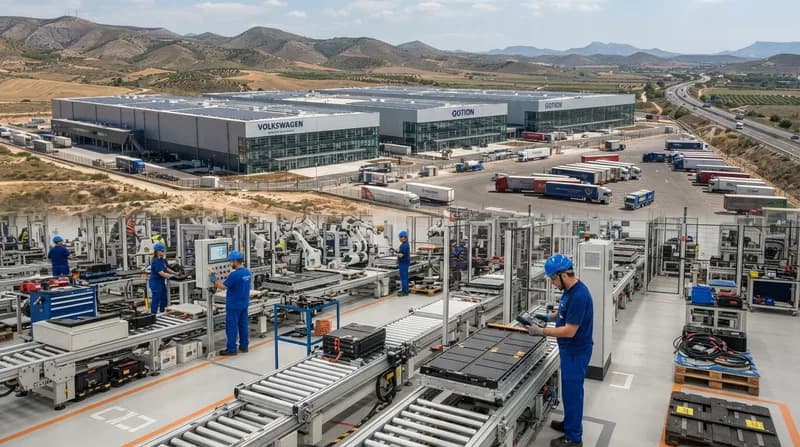
Technology is only one pillar of this strategy; the other is absolute supply chain control. The plan mandates that battery manufacturers establish robust take-back and recycling systems that scale proportionally with their production volumes. Furthermore, the Chinese government is moving toward a digital identity management system for batteries used in New Energy Vehicles. This "battery passport" initiative is designed to be internationally compatible, allowing for the tracking of the carbon footprint and lifecycle of every battery pack produced.
To facilitate this transition, the government is also actively encouraging industry consolidation through mergers and structural reforms, ensuring that only the most efficient and technologically capable manufacturers remain in the market. By simultaneously expanding domestic extraction of raw materials like lithium and cobalt, China is effectively hedging against global price volatility and supply chain disruptions.
Economic Implications and Policy Shifts
Perhaps most indicative of the shifting landscape is the evolution of tax policy. Recognizing that lithium-ion technology is now mature, China has introduced a consumption tax on these batteries, which will climb to four percent by 2027. Conversely, newer, more promising technologies like solid-state and sodium-ion batteries are exempt from this tax until the end of 2028. This deliberate financial pressure forces the industry to innovate faster, pivoting resources away from traditional chemistries and toward the next frontier of energy storage.
This aggressive policy pivot serves as a warning to global competitors. With data indicating that nearly 80% of global battery cells are already produced in Asia, China’s move to codify new chemistry standards and manufacturing quality benchmarks creates a challenging environment for Western manufacturers attempting to establish their own sovereign battery supply chains.