ScienceTechnical Deep Dive

Closing the Gap: How New Physics Slashes Data Storage Energy Consumption

Published
EElectricBuzz Editorial Team
Closing the Gap: How New Physics Slashes Data Storage Energy Consumption
3 min read485 wordsElectricBuzz Editorial Team

The Gist

Researchers have developed a mathematical framework that could revolutionize computing efficiency by bringing magnetic memory closer to the fundamental physical limit of energy usage.

A Theoretical Breakthrough in Computing Efficiency

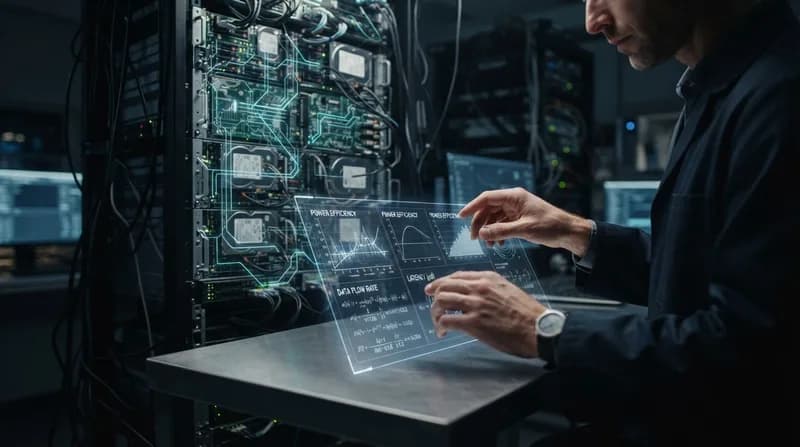
As the global appetite for AI-driven data processing and large-scale computing grows, the infrastructure supporting these technologies faces a mounting crisis: the sheer scale of energy consumption. Modern data centers are becoming increasingly power-hungry, raising concerns about the long-term sustainability of the digital age. To address this, a team of researchers from the University of Edinburgh has unveiled a transformative mathematical framework that promises to reduce the energy required to store and manipulate digital information by several orders of magnitude.

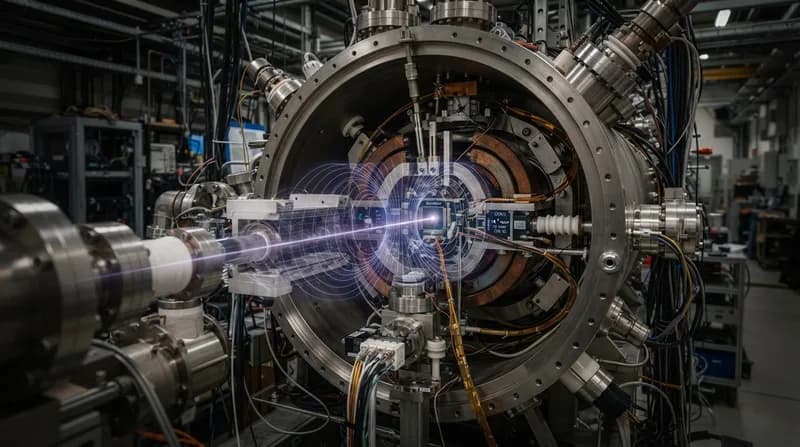
The study, published in Advanced Materials, shifts the focus toward the fundamental mechanism of magnetic memory: the switching of magnetic states. Currently, technologies like DRAM and MRAM rely on processes that, while effective, are inherently energy-intensive. By applying Optimal Control Theory, the Edinburgh researchers have successfully designed a method to optimize the magnetic-field pulses used to toggle bits between '0' and '1'. This approach doesn't just improve existing tech; it brings memory devices remarkably close to the Landauer limit, the theoretical thermodynamic minimum of energy required to process a single bit of information.

The Versatility of the New Framework

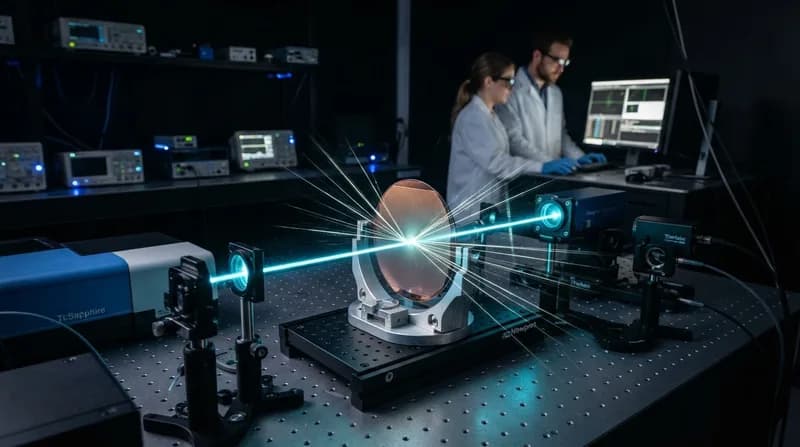
While the initial research focused on magnetic field pulses, the mathematical framework is notable for its versatility. The researchers emphasize that the same core principles can be adapted to electrical currents and even ultrafast laser pulses, both of which are central to the future of high-speed data storage and information manipulation.

This adaptability is critical for the semiconductor and data storage industries. By providing precise guidance on device design and the delivery of switching pulses, the framework offers a roadmap for engineers to transition from theoretical simulations to practical, experimental hardware. As AI models require increasingly faster and more efficient memory architectures, the ability to perform magnetic switching with minimal dissipation could prove to be the next major hardware paradigm shift.

Why It Matters

  • Energy Sustainability: As AI and ICT infrastructure scale, reducing the energy cost per digital operation is essential to mitigating carbon emissions from global data centers.
  • Fundamental Physics: By approaching the Landauer limit, this technology minimizes wasted heat, a primary bottleneck in current high-performance computing chip design.
  • Broad Applicability: The framework is not limited to magnetic memory; its reliance on Optimal Control Theory allows it to be ported to laser-driven and electric-current-driven switching, future-proofing the discovery.

Outlook and Future Implications

The potential for this development extends far beyond simple storage improvements. If implemented at scale, this technology could pave the way for a new generation of low-power, high-performance computing devices. By lowering the thermal footprint of data manipulation, manufacturers might be able to pack higher densities of memory into smaller form factors, further accelerating the capabilities of mobile devices and edge computing nodes. While the jump from mathematical theory to commercialized hardware is a significant bridge to cross, the foundation laid by this research provides a clear, scientifically grounded path toward dramatically more efficient future-proof digital infrastructure.


The 5 Best Over-Ear ANC Headphones of 2026, Tested & Ranked
Editor's Pick Guide
92/100
Tech & Gadgets12 min read

The 5 Best Over-Ear ANC Headphones of 2026, Tested & Ranked

We locked five over-ear ANC picks for 2026 — Sony WH-1000XM6, Bose QuietComfort Ultra 2, Soundcore Space One, Sennheiser Momentum 5, and Apple AirPods Max 2 — then stress-tested them on lab metrics, long-term owner truth, and live street prices.

Related Stories

Semantically matched articles, ranked by topic overlap and freshness.

NASA's Roman Space Telescope Set for Two Decades of Cosmic Discovery
Science

NASA's Roman Space Telescope Set for Two Decades of Cosmic Discovery

Thanks to exceptional launch precision and significant fuel savings, the Nancy Grace Roman Space Telescope is poised to more than double its mission life, potentially operating for over 22 years.

Unlocking Predictive Markers: How B Cells Could Forecast Immunotherapy-Induced Colitis
Science

Unlocking Predictive Markers: How B Cells Could Forecast Immunotherapy-Induced Colitis

New research from MD Anderson Cancer Center suggests that B cell activity acts as a crucial early-warning system for identifying patients at risk of developing severe colitis during cancer treatment.

Could a Tiny Brain Protein Be the Master Switch for Aging?
Science

Could a Tiny Brain Protein Be the Master Switch for Aging?

Researchers have identified that declining levels of a brain protein called Menin may drive systemic aging, offering a potential new target for age-related health interventions.

Challenging Einstein: Scientists Pioneer Gravity Tests Using Exotic Muonium Atoms
Science

Challenging Einstein: Scientists Pioneer Gravity Tests Using Exotic Muonium Atoms

Researchers at ETH Zurich have developed a method to create controlled beams of muonium, potentially enabling the first-ever gravitational tests on second-generation particles.

Unlocking the Narrative: AI System Transforms Physician Notes into Actionable Medical Data
Science

Unlocking the Narrative: AI System Transforms Physician Notes into Actionable Medical Data

A groundbreaking study reveals how a new AI system can parse clinical prose at scale, converting hidden patient insights into verifiable, computer-readable data.

Caltech’s Femtosecond Breakthrough: Steering Light with Light
Science

Caltech’s Femtosecond Breakthrough: Steering Light with Light

Researchers have engineered a nanoscale silicon metasurface capable of redirecting light beams in just 74 quadrillionths of a second, shattering traditional speed barriers in photonic computing.

Beyond the Starch: Why Black and Green Rice Are Emerging as Metabolic Superfoods
Science

Beyond the Starch: Why Black and Green Rice Are Emerging as Metabolic Superfoods

New research from Hokkaido University reveals that pigmented rice varieties contain unique, beneficial fats that could revolutionize dietary approaches to blood sugar management.

Biological Breakthrough: Scientists 3D-Print a Functional Human Gut-on-a-Chip
Science

Biological Breakthrough: Scientists 3D-Print a Functional Human Gut-on-a-Chip

Researchers at Lawrence Livermore National Laboratory have successfully replicated the complex 3D architecture of the human small intestine on a compact, microfluidic device.