Beyond the Cleanup Crew
For decades, neutrophils were relegated to a simple, secondary role in the body’s response to injury: they were the biological janitors. Tasked with clearing debris and necrotic tissue, these white blood cells were seen as necessary but blunt instruments. However, groundbreaking new research from Technische Universität Dresden has completely overturned this perspective, revealing that a specialized subset of these cells acts as the master conductors of tissue repair.
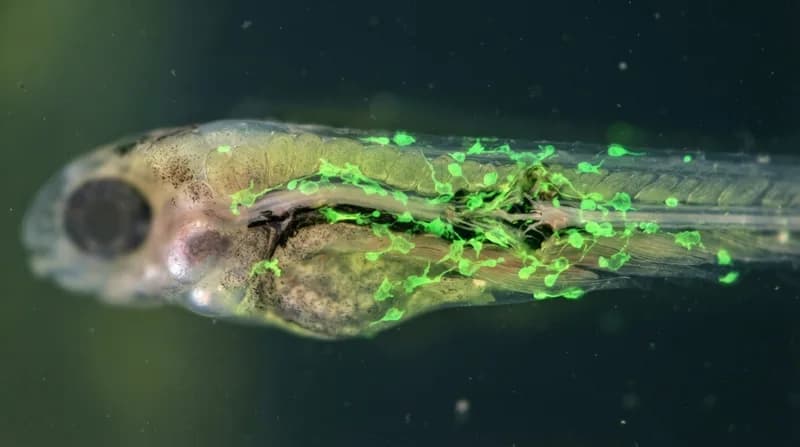
By studying larval zebrafish, which possess the remarkable ability to naturally regenerate their spinal cords, scientists have identified that specific neutrophils do far more than clean up. They are responsible for coordinating the broader immune response, specifically by shifting the environment at an injury site from one of destructive inflammation to one of growth and recovery. This discovery challenges the long-held medical consensus that early-stage inflammation is merely a byproduct of injury, suggesting instead that it is a tightly regulated process that, when managed correctly, holds the key to biological regeneration.
The Role of the Il-4 Signal
The linchpin of this regenerative process is a molecule called Il-4. When an injury occurs, these specialized neutrophils secrete this signal to essentially "calm" the surrounding immune environment. In the absence of this specific signaling, the immune system often descends into a cycle of chronic, high-level inflammation, which creates a hostile barrier that prevents delicate nerve fibers from reconnecting across the damaged gap.
The study demonstrated that when the neutrophils responsible for secreting Il-4 were disabled, the zebrafish lost their regenerative capacity. Conversely, when researchers introduced Il-4 directly into an injured site that lacked these neutrophils, the inflammation subsided rapidly, and the nerve fibers began to regrow as if the injury had never occurred. This suggests that the signal itself is a fundamental prerequisite for successful nerve fiber elongation in the central nervous system.
Why it Matters
- Understanding the Gap: Humans typically suffer from excessive scarring and chronic inflammation following central nervous system injury, which effectively blocks repair. Zebrafish don't share this limitation.
- Targeted Intervention: By focusing on the modulation of the immune response rather than just the nerves themselves, doctors could potentially use signaling molecules like Il-4 to "prime" human tissue for natural repair.
- Clinical Potential: This research shifts the focus of regenerative medicine toward immune-modulatory therapy, providing a concrete target for future drug development aimed at treating paralysis and severe nerve trauma.
From Zebrafish to Human Application
While the results are undeniably exciting, the research team—led by Xiaobo Tian and Professor Thomas Becker—is careful to temper expectations regarding immediate human application. The leap from aquatic larvae to complex human physiology is substantial. The primary hurdle for future research will be determining whether a similar Il-4 pathway exists in the human central nervous system and if it can be safely manipulated without compromising the body's overall ability to fight infections.
The collaborative study, which involved institutions including the University of Edinburgh, underscores a major trend in regenerative biology: moving away from the idea that we can simply "force" cells to regrow, and toward the concept of creating the correct chemical environment to let the body do the work itself. If scientists can successfully translate these findings to human patients, it could mark the most significant advancement in neurotrauma treatment in the modern era, moving us closer to therapies that do more than manage symptoms, but actually facilitate the restoration of damaged nerve tissue.