A New Strategy for Public Tenders
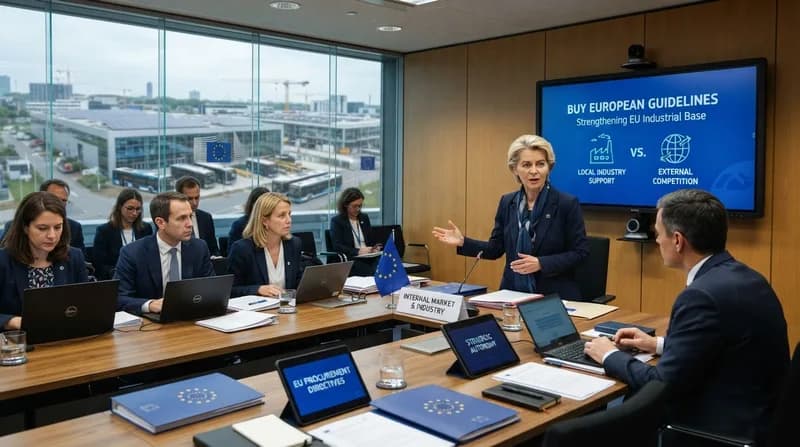
The European Commission has unveiled a bold legislative draft aimed at reshaping the landscape of public procurement across the EU. The proposed changes are designed to move away from a strictly price-driven model, offering public authorities more flexibility to factor in strategic considerations like industrial security, supply chain resilience, and economic sustainability. By modernizing these rules, the Commission hopes to better align public spending with its broader goal of protecting European industrial capacity.
While the proposal remains a draft awaiting scrutiny from the EU Parliament and member states, it has already sparked significant debate. The core intent is to simplify the process of excluding companies from countries that do not provide reciprocal market access. Under the new framework, public buyers would have a more robust legal footing to prioritize 'European preference' criteria, ensuring that taxpayer money directly supports the stability and competitiveness of the European internal market.
The BYD Factor and the Complexity of Origin
EU Commissioner for Industrial Strategy, Stéphane Séjourné, has been vocal about the political intent behind these changes. Using the prevalence of Chinese-manufactured electric buses in European cities as a lightning rod for the discussion, he suggested that the new rules would provide the necessary regulatory teeth to prioritize domestic alternatives. The mention of BYD, a giant in the global EV bus market, highlights the tension between affordable, high-quality international products and the European desire to nurture local manufacturing hubs.
However, the reality of global supply chains adds significant complexity to the proposal. As noted by industry observers, BYD operates a major production facility in Komárom, Hungary, which has been manufacturing buses for the European market since 2017. These operations provide employment for EU citizens and contribute to the local economy. Because these vehicles are produced within the European Union, the distinction between a 'Chinese company' and a 'European-made product' becomes blurred. Under the proposed draft, the focus shifts toward the origin of the product and potentially the sourcing of key components, rather than merely the nationality of the parent corporation.
Why it Matters: The Shift Toward Economic Sovereignty
- Strategic Autonomy: The EU is shifting its focus toward reducing dependency on non-EU suppliers in critical sectors like public transport and municipal fleet management.
- Reciprocity: The Commission plans to establish a list of approved trading partners. Countries that grant European firms access to their tenders will be treated favorably; those that do not, such as China, face potential exclusion.
- Quality Over Price: The reform aims to normalize the evaluation of bids based on energy efficiency, maintenance, and corporate social responsibility (CSR) alongside acquisition costs.
- Operational Security: Procurement rules will better address risks associated with the digital integration of infrastructure, such as charging networks, by prioritizing secure and reliable suppliers.
The Road Ahead for European Mobility
The implications for the EV and mobility sectors are profound. Public transit operators, which are major customers for electric buses and charging infrastructure, could soon find themselves navigating a new hierarchy of supplier eligibility. By introducing 'European preference' as a legally sound option, the Commission is effectively giving member states a tool to hedge against market dominance from state-subsidized foreign competitors.
While the legislation seeks to combat unfair market practices, it must balance these goals with the practical need to accelerate the green transition. Infrastructure projects, including the massive expansion of EV charging networks, require high-volume, cost-effective equipment. If the proposed rules are implemented without careful calibration, they could potentially lead to higher prices or supply bottlenecks. The coming months will be critical as the European Parliament reviews these measures, determining how to best integrate 'location-based patriotism' with the urgent need for a faster, more efficient, and more sustainable European transport network.