ScienceTechnical Deep Dive

Breakthrough Immunotherapy Regimen Significantly Extends Survival in Lung Cancer Patients

Published
EElectricBuzz Editorial Team
Breakthrough Immunotherapy Regimen Significantly Extends Survival in Lung Cancer Patients
2 min read389 wordsElectricBuzz Editorial Team

The Gist

Final Phase III results from the IMpower030 trial reveal that combining atezolizumab with chemotherapy dramatically improves outcomes for patients with resectable non-small cell lung cancer.

Revolutionizing NSCLC Treatment Protocols

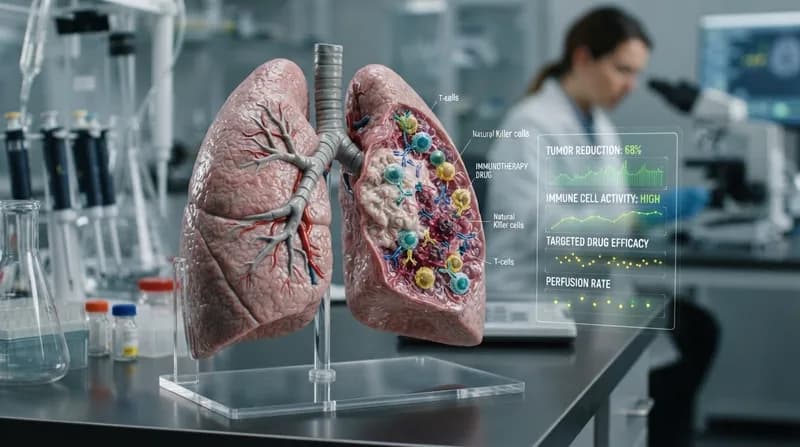
A major shift in oncology may be on the horizon following the release of final data from the Phase III IMpower030 clinical trial. Presented at the 2026 World Conference on Lung Cancer in Seoul, the study focused on patients with resectable stage II–IIIB non-small cell lung cancer (NSCLC). Researchers investigated the efficacy of a perioperative regimen that combines the immunotherapy drug atezolizumab with standard platinum-based chemotherapy.

The findings indicate a substantial improvement in patient outcomes, with those receiving the combined therapy achieving a median event-free survival (EFS) of 62.8 months. This is a significant leap compared to the 34.9 months observed in patients treated with chemotherapy alone. While the study did not reach its strict predefined threshold for statistical significance, the clinical improvements across multiple key metrics—including overall survival and disease-free survival—suggest a transformative potential for this combination therapy in clinical practice.

Clinical Efficacy and Pathological Response

Beyond the survival data, the trial highlighted impressive gains in pathological response rates, which serve as crucial indicators of treatment success. Patients who received the atezolizumab regimen demonstrated a pathological complete response rate of 29.6%, a stark increase from the 8.5% observed in the control group. Furthermore, major pathological response rates were more than double at 53.6%, compared to 24.4% for those on chemotherapy alone.

Importantly, the researchers noted that surgical cancellation rates remained low and consistent across both cohorts, suggesting that the addition of immunotherapy does not negatively impact a patient's ability to undergo necessary operations. The safety profile also remained stable, with no new or unexpected safety signals identified throughout the trial. Adverse events were largely concentrated during the neoadjuvant phase, which is consistent with existing chemotherapy treatment expectations.

Why It Matters

  • Extended EFS: The near-doubling of event-free survival provides a compelling case for the integration of immunotherapy into the standard care pathway for resectable NSCLC.
  • Pathological Improvement: The sharp rise in complete response rates suggests that the drug combination is highly effective at reducing tumor burden prior to surgery.
  • Safety Consistency: The ability to deliver this intensive treatment without an increase in surgical complications or new safety concerns is vital for broad clinical adoption.
  • Future Outlook: These findings provide robust support for the role of perioperative immunotherapy, offering oncologists a potent new strategy to combat late-stage lung cancer and improve long-term prognosis for their patients.

The 5 Best Over-Ear ANC Headphones of 2026, Tested & Ranked
Editor's Pick Guide
92/100
Tech & Gadgets12 min read

The 5 Best Over-Ear ANC Headphones of 2026, Tested & Ranked

We locked five over-ear ANC picks for 2026 — Sony WH-1000XM6, Bose QuietComfort Ultra 2, Soundcore Space One, Sennheiser Momentum 5, and Apple AirPods Max 2 — then stress-tested them on lab metrics, long-term owner truth, and live street prices.

Related Stories

Semantically matched articles, ranked by topic overlap and freshness.

NASA's Roman Space Telescope Set for Two Decades of Cosmic Discovery
Science

NASA's Roman Space Telescope Set for Two Decades of Cosmic Discovery

Thanks to exceptional launch precision and significant fuel savings, the Nancy Grace Roman Space Telescope is poised to more than double its mission life, potentially operating for over 22 years.

Unlocking Predictive Markers: How B Cells Could Forecast Immunotherapy-Induced Colitis
Science

Unlocking Predictive Markers: How B Cells Could Forecast Immunotherapy-Induced Colitis

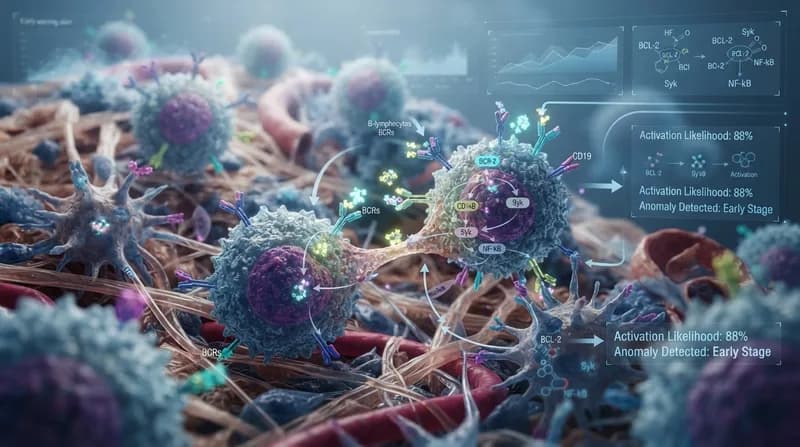
New research from MD Anderson Cancer Center suggests that B cell activity acts as a crucial early-warning system for identifying patients at risk of developing severe colitis during cancer treatment.

Could a Tiny Brain Protein Be the Master Switch for Aging?
Science

Could a Tiny Brain Protein Be the Master Switch for Aging?

Researchers have identified that declining levels of a brain protein called Menin may drive systemic aging, offering a potential new target for age-related health interventions.

Challenging Einstein: Scientists Pioneer Gravity Tests Using Exotic Muonium Atoms
Science

Challenging Einstein: Scientists Pioneer Gravity Tests Using Exotic Muonium Atoms

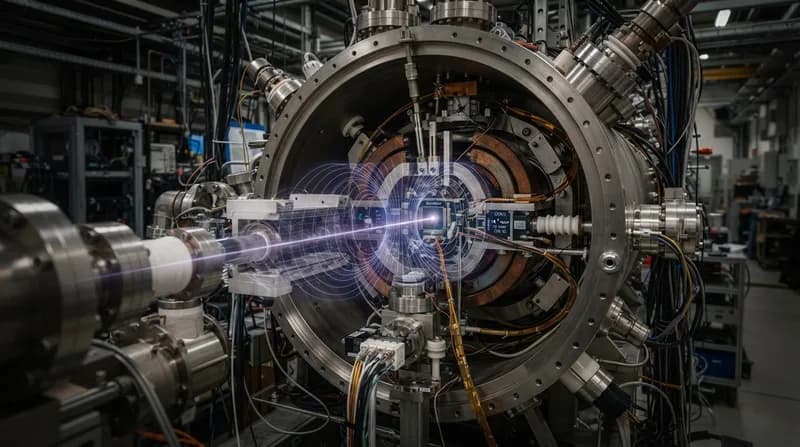
Researchers at ETH Zurich have developed a method to create controlled beams of muonium, potentially enabling the first-ever gravitational tests on second-generation particles.

Unlocking the Narrative: AI System Transforms Physician Notes into Actionable Medical Data
Science

Unlocking the Narrative: AI System Transforms Physician Notes into Actionable Medical Data

A groundbreaking study reveals how a new AI system can parse clinical prose at scale, converting hidden patient insights into verifiable, computer-readable data.

Caltech’s Femtosecond Breakthrough: Steering Light with Light
Science

Caltech’s Femtosecond Breakthrough: Steering Light with Light

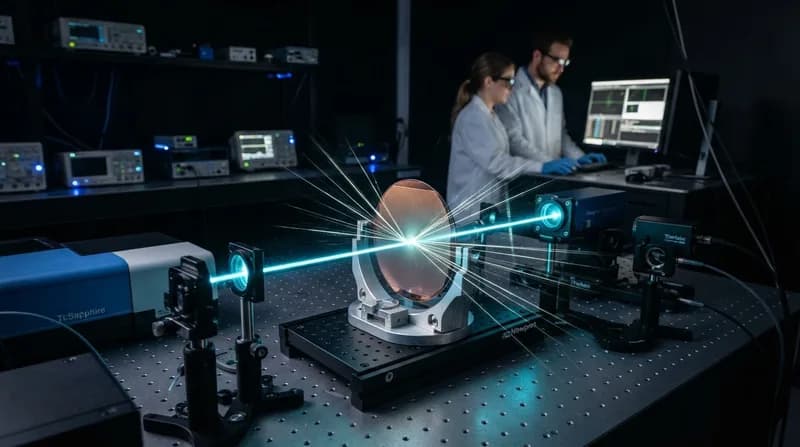
Researchers have engineered a nanoscale silicon metasurface capable of redirecting light beams in just 74 quadrillionths of a second, shattering traditional speed barriers in photonic computing.

Beyond the Starch: Why Black and Green Rice Are Emerging as Metabolic Superfoods
Science

Beyond the Starch: Why Black and Green Rice Are Emerging as Metabolic Superfoods

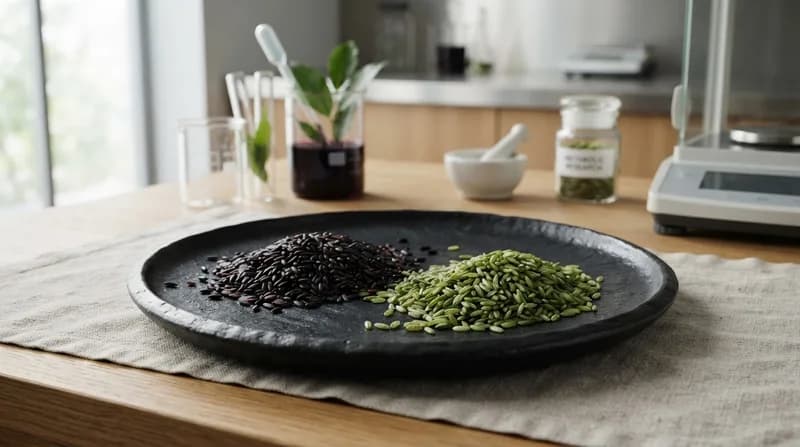
New research from Hokkaido University reveals that pigmented rice varieties contain unique, beneficial fats that could revolutionize dietary approaches to blood sugar management.

Biological Breakthrough: Scientists 3D-Print a Functional Human Gut-on-a-Chip
Science

Biological Breakthrough: Scientists 3D-Print a Functional Human Gut-on-a-Chip

Researchers at Lawrence Livermore National Laboratory have successfully replicated the complex 3D architecture of the human small intestine on a compact, microfluidic device.