The Challenge of Crocodile Conservation
For decades, wildlife biologists have faced a frustrating reality in their efforts to revive endangered saltwater crocodile populations: the creatures are notoriously good at finding their way home. This powerful homing instinct often leads translocated crocodiles to abandon their new environments, trekking vast distances to return to their original capture sites. Because of this, reintroduction programs have traditionally focused on releasing hatchlings, which lack a strong attachment to a specific 'home' territory. However, this approach is fraught with difficulty, as hatchlings suffer from extremely high mortality rates and take significant time to reach reproductive maturity, delaying the recovery of the species.
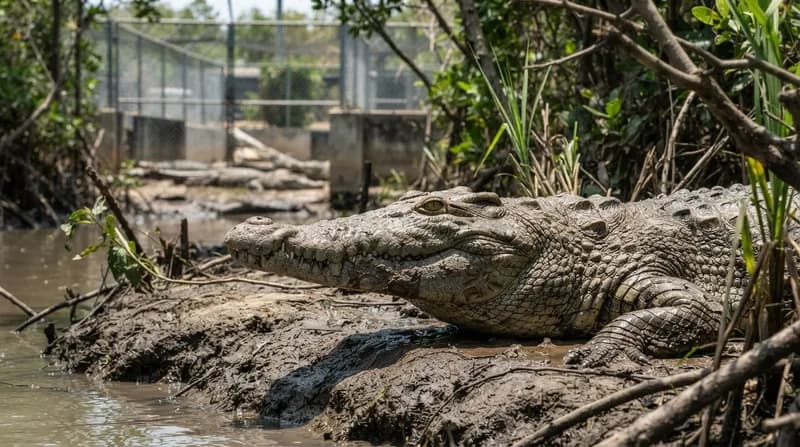
A recent, vital study conducted in the Sundarbans mangrove forest of Bangladesh, one of the last bastions for these apex predators, has uncovered a potential shift in strategy. Researchers from Murdoch University, working in collaboration with local agencies, investigated whether older, captive-reared crocodiles—often overlooked in favor of younger, more vulnerable individuals—might prove more effective for reintroduction efforts. By tracking the movements of mature crocodiles after release, the team hoped to see if these animals would stay in their new habitats rather than attempting to return to the human-managed environments they had occupied for years.
The Results: Captive-Raised vs. Translocated Wildlife
The study featured a diverse group of subjects, including three captive-reared female crocodiles that had lived in captivity for between eight and 22 years, a local wild crocodile released back into its home range, and a third 'translocated' wild crocodile named Jongra, who was moved 132 kilometers from its original site. The researchers outfitted all subjects with sophisticated satellite tracking devices to monitor their behavioral patterns in the wild over several months.
The data provided a stark contrast between the groups. Perhaps most notably, the captive-reared crocodiles showed no interest in returning to their breeding facilities. Instead, they settled into distinct, stable home ranges almost immediately. Their movement patterns closely mirrored those of the local, non-translocated wild crocodile, suggesting that these captive-born animals were capable of seamlessly adapting to their new surroundings. This success indicates that years of captivity did not stifle their ability to survive or navigate the complex mangrove ecosystem effectively.
The 'Jongra' Factor: A Lesson in Instinct
Conversely, the experiment with the translocated wild crocodile, Jongra, highlighted the immense power of the species' natural homing instinct. Unlike the captive-reared group, Jongra immediately began moving with clear purpose. He traveled significantly farther each day than any other participant, covering vast distances—at times exceeding 30 kilometers in a single day—in a persistent bid to return to his original capture site. This behavior confirms why translocation of wild adult crocodiles is often an ineffective conservation strategy, as the animals’ internal drive to return 'home' is both intense and highly prioritized over settling into a new territory.
Conservation Implications
These findings serve as a pivotal development for global conservation programs, particularly in regions where saltwater crocodile populations have been decimated by historical hunting and habitat loss. By moving away from a sole reliance on hatchlings and incorporating mature, captive-reared individuals into reintroduction strategies, conservationists may be able to rebuild populations much faster. The ability of captive-reared crocodiles to accept a new home range without the constant, high-energy drive to return to a facility represents a significant win for biodiversity management. Moving forward, the focus will likely shift toward more deliberate release planning that distinguishes between the behavioral needs of wild-captured versus captive-raised animals, ensuring that each intervention provides the highest chance for long-term survival in the wild.