ScienceTechnical Deep Dive

Breaking Symmetry: How Non-Reciprocal Forces Create Synthetic Active Matter

Published
EElectricBuzz Editorial Team
Breaking Symmetry: How Non-Reciprocal Forces Create Synthetic Active Matter
3 min read463 wordsElectricBuzz Editorial Team

The Gist

Physicists have discovered that by harnessing asymmetric interactions between particles, they can create synthetic systems that move and reorganize without external self-propulsion.

Understanding Non-Reciprocal Interactions

In the world of classical physics, Newton's third law—the principle of action and reaction—usually governs how objects interact. However, researchers at the Tokyo University of Science have demonstrated that when this symmetry is broken at the microscopic level, remarkable new phenomena emerge. By creating systems where one particle influences another more strongly than it is influenced in return, the team has unlocked a new method for designing active matter that remains in constant, dynamic motion rather than settling into a static, aggregated state.

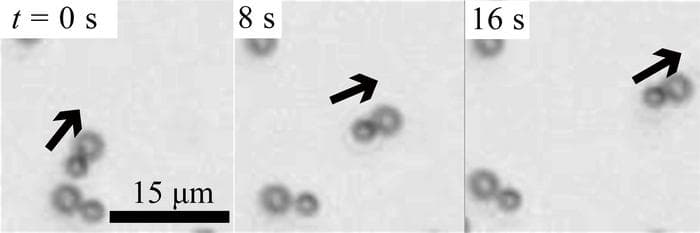
Led by Yutaka Sumino and Kiwamu Yoshii, the research team focused on colloidal particles suspended in an aqueous environment. By mixing polystyrene particles of two distinct sizes (1 µm and 1.5 µm) and subjecting them to an alternating electric field, the team induced electrohydrodynamic flows. Because the flow strength scales with particle size, the larger particles exert a significantly stronger attractive force on the smaller ones than vice versa. This effectively breaks the action-reaction symmetry, creating a non-reciprocal system where particles interact asymmetrically.

The Emergence of Self-Propelled Structures

The most striking result of this imbalance is the spontaneous emergence of mobility from static components. Individually, these colloidal particles are not self-propelled. Yet, when a large and small particle interact, they form an asymmetric pair with a distinct "head" and "tail." These pairings function as self-propelled units that traverse the fluid, driven by the asymmetric forces generated by the surrounding liquid medium.

This collective behavior goes beyond simple pairing. As these units interact, they form larger, more complex clusters. Unlike traditional systems where such clusters would grow indefinitely into large, static aggregates, these structures are inherently unstable. The "head-heavy" asymmetry, coupled with excluded-volume interactions, causes these clusters to fragment, rearrange, and reform continuously. This prevents the system from reaching an equilibrium of coarsening, allowing it to remain in a persistent, liquid-like state of activity.

Why It Matters

  • Synthetic Active Matter: These findings provide a blueprint for creating materials that reorganize themselves, which could be critical for developing adaptive micro-machines or self-healing structural materials.
  • Fundamental Physics: The study clarifies that while these interactions appear to break Newton's third law, they actually conserve momentum by transferring it into the surrounding fluid, which then dissipates the energy through friction with the substrate.
  • Design Principles: The research suggests that self-propulsion does not necessarily need to be "hard-coded" into individual units. Instead, it can emerge as an emergent property of non-reciprocal interactions, greatly simplifying the design of future synthetic biological systems.

By tracking over 10,000 particles for extended periods, the team successfully bridged the gap between microscopic pair dynamics and macroscopic collective behavior. This discovery opens a new frontier in materials science, suggesting that we can dictate the lifespan and structure of synthetic matter simply by tuning the non-reciprocity of its constituent components.
The 5 Best Over-Ear ANC Headphones of 2026, Tested & Ranked
Editor's Pick Guide
92/100
Tech & Gadgets12 min read

The 5 Best Over-Ear ANC Headphones of 2026, Tested & Ranked

We locked five over-ear ANC picks for 2026 — Sony WH-1000XM6, Bose QuietComfort Ultra 2, Soundcore Space One, Sennheiser Momentum 5, and Apple AirPods Max 2 — then stress-tested them on lab metrics, long-term owner truth, and live street prices.

Related Stories

Semantically matched articles, ranked by topic overlap and freshness.

NASA's Roman Space Telescope Set for Two Decades of Cosmic Discovery
Science

NASA's Roman Space Telescope Set for Two Decades of Cosmic Discovery

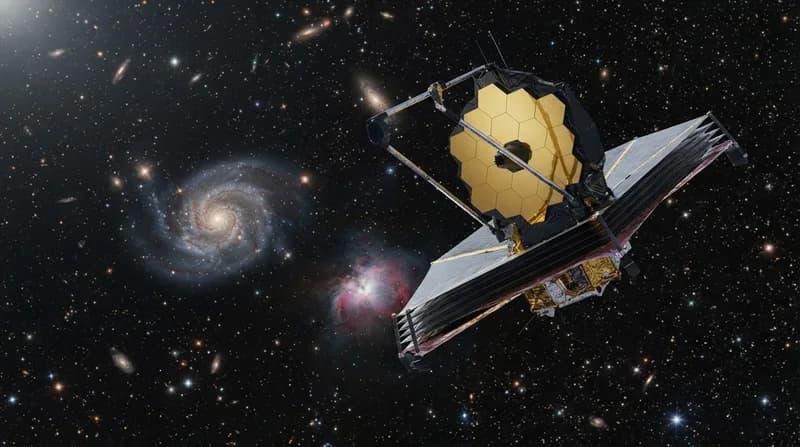
Thanks to exceptional launch precision and significant fuel savings, the Nancy Grace Roman Space Telescope is poised to more than double its mission life, potentially operating for over 22 years.

Unlocking Predictive Markers: How B Cells Could Forecast Immunotherapy-Induced Colitis
Science

Unlocking Predictive Markers: How B Cells Could Forecast Immunotherapy-Induced Colitis

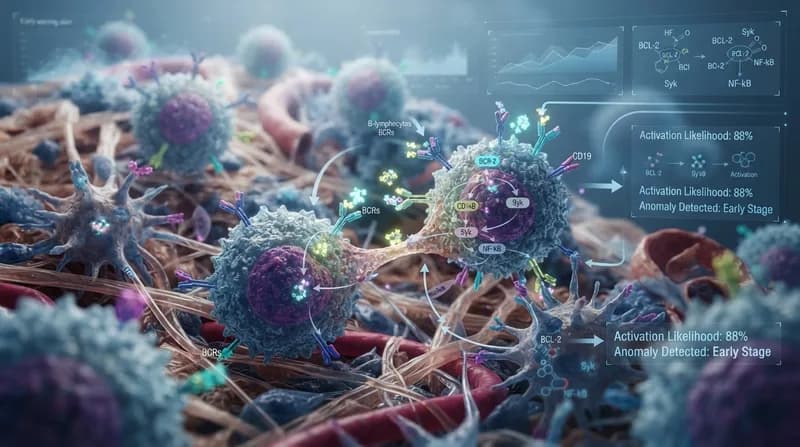
New research from MD Anderson Cancer Center suggests that B cell activity acts as a crucial early-warning system for identifying patients at risk of developing severe colitis during cancer treatment.

Could a Tiny Brain Protein Be the Master Switch for Aging?
Science

Could a Tiny Brain Protein Be the Master Switch for Aging?

Researchers have identified that declining levels of a brain protein called Menin may drive systemic aging, offering a potential new target for age-related health interventions.

Challenging Einstein: Scientists Pioneer Gravity Tests Using Exotic Muonium Atoms
Science

Challenging Einstein: Scientists Pioneer Gravity Tests Using Exotic Muonium Atoms

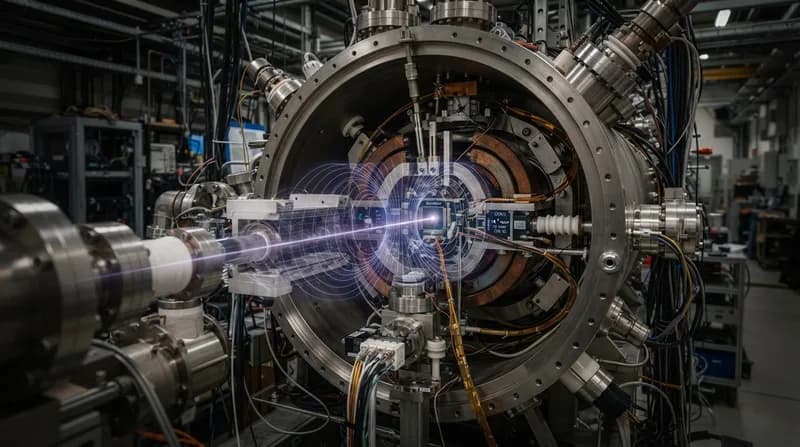
Researchers at ETH Zurich have developed a method to create controlled beams of muonium, potentially enabling the first-ever gravitational tests on second-generation particles.

Unlocking the Narrative: AI System Transforms Physician Notes into Actionable Medical Data
Science

Unlocking the Narrative: AI System Transforms Physician Notes into Actionable Medical Data

A groundbreaking study reveals how a new AI system can parse clinical prose at scale, converting hidden patient insights into verifiable, computer-readable data.

Caltech’s Femtosecond Breakthrough: Steering Light with Light
Science

Caltech’s Femtosecond Breakthrough: Steering Light with Light

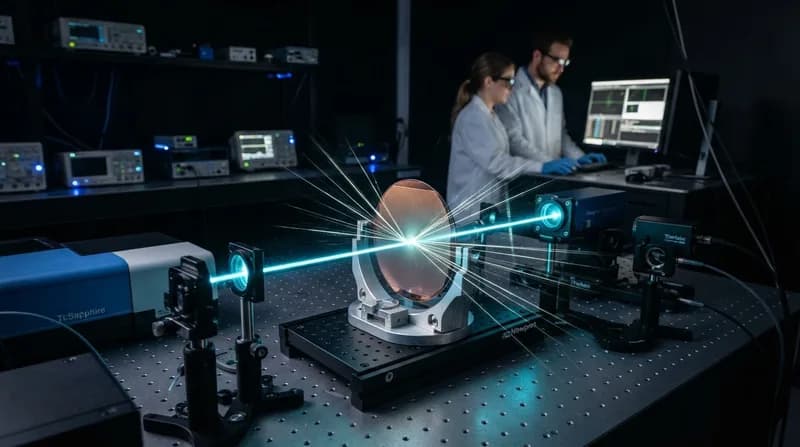
Researchers have engineered a nanoscale silicon metasurface capable of redirecting light beams in just 74 quadrillionths of a second, shattering traditional speed barriers in photonic computing.

Beyond the Starch: Why Black and Green Rice Are Emerging as Metabolic Superfoods
Science

Beyond the Starch: Why Black and Green Rice Are Emerging as Metabolic Superfoods

New research from Hokkaido University reveals that pigmented rice varieties contain unique, beneficial fats that could revolutionize dietary approaches to blood sugar management.

Biological Breakthrough: Scientists 3D-Print a Functional Human Gut-on-a-Chip
Science

Biological Breakthrough: Scientists 3D-Print a Functional Human Gut-on-a-Chip

Researchers at Lawrence Livermore National Laboratory have successfully replicated the complex 3D architecture of the human small intestine on a compact, microfluidic device.