The Darwinian Struggle Within Our Tissues
The human body is far more than a static vessel; it is a dynamic, microscopic ecosystem. According to groundbreaking research recently published in Nature Genetics, our healthy tissues function as a Darwinian battleground, where cells constantly compete for dominance. Scientists from the Wellcome Sanger Institute, the University of Cambridge, and University College London have discovered that when we introduce powerful external factors—specifically chemotherapy and radiation—we fundamentally alter the rules of this competition.
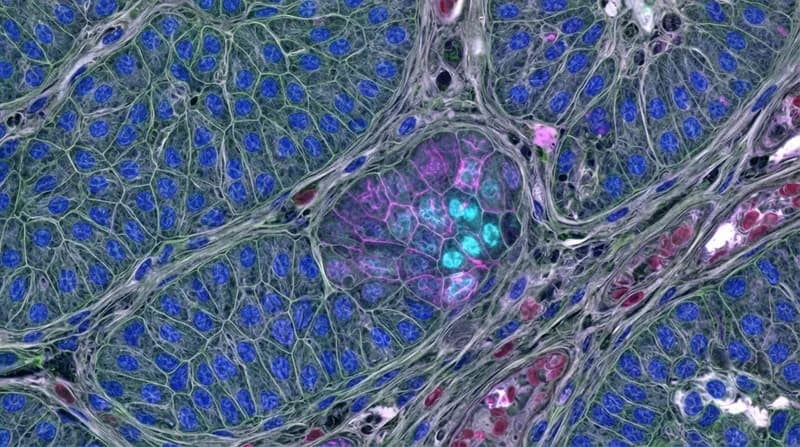
As we age, healthy tissues like the esophageal lining become a patchwork of somatic mutations. Most of these genetic changes are harmless, but some provide a competitive edge, allowing certain cells to outcompete their neighbors. The new study highlights how cancer therapies, while intended to eradicate malignant tumors, exert a selective pressure on this existing landscape of normal cells, inadvertently favoring those with specific, often pre-cancerous, genetic profiles.
The Impact of Chemoradiotherapy
The research team utilized high-precision DNA sequencing to compare esophageal tissue samples from patients who had received varying levels of care. The most significant genetic shifts were observed in patients treated with chemoradiotherapy—a dual-action approach involving both chemical agents and radiation. In these individuals, the researchers identified a substantial increase in cells harboring mutations in TP53 and PPM1D genes.
The TP53 gene is famously known as the 'guardian of the genome,' playing a vital role in tumor suppression. The fact that therapy selects for mutations in this specific gene suggests that the treatment process may be creating a niche where cells with weakened defense mechanisms are actually more resilient to external stressors. Similarly, the PPM1D gene, which regulates cell stress responses, showed increased mutation prevalence, indicating that these cells are adapting to the harsh conditions created by medical intervention.
Resistance and Future Implications
For patients undergoing combination chemotherapy, the researchers observed a different trend: an increase in healthy cells carrying mutations that confer resistance to the drug 5-fluorouracil (5-FU). While this resistance might protect the patient from certain acute toxicities by allowing healthy tissue to persist, it raises critical questions about the long-term genetic makeup of the patient's body post-treatment.
Why It Matters
- Precision Medicine: Mapping these mutations could allow doctors to predict how an individual's healthy tissue will respond to specific drug regimens, minimizing harmful side effects.
- Drug Resistance: Understanding how normal cells develop resistance can provide insights into how cancerous tumors eventually evolve to evade treatment.
- Reduced Toxicity: By identifying the genetic 'weak spots' of healthy tissue, researchers hope to design future therapies that are more selective, destroying cancer cells without triggering the survival-of-the-fittest response in normal cells.
The research team is already looking ahead, moving beyond the esophagus to conduct pilot studies on skin, head, and neck cancers. By tracking these genetic shifts in real-time through blood and urine samples, scientists hope to build a comprehensive catalog of genetic targets. This effort aims to transition cancer care from a 'blunt instrument' approach to a nuanced, biological strategy that respects the evolutionary landscape of the human body.