The Escalating Threat of Arctic Cyclone Clustering
In the rapidly transforming landscape of the Arctic, weather events are proving to be far more complex and destructive than previously understood. While isolated storms have long been recognized as a factor in seasonal ice fluctuations, a groundbreaking study led by the Alfred Wegener Institute, Helmholtz Centre for Polar and Marine Research, has identified a dangerous phenomenon known as 'cyclone clustering.' This occurs when multiple low-pressure weather systems strike the same region in rapid succession, preventing the environment from stabilizing between events.
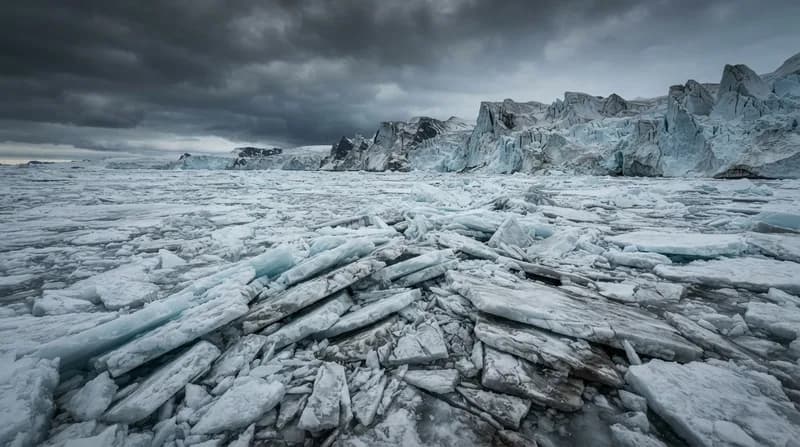
By analyzing satellite data and weather records spanning nearly five decades, researchers discovered that these clusters function as a force multiplier for environmental decay. Rather than allowing the sea ice to refreeze or recover, the arrival of consecutive storms maintains a state of continuous turbulence, leading to significantly higher rates of physical ice fracturing, drift, and melting.
The Mechanics of Accelerated Ice Loss
The study, published in Nature Communications, highlights that cyclone clusters are responsible for roughly double the sea ice loss compared to isolated storms. The persistence of these events is equally concerning, as their impact lasts approximately two and a half times longer than standard weather disturbances. During the winter, these clusters prevent newly formed ice from hardening by constantly disrupting the ice cover. In the warmer months, the impact shifts to a combination of mechanical compression and thermodynamic stress, as storms funnel warmer air into the region and churn up warmer subsurface seawater.
This vulnerability is compounded by the changing composition of the Arctic itself. As global temperatures climb, the existing sea ice has become thinner and more mobile, rendering it less resilient to the intense wind and thermal energy unleashed by these clusters. This creates a precarious feedback loop: the weaker the ice becomes, the more susceptible it is to being dismantled by successive storm systems, which in turn leads to further thinning and increased exposure to future weather events.
Why It Matters
- Coastal Vulnerability: Sea ice serves as a vital natural buffer that protects Arctic coastlines from high-energy wave action. As these barriers thin or disappear due to cluster-driven melting, coastal communities face heightened risks of severe erosion and flooding.
- Feedback Loops: The findings suggest that we may be entering a self-reinforcing cycle where the very mechanisms of climate change make the region more reactive to short-term weather volatility.
- Predictive Modeling: Incorporating 'cyclone clustering' into global climate projections is now essential for scientists to create accurate forecasts regarding the future of the Arctic and its role in the global climate system.
A Future of Climate Instability
The long-term analysis reveals a clear, troubling trend: the destructive footprint of cyclone clusters has expanded substantially over the last two decades. As the Arctic continues to warm, the interaction between thinning ice and intense, clustered weather systems is expected to remain a critical focal point for climate research. By identifying and quantifying this 'knowledge gap,' the research team has provided a new foundation for understanding how short-term meteorological events can drive long-term climatic shifts, underscoring the urgent need to account for serial weather patterns in our broader environmental risk assessments.