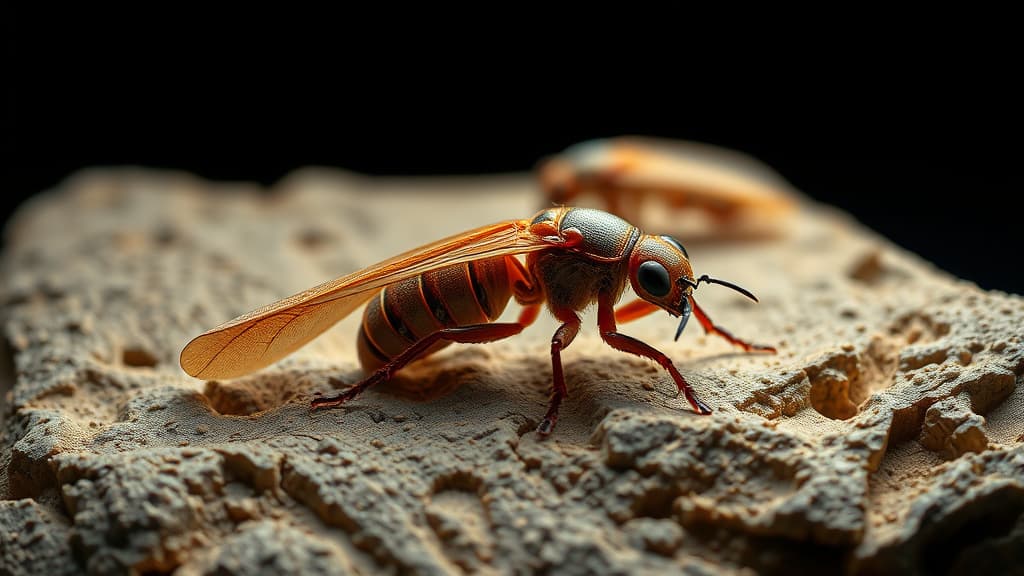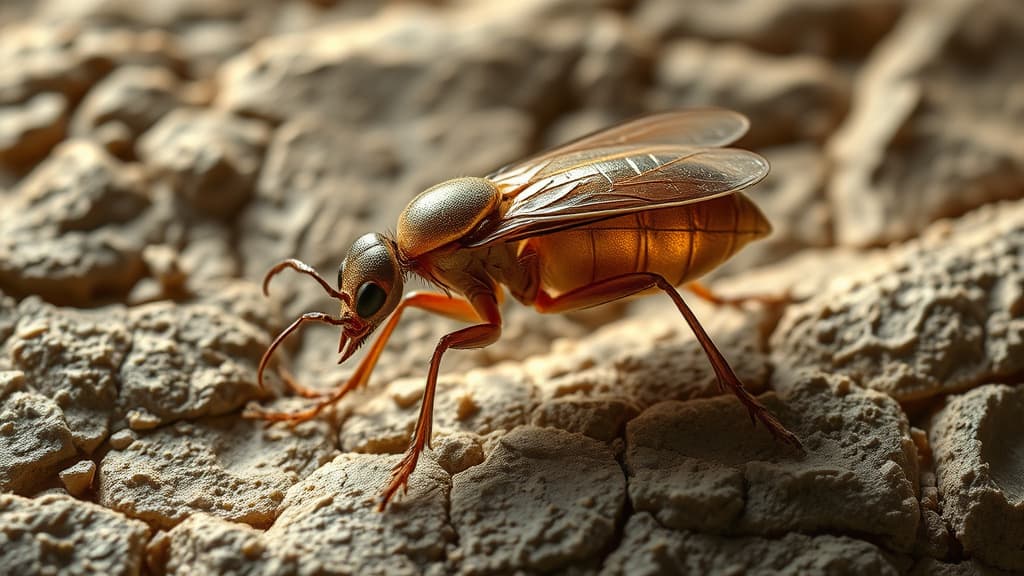
A groundbreaking discovery has unveiled a 324-million-year-old fossil named Chosha praecursor, providing crucial evidence regarding the evolutionary transition of insects from water to land. This fossil presents a semi-aquatic lifestyle, contradicting earlier theories that suggested a swift adaptation to terrestrial environments.
The Chosha praecursor measures 49.66 millimeters in total length and features distinctive paddle-like abdominal limbs. These characteristics indicate its adaptation to a life partially spent in aquatic habitats. Importantly, this find fills an 80-million-year gap in the fossil record, shedding light on how insects gradually evolved from their aquatic ancestors.
Key Findings
- The fossil was part of a study led by Prof. Chenyang Cai and Erik Tihelka, who highlighted that early insects retained several aquatic adaptations.
- This retention signifies a slow evolutionary shift, challenging the previous notion of an abrupt transition to land.
- The research drew comparisons with other fossils, namely Leverhulmia and another unidentified specimen, placing these insects within a primitive stem lineage crucial for the early diversification of insects.
- The study also demonstrates a gradual reduction of abdominal appendages over time as adaptations occurred for terrestrial life.
This discovery not only enhances our understanding of insect evolution but also opens new avenues for research into how early life adapted to changing environments. The findings suggest that the journey from aquatic to terrestrial life was far more complex and drawn out than previously believed.