E-BUZZ ME Logo
ScienceTechnical Deep Dive

Gravitational Waves May Reveal Secrets of Early Black Hole Formation

Published
EElectricBuzz Editorial Team
Gravitational Waves May Reveal Secrets of Early Black Hole Formation
2 min read229 wordsElectricBuzz Editorial Team

The Gist

Recent research from Colgate University suggests that a gravitational-wave hum detected could be linked to 13-billion-year-old dark stars, offering insights into the origin of the Universe's first supermassive black holes.

Recent findings from Colgate University indicate that a mysterious gravitational-wave hum, detected via pulsars, may be connected to ancient dark stars formed around 13 billion years ago. This research could illuminate the origins of the Universe's first supermassive black holes and their continuing impact on today’s gravitational wave background.

Key Findings

  • The gravitational-wave hum contains information about the formation of supermassive black holes occurring over 13 billion years ago.
  • Remnants from these supermassive Dark Stars may significantly impact the gravitational wave signals currently monitored by Pulsar Timing Arrays.
  • Dark Stars are theorized to grow through dark matter heating rather than through nuclear fusion and can potentially achieve masses up to a million times that of the Sun before collapsing into black holes.
  • The study emphasizes that the density of early black hole seeds is vital; an excess could lead to excessive gravitational waves, while a scarcity prompts a need for alternative formation models.
  • Future measurements from Pulsar Timing Arrays could assist astronomers in refining their understanding of the genesis of supermassive black holes and their connection to dark matter.

This research opens a new avenue in astrophysics, emphasizing the role of dark matter and the early universe in shaping the gravitational wave environment we observe today. By analyzing gravitational waves, scientists aim to refine models explaining how supermassive black holes formed and evolved, paving the way for future discoveries.

Related Stories

Semantically matched articles, ranked by topic overlap and freshness.

Ancient Fossil Sheds Light on Insect Evolution
Science

Ancient Fossil Sheds Light on Insect Evolution

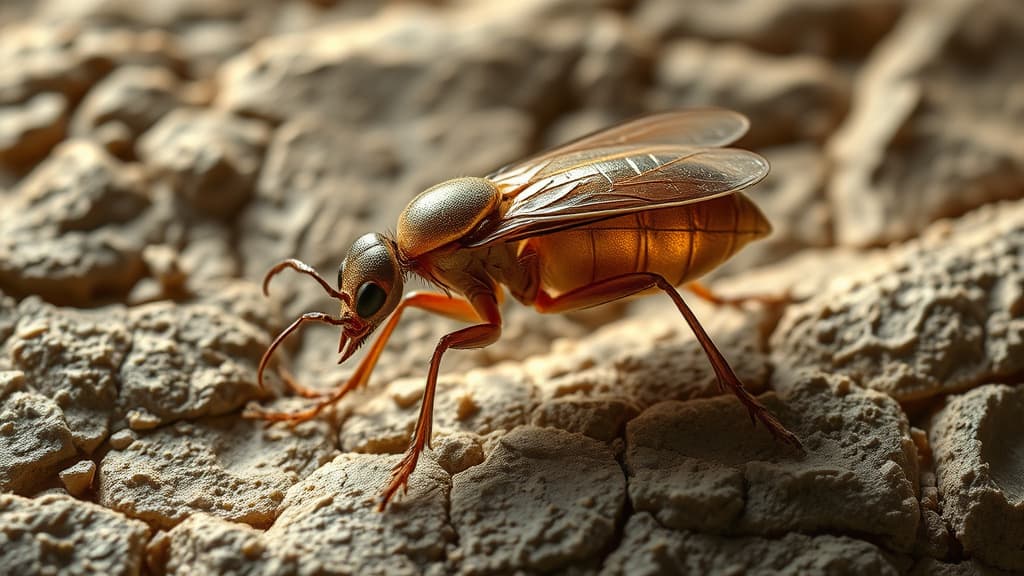
A newly identified 324-million-year-old insect fossil, Chosha praecursor, reveals that insects transitioned from water to land through a prolonged amphibious phase. This discovery fills an 80 million-year gap in the fossil record, challenging previous notions of insect evolution.

Gravitational Waves May Reveal Secrets of Ancient Dark Stars
Science

Gravitational Waves May Reveal Secrets of Ancient Dark Stars

Recent research suggests a newly detected gravitational-wave background could be linked to supermassive black holes formed over 13 billion years ago by hypothetical Dark Stars.

AI Optimizes 3D Printing of NASA Alloy, Reducing Costs and Power
Science

AI Optimizes 3D Printing of NASA Alloy, Reducing Costs and Power

Researchers at Washington State University have harnessed AI to optimize the 3D printing of GRCop-42, a NASA alloy, cutting power requirements significantly.

Vitamin C and Cold Symptoms: What Recent Research Reveals
Science

Vitamin C and Cold Symptoms: What Recent Research Reveals

Recent studies indicate that while vitamin C cannot prevent colds, regular intake may reduce severe symptoms by approximately 10%. This challenges the long-held belief stemming from Linus Pauling's advocacy in the 1970s that large doses could ward off infections.

Ancient Evidence Reveals Longstanding Aversion to Eating Insects
Science

Ancient Evidence Reveals Longstanding Aversion to Eating Insects

Recent research indicates that modern Western aversion to entomophagy may have roots stretching back 9,000 years. Genetic analysis of 745 dental samples shows that while Neanderthals regularly consumed insects, early modern humans in Northern Eurasia largely did not.

Ancient Fossil Reveals Insect Evolution from Water to Land
Science

Ancient Fossil Reveals Insect Evolution from Water to Land

A 324-million-year-old fossil called Chosha praecursor has been identified, revealing insights into how insects transitioned from aquatic to terrestrial life. This discovery suggests a prolonged amphibious phase, with features retained from aquatic ancestors, rather than a sudden shift to land.

AI Revolutionizes 3D Printing of NASA's GRCop-42 Alloy
Science

AI Revolutionizes 3D Printing of NASA's GRCop-42 Alloy

Researchers at Washington State University have leveraged AI to sift through over 100 million configurations, discovering six viable settings to 3D print GRCop-42, a NASA-developed alloy, using only 500 watts of power. This breakthrough could democratize access to this high-performance material, traditionally difficult to print with standard commercial equipment.

Vitamin C: No Cold Prevention, Minimal Symptom Relief Confirmed
Science

Vitamin C: No Cold Prevention, Minimal Symptom Relief Confirmed

Recent research confirms that vitamin C does not prevent colds, while regular consumption may slightly shorten severe symptoms.