The Discovery of Elias 2-24 b
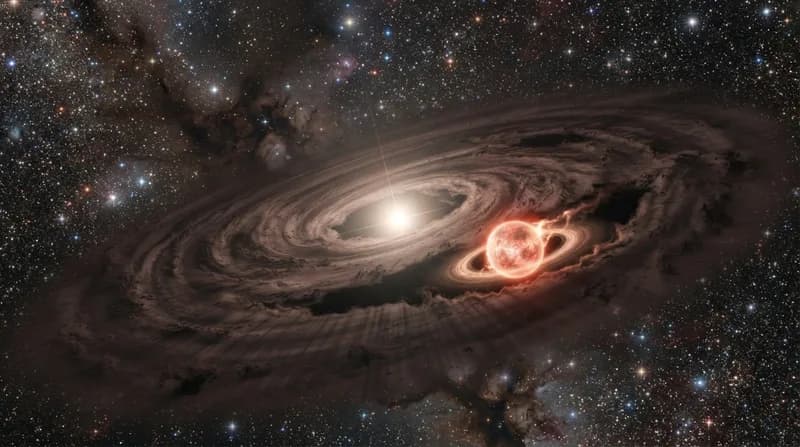
In a groundbreaking leap for planetary science, astronomers have identified Elias 2-24 b, an exoplanet that holds the title of the youngest ever detected. At less than one million years old, this Jupiter-mass world is still in its infancy, cradled by the swirling disk of gas and dust from which it is actively feeding. Located approximately 450 light-years from Earth, the planet offers scientists a rare, real-time glimpse into the chaotic and rapid processes that govern the birth of solar systems.
The identification of Elias 2-24 b was the result of a meticulous study led by researchers at the Universidad Diego Portales, who combed through archival data from the W. M. Keck Observatory. By comparing observations taken in 2018 and 2020, the team was able to track the object's movement, confirming that it is indeed an orbiting planet rather than an imaging artifact. The discovery helps resolve a decade-long mystery surrounding a suspicious gap detected in the debris disk of the star Elias 2-24, which scientists had long hypothesized was being carved out by a forming giant.
Challenging Planetary Models
The existence of Elias 2-24 b poses a significant problem for contemporary astrophysical theories. Current models of planet formation, which rely heavily on simulations and observations of older stars, suggest that it should take approximately five million years for a Jupiter-sized planet to coalesce—and even longer for one orbiting so far from its host star. Elias 2-24 b, sitting at a distance roughly 55 times greater than the Earth-Sun distance, has seemingly formed much faster than our best computer models predicted.
This discovery forces researchers to reconsider the processes of core accretion and gravitational instability. Because the planet is located within a prominent gap in the circumstellar disk, its active accretion of material provides concrete evidence of how giant planets shape their environments. As the planet grows, it sweeps up gas and dust, leaving a signature 'path' that serves as a beacon for modern, high-contrast imaging technologies. This finding serves as a stark reminder that the galaxy holds complexities that current theoretical frameworks are only beginning to address.
Why It Matters
- Direct Observation: Unlike most exoplanets found through indirect transit methods, Elias 2-24 b allows for direct imaging during its most vulnerable developmental stages.
- Refining Theory: The rapid formation of this planet proves that existing models are incomplete, necessitating new physics to explain how massive worlds emerge in such short timescales.
- Deep-Time Context: Studying the Elias 2-24 system provides a 'time machine' effect, illustrating what our own solar system likely looked like billions of years ago.
- Multi-Instrument Synergy: The confirmation of this planet highlights the critical importance of collaborative data usage across archives, including Keck and ALMA, to piece together cosmic events.
The Future of Planet Hunting
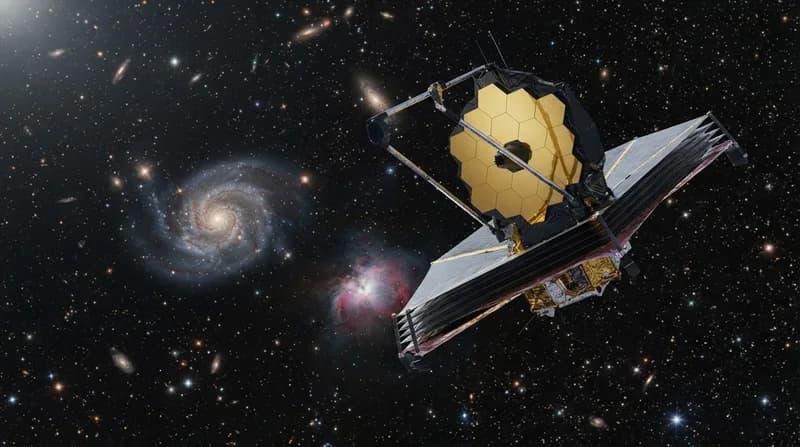
The detection of Elias 2-24 b is viewed by experts as the herald of a new era in space exploration. While this planet pushes the limits of existing detection capabilities, the recent launch of the Nancy Grace Roman Space Telescope promises to make such discoveries routine. With its advanced coronagraph, Roman will be able to block starlight with unprecedented precision, revealing planets in tighter orbits and identifying true 'Jupiter analogs' that were previously hidden by the intense glare of their host stars.
As astronomers continue to refine their search techniques, the gap in our knowledge regarding planetary 'childhood' will continue to close. The ability to witness these baby planets in the act of formation transforms astronomy from a science of static snapshots into a dynamic, observational history of the universe. With Elias 2-24 b leading the way, we are closer than ever to fully understanding the diverse ways that star systems come to life across the cosmos.