The Surprising Calculus of Carbon
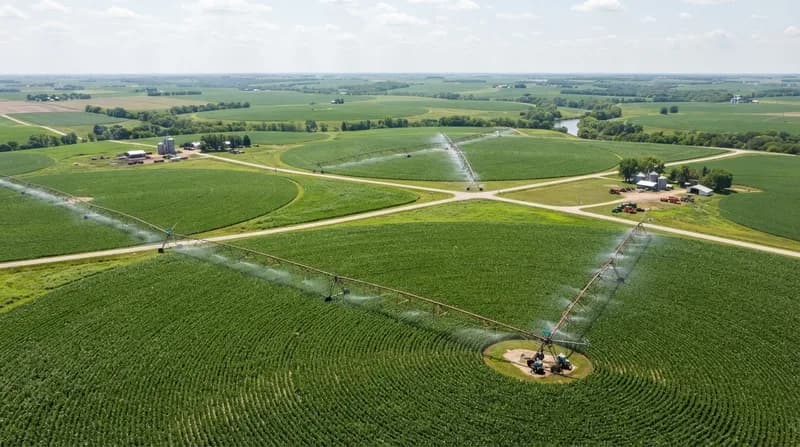
For years, irrigation has been viewed primarily through the lens of water conservation and agricultural efficiency. However, a groundbreaking study from Colorado State University has reframed the practice as an unexpected powerhouse in the fight against climate change. By significantly boosting crop yields on existing farmland, irrigation eliminates the need to convert carbon-rich natural landscapes—such as forests and grasslands—into new agricultural plots. According to the research, the climate benefit derived from this 'avoided land conversion' is staggering: it is equivalent to approximately 363 years of the total greenhouse gas emissions produced by all U.S. irrigation systems combined.
The study, published in the Proceedings of the National Academy of Sciences, provides a sophisticated look at the environmental trade-offs inherent in modern farming. While the energy-intensive process of pumping water for irrigation does produce a direct carbon footprint, the indirect benefits of land sparing are far greater. Researchers calculated that nearly 6.86 gigatons of potential greenhouse gas emissions have been avoided because irrigation allows farmers to squeeze more food out of less acreage. To put this figure in perspective, it exceeds the entire United States' greenhouse gas output for the year 2024.
The Path to Net-Zero Irrigation
While the net impact of irrigation is overwhelmingly positive, the report acknowledges that its direct emissions—primarily stemming from fossil-fuel-powered water pumps—cannot be ignored. The researchers suggest that the next frontier for climate-smart agriculture is the total electrification of irrigation infrastructure. By transitioning from traditional diesel or gas pumps to electric systems fed by an increasingly clean grid, the agricultural sector can further slash its direct carbon footprint, effectively 'greening' the engine of food production without sacrificing yield.
Beyond electrification, the research team employed a combination of machine learning and global economic modeling to simulate a hypothetical U.S. without irrigation. The results highlighted a dire scenario: without the ability to irrigate, global market pressures would force the conversion of vast, ecologically sensitive areas into new farmland to make up for the global food deficit. This would trigger a massive release of carbon stored in soils and vegetation, proving that irrigation is not just a tool for productivity, but a vital mechanism for carbon sequestration on a planetary scale.
Why It Matters
- Land Preservation: Efficient irrigation maintains high yields on existing plots, preventing the destruction of forests and natural carbon sinks.
- Quantifiable Impact: The 6.86 gigatons of avoided emissions represent roughly 13% of total global annual emissions, highlighting the scale of the climate benefit.
- Policy Opportunities: The research suggests that future climate policies should prioritize the electrification of agricultural pumping equipment as a low-hanging fruit for emissions reduction.
- Complex Trade-offs: While irrigation is a climate boon, it remains a central point of contention in water-stressed regions, where local ecosystem demands often clash with the need for food security.
The Future of Resilient Agriculture
As the global population grows and climate-driven weather volatility becomes the new normal, irrigation serves as a critical adaptation strategy. It does more than just move water; it provides a buffer against drought and heat stress, ensuring that the food system remains resilient. The research underscores that while we must continue to solve the 'very complicated societal cost-benefit questions' surrounding water use in the Western United States, we must also recognize that sacrificing irrigation would likely lead to a catastrophic net increase in global greenhouse gas emissions. Moving forward, the focus will be on marrying high-tech efficiency with sustainable water management to ensure both food security and climate stability for generations to come.