The New Frontier in Disease Detection
For decades, public health officials have relied on clinical reporting to monitor the spread of diseases. However, when it comes to sexually transmitted infections (STIs), this traditional approach is plagued by significant data blind spots. Stigma, limited access to healthcare, and the high prevalence of asymptomatic cases mean that official clinical numbers often fail to capture the true scope of infection. Now, a groundbreaking study from the University of Washington and the Washington State Department of Health suggests that the answer to closing these gaps might be hiding right under our feet—in our sewer systems.
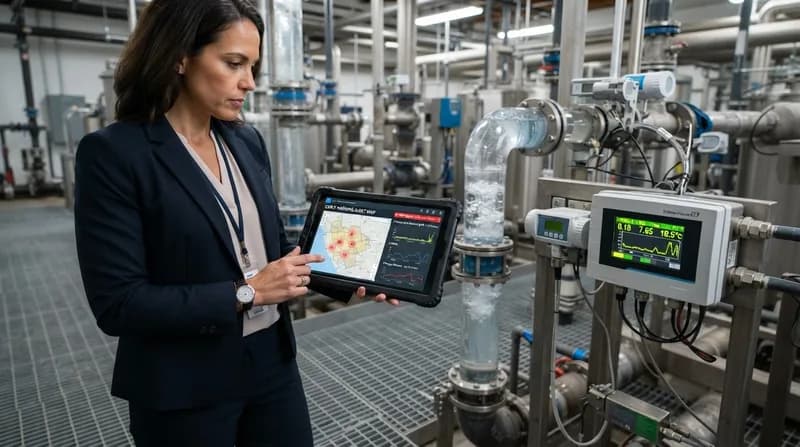
Published in the journal ACS ES&T Water, the research demonstrates that wastewater-based epidemiology—a practice famously utilized during the COVID-19 pandemic and for polio monitoring—can be a highly effective tool for detecting Chlamydia trachomatis. By analyzing influent wastewater at treatment plants and neighborhood-level sewer sites, researchers have found a way to monitor population-level health trends without infringing on individual privacy or requiring patients to seek medical intervention.
Revealing the Hidden Data Gap
The research team conducted a comprehensive sampling project across Washington state, monitoring five large wastewater treatment plants and six neighborhood-specific sites. These locations varied significantly, covering everything from dense urban centers to small rural communities. While the study tested for gonorrhea, syphilis, and chlamydia, the latter was consistently detected across all sites, providing a clearer picture of infection prevalence than clinical data alone.
Perhaps the most striking discovery occurred in a neighborhood adjacent to a college campus. This area, inhabited primarily by people between the ages of 18 and 34—a demographic at higher risk for STIs—showed a discrepancy between clinical records and environmental data. While formal health records reported very few chlamydia cases, the wastewater samples consistently showed the presence of C. trachomatis. This clear signal in the sewers suggests that the infection is spreading through the community, likely masked by the very barriers that prevent traditional clinical reporting.
Why It Matters
- Overcoming Stigma: Wastewater monitoring collects data at the population level, bypasses the need for individual diagnostic testing, and eliminates the social stigma that prevents many from seeking care.
- Early Warning System: Public health agencies can use this non-invasive data to identify outbreaks in real time, enabling them to launch awareness campaigns or allocate resources to specific regions long before clinical surges occur.
- Capturing Asymptomatic Trends: Many STIs present with no symptoms, meaning they go undetected in clinics. Wastewater provides a snapshot of the community's actual infection load, capturing asymptomatic spread that would otherwise remain completely invisible to traditional surveillance.
Future Implications for Public Health Policy
The ability to track pathogens via wastewater represents a significant shift in how we approach preventative medicine. By identifying spikes in pathogen concentration—such as the holiday-related trends observed in this study—officials can better predict transmission windows and tailor their interventions accordingly. As this surveillance method matures, it offers a scalable, low-cost solution for identifying and managing STIs across diverse populations.
Ultimately, this approach does not replace the doctor's office, but it provides a critical "big picture" view. By filling in the gaps where stigma and asymptomatic conditions previously created a void in our knowledge, wastewater monitoring allows for a more proactive and equitable public health strategy. As research continues to refine these detection methods, cities could soon have an automated, continuous, and highly accurate pulse on the health of their communities.