The Intersection of Technology and Recovery
In the high-stress environment of an emergency department, medical professionals are constantly looking for ways to stabilize patients beyond traditional pharmaceutical interventions. A recent clinical study, presented at the European Emergency Medicine Congress, has introduced a novel, non-invasive method for managing hypertensive urgency: combining virtual reality (VR) headsets with classical music. The research suggests that by creating a tranquil, immersive digital environment, medical teams can help reduce both patient anxiety and blood pressure more rapidly during the critical first minutes of care.
The study, conducted in Turkey, focused on patients arriving with blood pressure readings of 180/110 mmHg or higher—a condition known as hypertensive urgency. While standard medication remains the primary treatment, the researchers hypothesized that the chaotic environment of an ER often exacerbates the problem by inducing fear and stress. By introducing a calming, sensory-rich experience, they aimed to dampen the body's stress response, which naturally contributes to blood pressure spikes.
The Methodology: Immersive Calm
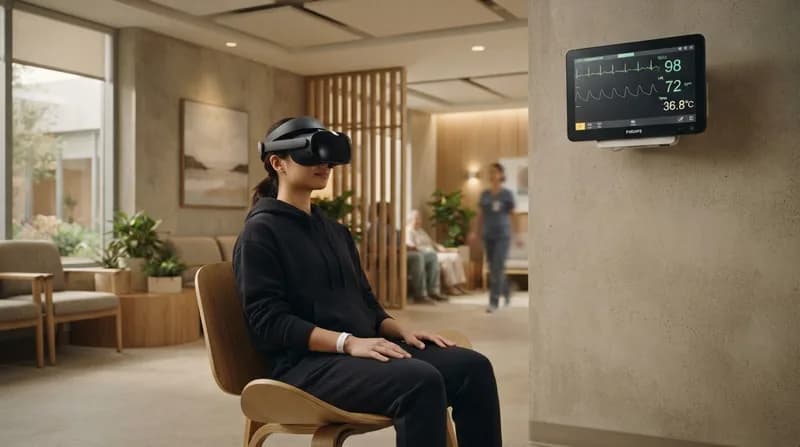
The randomized controlled trial involved 130 adult patients divided into two groups. While all participants received standard medical treatment, the intervention group was equipped with VR headsets. These devices transported patients into a serene, high-definition digital landscape featuring a flowing forest river, towering trees, and a wooden suspension bridge. Simultaneously, patients listened to a curated playlist of classical masterpieces from composers such as Mozart, Bach, Vivaldi, and Debussy, chosen specifically for their rhythmic and soothing properties.
Data collection spanned a two-hour window, with blood pressure and mean arterial pressure (MAP) measured at various intervals. The results were telling: within the first 15 minutes, patients in the VR cohort experienced a 12% reduction in mean arterial pressure, compared to an 8% reduction in the control group. By the 30-minute mark, the VR-assisted group maintained a lead in blood pressure normalization, and even patients who started with higher baseline anxiety saw a more significant reduction in their emotional distress levels compared to those receiving medication alone.
Why it Matters: Clinical Implications
The implications for emergency medicine are significant. As the researchers noted, the intervention is inexpensive, easily deployed, and entirely free of side effects. In a busy emergency ward where resources are stretched thin, any tool that can accelerate patient stabilization has tangible value.
- Speed of Action: Significant blood pressure reduction was observed within the first 15 minutes, which is critical for early patient stabilization.
- Anxiety Management: The VR intervention demonstrated a marked ability to lower state anxiety, addressing the physiological effects of the 'fight or flight' response.
- Resource Efficiency: By providing a calming, drug-free supportive therapy, hospitals may be able to manage patient distress more effectively without escalating pharmaceutical dosages unnecessarily.
- Scalability: VR headsets and smartphone audio interfaces are becoming ubiquitous and affordable, making this a highly portable solution for various clinical settings.
Future Outlook and Research
While the initial findings are promising, the researchers emphasized that this technique should be viewed as a supportive, patient-centered addition to care rather than a replacement for conventional medicine. The study acknowledged limitations, such as the inability to isolate whether the VR visual component, the music, or the combination of both provided the greatest benefit. Future research initiatives are already planned to investigate these variables individually and to test the intervention across a broader range of hospitals with more diverse patient populations. As wearable technology continues to evolve, the integration of immersive digital therapy into acute clinical care appears to be a burgeoning frontier for patient wellness.