A Century of Shadows
For nearly a hundred years, astronomers have observed a peculiar contradiction on Venus. While the planet appears as a pale yellow orb in the visible light spectrum, it reveals a completely different, complex character when viewed through ultraviolet filters. Sweeping across its upper sulfuric acid clouds are mysterious, dark features that have evaded identification for generations. This elusive 'unknown absorber' creates these distinct ultraviolet patterns, but its chemical nature has remained a complete enigma to the planetary science community.
Now, an international collaboration of researchers has moved the needle significantly. By shifting the focus from mere observations to rigorous numerical modeling, the team has established strict constraints on what this mysterious substance could actually be. Rather than simply guessing at compounds, they have calculated the exact light-absorption requirements the material must possess to produce the observed phenomena.
The 'Cuvette' Perspective
The core challenge in this research is the difference between a cloud and a liquid. Dr. Jan Spacek of the Foundation for Applied Molecular Evolution led the charge by posing a thought experiment: what would the Venusian clouds look like if we could somehow collect their droplets into a laboratory cuvette? The analogy of cigarette smoke is central here; like the smoke from a cigarette, which looks white due to light scattering but consists of dark, tar-like particles, Venusian clouds may be deceivingly bright from afar while harboring a dark secret within their microscopic droplets.
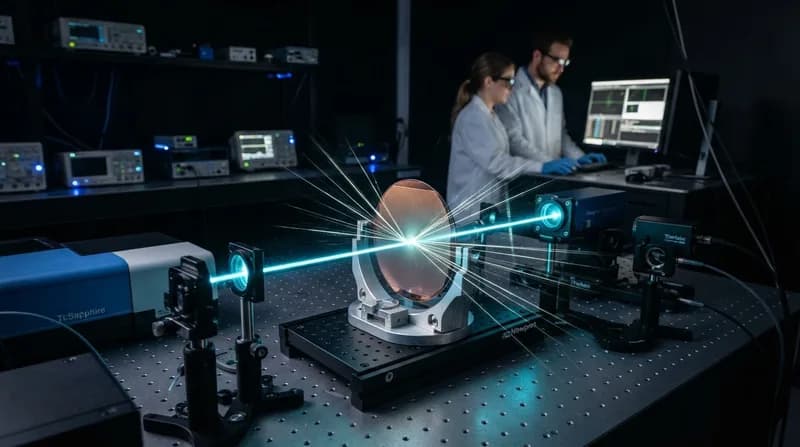
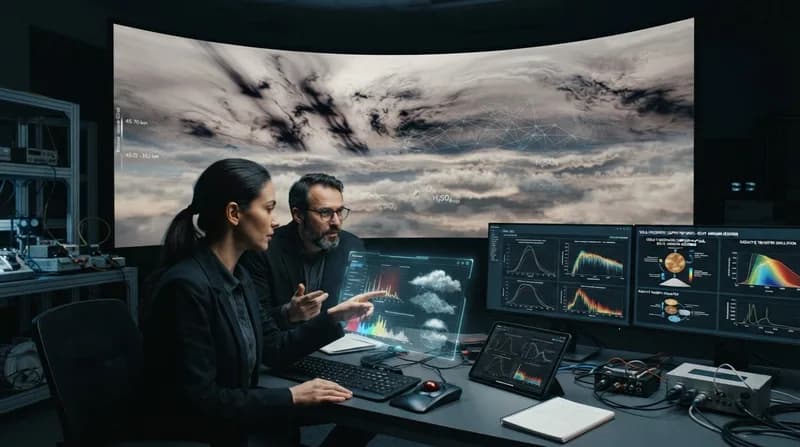
To bridge the gap between distant telescope observations and laboratory chemistry, the team utilized radiative-transfer modeling. Dr. Yeon Joo Lee, representing the Institute for Basic Science, performed the complex calculations necessary to strip away the interference of light scattering within the thick Venusian atmosphere. By accounting for these optical dynamics, the researchers determined that the substance must exhibit an absorption coefficient of approximately 1,278 cm⁻¹ at 375 nm. This is a high bar, implying that the material is either incredibly potent at absorbing light or exists in extreme concentrations within the droplets.
The Organic vs. Inorganic Debate
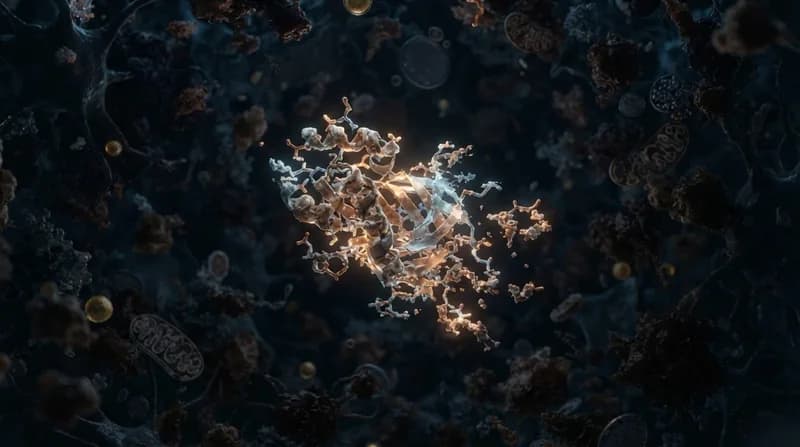
The study highlights that if the absorber is organic—defined here purely as carbon-based—it would need to exist in concentrations of roughly 10 grams per liter to achieve the observed effect. While pigments like porphyrins are useful benchmarks for such efficiency, the researchers were careful to clarify that they are not attributing these patterns to biological life. Instead, they are looking for chemically stable, conjugated organic molecules that resist turning into the amorphous, brown 'tar-like' sludge typically created by organic matter in concentrated sulfuric acid.
The findings also put significant pressure on inorganic candidates. Many proposed inorganic minerals or compounds would struggle to meet the required absorption levels without reaching unrealistically high concentrations. By tightening these constraints, the scientists have paradoxically made the mystery deeper, as many previously plausible theories no longer align with the new, stricter data profile.
Looking Toward In-Situ Exploration
This research serves as a roadmap for the next generation of space exploration. The Morning Star Missions to Venus are already in development, aiming to conduct direct, in-situ chemistry analysis of the planet's atmosphere. A key component of this effort is the planned deployment of the Autofluorescence Nephelometer, an instrument designed to detect the specific organic signatures that the current models suggest might be at play.
By combining laboratory-based physics with future probe data, scientists are finally turning an atmospheric riddle into an empirical hunt. Whether the culprit turns out to be a complex organic polymer or an exotic inorganic chemical, the window of possibilities is smaller than ever before, bringing us closer to understanding one of the most persistent mysteries in our solar system.