E-BUZZ ME Logo
ScienceTechnical Deep Dive

Unlocking the Immune System: Forcing Cancer Cells to Self-Destruct for a Powerful Attack

Published
Unlocking the Immune System: Forcing Cancer Cells to Self-Destruct for a Powerful Attack
1 min read155 words

The Gist

New research explores a fascinating strategy to combat cancer: actively triggering cancer cells to undergo programmed death, which then signals the immune system to launch a stronger anti-tumor offensive.

Turning Self-Destruction into an Immune Signal

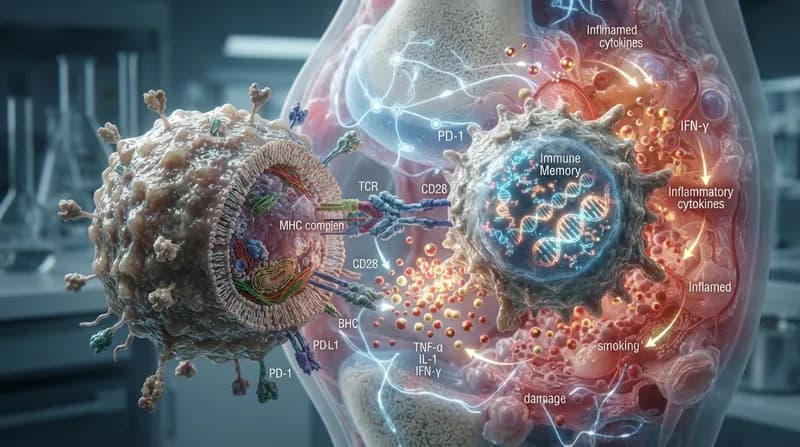
In the intricate world of cellular biology, a controlled process known as programmed cell death — encompassing methods like apoptosis and necroptosis — acts as a vital defense mechanism. Cells initiate this self-destruction when they're damaged, stressed, or on the verge of becoming cancerous, safeguarding the body from potential threats.

Scientists are now harnessing this natural process, discovering that by intentionally forcing cancerous cells to undergo this programmed demise, they can essentially 'alert' the immune system. This targeted cellular destruction doesn't just eliminate rogue cells; it transforms their demise into a beacon, prompting the immune system to recognize and intensify its attack against remaining tumor cells.

This innovative approach holds immense promise, suggesting a future where treatments could leverage the body's own sophisticated cellular machinery to not only destroy cancer but also to recruit and supercharge its natural defenses, paving the way for more potent and integrated anti-cancer therapies.


Related Stories

Semantically matched articles, ranked by topic overlap and freshness.

Self-Sampling Significantly Boosts HPV Detection and Screening Rates
Science62%

Self-Sampling Significantly Boosts HPV Detection and Screening Rates

A new clinical trial reveals that offering patients the option to self-sample for HPV leads to a dramatic increase in high-risk virus detection and overall screening participation.

New Experimental Antiviral Pill Shows Promise in Halting Measles Transmission
Science62%

New Experimental Antiviral Pill Shows Promise in Halting Measles Transmission

A breakthrough antiviral treatment has successfully prevented the spread of a measles-like virus in animal trials, offering a potential new tool to contain future outbreaks.

Sulfur-Based Compound Identified as Potential Breakthrough for Aging Muscle Repair
Science62%

Sulfur-Based Compound Identified as Potential Breakthrough for Aging Muscle Repair

Researchers have discovered a compound named LASSS that protects proteins essential for muscle recovery, offering hope for combating age-related muscle loss.

Longevity-Linked APOE2 Gene Found to Shield Brain from Aging and Alzheimer’s
Science61%

Longevity-Linked APOE2 Gene Found to Shield Brain from Aging and Alzheimer’s

Researchers have discovered that the APOE2 gene variant protects neurons by reducing DNA damage and enhancing stress recovery, offering a potential blueprint for new Alzheimer’s therapies.

Self-Repairing Bio-Textiles: Scientists Create Clothing From Living Fungi
Science61%

Self-Repairing Bio-Textiles: Scientists Create Clothing From Living Fungi

Researchers have developed a revolutionary biodegradable textile using the parasitic fungus Cordyceps militaris that can clean and repair itself.

Biological Age Linked to Weight Loss Success in New Study
Science59%

Biological Age Linked to Weight Loss Success in New Study

A recent study suggests that individuals with a biological age younger than their chronological age may lose more weight when following calorie-restricted diets.

AI Aids Stanford Researchers in Discovering Natural Weight Loss Molecule
Science59%

AI Aids Stanford Researchers in Discovering Natural Weight Loss Molecule

Stanford scientists have identified a natural molecule that mimics the weight-loss effects of Ozempic with fewer side effects by targeting specific brain regions.

GLP-1 Weight Loss Drugs Linked to Increased Risk of Hair Loss
Science58%

GLP-1 Weight Loss Drugs Linked to Increased Risk of Hair Loss

A large-scale study reveals that popular GLP-1 medications like Ozempic and Mounjaro may carry a higher risk of alopecia compared to other diabetes treatments.