A Hidden Economic Engine
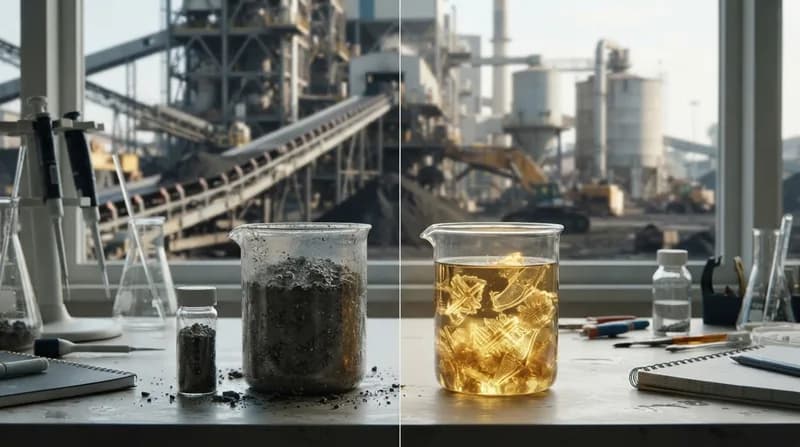
Industrial waste has long been viewed as an environmental liability, with massive piles of coal ash, mine tailings, and red mud occupying land and threatening local ecosystems. However, a groundbreaking research initiative led by the Worcester Polytechnic Institute (WPI) is flipping this narrative on its head. With a $3.3 million grant from the National Science Foundation, scientists are exploring the potential to treat these waste streams not as trash, but as a secondary, high-value resource of rare earth elements (REEs) and silicon-based materials.
The scale of the opportunity is staggering. Current estimates suggest that U.S. coal ash landfills alone hold approximately 11 million tons of rare earth elements. At current valuations, this stockpile could be worth as much as $8.4 billion, a figure nearly eight times the size of the nation’s total current domestic raw reserves. By unlocking these trapped minerals, the United States could potentially reduce its reliance on foreign imports and traditional mining operations, while simultaneously cleaning up long-standing environmental hazards.
Bio-Inspired Extraction Techniques
The core of this project lies in biomimicry. The research team is studying the specialized strategies employed by diatoms, sea sponges, and certain plants that naturally collect dissolved silica and assemble complex structures under mild environmental conditions. By replicating these biological processes, the researchers aim to develop a revolutionary extraction method that eschews the high-temperature, energy-intensive, and chemically harsh processes typical of current industrial mineral recovery.
This "whole-material" approach seeks to do more than just scavenge rare metals. The goal is to fully process the waste streams, separating strategically significant elements while converting the residual material into marketable commodities like concrete additives, semiconductors, or specialized ceramics. By effectively closing the loop on industrial waste, the researchers aim to create a circular economy model that is both economically viable and environmentally responsible.
The Role of AI and Advanced Computation
Bridging the gap between biological inspiration and industrial-scale reality requires a high-tech approach. The project is a multidisciplinary effort that integrates geology, metallurgy, materials science, and artificial intelligence. AI models will be utilized to simulate molecular interactions, helping scientists design specialized biomolecules that can target and extract specific minerals with unprecedented precision.
These computational tools will accelerate the discovery of efficient reaction pathways, optimizing how silicate materials are dissolved, broken down, and rebuilt. By replacing intuition-based experimentation with data-driven AI simulations, the team hopes to compress decades of traditional metallurgical research into a five-year window of intensive development.
Why it Matters
- Economic Independence: Tapping into existing domestic waste could provide a secure, home-grown supply chain for critical minerals used in national defense, electronics, and green energy.
- Environmental Remediation: Converting toxic landfills into usable raw materials addresses a major ecological concern while preventing further soil and water contamination.
- Sustainable Manufacturing: By utilizing low-energy, bio-inspired methods, the industry can drastically lower its carbon footprint compared to traditional extractive mining, which is notoriously energy-heavy.
A Future-Proofing Strategy
Looking ahead, the WPI team is focused on scalability. The research doesn't just aim for laboratory success; it seeks to translate these bio-engineered methods into practical, industrial applications. If successful, this framework could set a new global standard for how industries handle their byproducts, moving the needle from a 'take-make-waste' manufacturing cycle to a regenerative, sustainable ecosystem.
As the project progresses, it promises to serve as a beacon for cross-disciplinary innovation. By involving students and industry partners, the initiative aims to train a new generation of scientists equipped to handle the intersection of biotechnology and industrial engineering, ensuring that the critical minerals needed for the tech-driven future are sourced cleanly, cheaply, and right here at home.