The Hydrogen Transition in Heavy-Duty Logistics
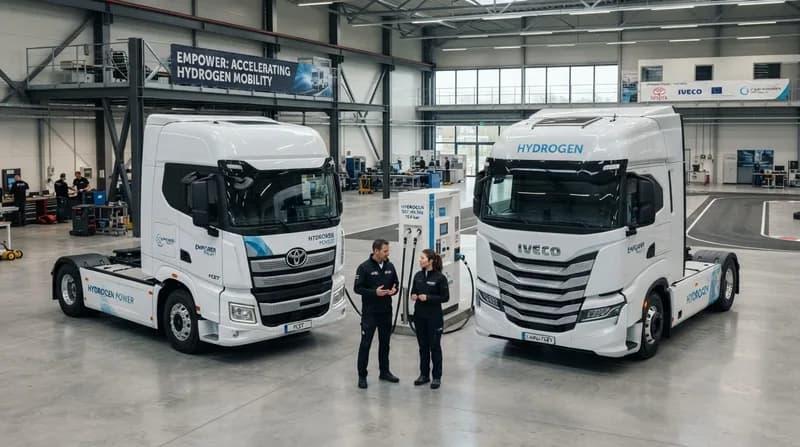
In a significant expansion of its commercial hydrogen strategy, Toyota has announced a strategic partnership with European truck manufacturer Iveco. The collaboration centers on the development of the next-generation S-eWay Fuel Cell truck, a vehicle designed to meet the rigorous demands of long-haul logistics. This initiative is a core component of the EU-funded research project known as EMPOWER, which aims to accelerate the decarbonization of European heavy-duty transport.
Toyota will provide its advanced third-generation fuel cell system, capable of outputting 300 kW. Iveco will leverage its engineering expertise to manage the vehicle's development, integration, and validation. The partnership reflects a major shift for both companies, as they aim to prove that hydrogen fuel cells can offer a viable, long-distance alternative to traditional diesel propulsion in the European freight sector.
Technical Advancements and Performance Specs
The new S-eWay Fuel Cell is set to make massive strides in efficiency compared to earlier prototypes. One of the most notable engineering achievements is the reduction in battery capacity requirements; the new model reportedly needs only half the battery storage of its predecessor, thanks to a sophisticated, optimized energy management system. This simplification not only reduces overall vehicle weight but also lowers the total cost of ownership, a critical factor for logistics fleets.
Performance remains the primary focus, with the truck targeting a range exceeding 900 kilometers on a single fill-up—a vital metric for transcontinental shipping. Durability is equally prioritized, with the fuel cell technology designed to endure over 25,000 operating hours. These specs are built upon data gathered during previous EU initiatives like the H2Haul project, ensuring that the new platform is ready for the harsh realities of real-world road duty.
Why it Matters: Toyota’s Growing Hydrogen Ecosystem
This collaboration is part of a broader, aggressive push by Toyota to dominate the hydrogen supply chain for commercial vehicles. Within a single month, Toyota has secured partnerships with both Iveco and Scania, solidifying its position as a go-to supplier for hydrogen-electric heavy-duty platforms. Beyond individual partnerships, Toyota’s entry into the Cellcentric joint venture—a collaboration between industry titans Daimler Truck and the Volvo Group—underscores its ambition to establish a standardized fuel cell architecture across the global transport industry.
- Project: EMPOWER (EU-funded)
- Power Output: 300 kW (Toyota Fuel Cell System)
- Target Range: 900+ kilometers
- Operational Lifespan: 25,000+ hours
- Validation Timeline: Q4 2026; Initial public road tests Q1 2027
By shifting focus from individual R&D to collaborative, industrial-scale deployment, Toyota and Iveco are positioning the S-eWay Fuel Cell as a cornerstone for future zero-emission freight corridors. Validation processes are slated to kick off in late 2026, with the industry closely monitoring public road testing scheduled for the first half of 2027.