Accelerating the EV Lifecycle
The automotive landscape is evolving at a breakneck pace, and TomTom is looking to ensure that navigation software keeps up. The Dutch navigation giant has launched a new self-service platform dubbed 'Electric Vehicle Management,' specifically designed to help automakers integrate new vehicle variants into digital ecosystems in a fraction of the time previously required. Historically, onboarding a new EV model into navigation and charging infrastructure planning could take months of custom development. With this new suite, TomTom claims that timeframe can now be reduced to mere minutes.
By inputting essential vehicle specifications—such as battery capacity, connector types, physical dimensions, and curb weight—manufacturers can generate a comprehensive digital ID for their vehicles. This data acts as a single source of truth, enabling seamless integration across infotainment systems, mobile companion apps, and web-based services. This unified approach eliminates the inefficiency of configuring software separately for each distinct application, ensuring that range calculation and routing are consistent across the entire user experience.
The Power of Predictive Analytics
At the core of the new system is an AI-powered consumption model that moves beyond static range estimations. Once a vehicle is onboarded, the system initiates a sophisticated blend of physical performance calculations and real-world driving data. This hybrid approach generates vehicle-specific forecasts that account for how an EV behaves in diverse environments. As the platform processes more data from the fleet, these predictions evolve, becoming increasingly precise in their range and charging requirements.
Why it Matters
- Reduced Time-to-Market: Automakers can deploy navigation and planning services for new EV variants almost immediately, allowing them to focus on hardware innovation rather than software hurdles.
- Unified Data Foundation: A single digital profile for a vehicle propagates across all consumer touchpoints, preventing data silos between the car's dash and the driver's phone.
- Enhanced Driver Trust: By leveraging AI to process real-world consumption patterns, drivers receive more accurate range estimates, effectively reducing 'range anxiety' during long-distance travel.
- Global Charging Intelligence: The expanded suite leverages a database of over 2.3 million charging connectors across 117 countries, providing drivers with granular details like real-time availability, power output, and reliability ratings.
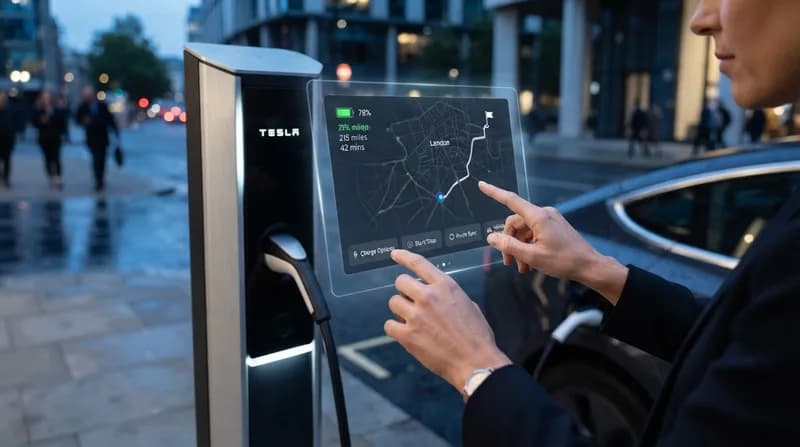
For the end-user, the impact is a more cohesive journey. TomTom’s routing logic automatically calculates ideal charging stops, monitors charging point reliability, and dynamically adjusts the route should a driver decide to skip a station or if conditions change mid-trip. This level of synchronization is essential as the global fleet of electric vehicles continues to grow, with TomTom currently supporting over six million EVs worldwide. Through these new APIs and SDKs, the company is positioning itself as the critical middleware that bridges the gap between hardware manufacturers and the connected driving experience.