ScienceTechnical Deep Dive

The Tri-Generation Breakthrough: How SMRs Could Solve Energy, Water, and Fuel Crises

Published
EElectricBuzz Editorial Team
The Tri-Generation Breakthrough: How SMRs Could Solve Energy, Water, and Fuel Crises
2 min read399 wordsElectricBuzz Editorial Team

The Gist

A revolutionary new energy system design leverages small modular nuclear reactors to simultaneously churn out clean electricity, green hydrogen, and desalinated freshwater.

Revolutionizing Resource Efficiency

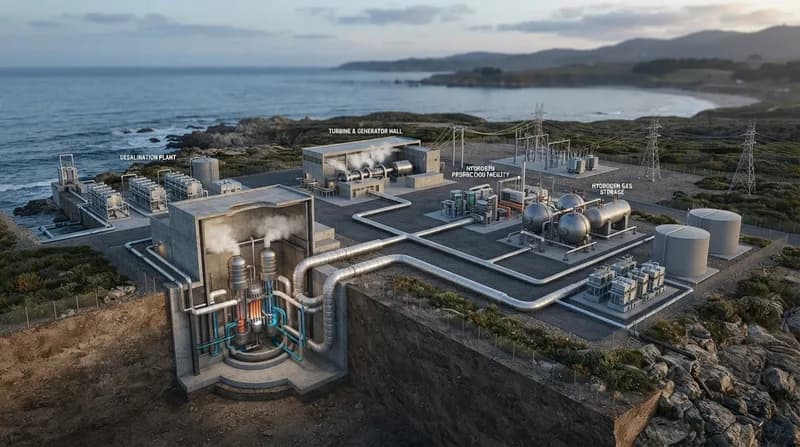
Researchers are proposing an ambitious new tri-generation system that could fundamentally change how we approach resource-scarce environments. By utilizing a Small Modular Reactor (SMR) as a centralized hub, the system simultaneously produces carbon-free electricity, high-quality hydrogen fuel, and fresh water. This integrated approach tackles three of the modern world’s most pressing challenges—power stability, sustainable fuel production, and the growing need for potable water—within a single, cohesive infrastructure.

The Thermal Cascade Process

The ingenuity of this design lies in its cascading energy use. The SMR, which generates 200 MW of thermal power, first produces steam to drive turbines for electrical grid supply. Instead of discarding the secondary heat, the system cleverly repurposes it. A portion of this thermal energy is directed toward High-Temperature Steam Electrolysis (HTSE). Because the input water is already heated, the electrolytic process requires significantly less electricity than conventional methods, dramatically increasing overall efficiency.

Once the hydrogen extraction process is complete, the remaining residual heat is still substantial. This is then harnessed by a desalination plant to treat seawater, converting it into freshwater. This elegant recycling of waste heat pushes the total energy utilization of the reactor system to 53%, a marked improvement over the 48% efficiency observed in reactors focused solely on power generation.

Economic Viability and Output Specs

The study highlights that this system isn't just theoretically sound—it’s economically compelling. In a market-led operational scenario, the reactor can generate 90 MW of electricity, approximately 52 tonnes of hydrogen per day, and 612 cubic meters of freshwater daily. By selling the desalinated water as a secondary commodity, the operational costs of hydrogen production can be reduced to roughly $2.93–$3.19 per kilogram, making green hydrogen significantly more competitive with traditional, fossil-fuel-dependent methods.

Why It Matters

  • Circular Infrastructure: By coupling desalination with hydrogen production, regions suffering from water stress gain a dual incentive to adopt SMR technology.
  • Energy Decarbonization: Shifting hydrogen production away from Steam Methane Reforming—which releases massive amounts of CO2—is critical for meeting global climate targets.
  • Industrial Synergy: The ability to provide local hubs for steel manufacturing, fertilizer production, and heavy transport with low-carbon inputs could decentralize key industrial chains.

Ultimately, this tri-generation model provides a blueprint for resilient, self-sustaining communities. Whether located in arid coastal regions or near industrial centers, the ability to flip a single switch to activate a trifecta of essential utilities offers a transformative path forward for sustainable development.

The 5 Best Over-Ear ANC Headphones of 2026, Tested & Ranked
Editor's Pick Guide
92/100
Tech & Gadgets12 min read

The 5 Best Over-Ear ANC Headphones of 2026, Tested & Ranked

We locked five over-ear ANC picks for 2026 — Sony WH-1000XM6, Bose QuietComfort Ultra 2, Soundcore Space One, Sennheiser Momentum 5, and Apple AirPods Max 2 — then stress-tested them on lab metrics, long-term owner truth, and live street prices.

Related Stories

Semantically matched articles, ranked by topic overlap and freshness.

Quantum Leap: New Hybrid Material Uses Voltage to Control Exciton Transport
Science

Quantum Leap: New Hybrid Material Uses Voltage to Control Exciton Transport

Researchers have unlocked a breakthrough in 2D material science, enabling electrical control over exciton transport and valley polarization without precise alignment constraints.

Breaking Barriers: New Research Reveals People with Dementia Are Eager to Contribute to Science
Science

Breaking Barriers: New Research Reveals People with Dementia Are Eager to Contribute to Science

A groundbreaking study challenges long-standing assumptions, revealing that individuals with dementia find research participation meaningful rather than burdensome.

New Piezoelectric Microprobe Revolutionizes Intravascular Imaging for Brain Health
Science

New Piezoelectric Microprobe Revolutionizes Intravascular Imaging for Brain Health

Researchers have developed a breakthrough 0.55 mm diameter microprobe capable of navigating the brain's tiny blood vessels to provide high-resolution, 360-degree diagnostic imaging.

Unlocking the Immune System: New Genetic Target Found to Reverse T-Cell Exhaustion
Science

Unlocking the Immune System: New Genetic Target Found to Reverse T-Cell Exhaustion

Researchers at St. Jude Children's Research Hospital have identified a 'master regulator' gene that suppresses immune function, offering a promising new path for cancer immunotherapy.

AI Agents Slash Tumor Digital Twin Development Time from Months to Minutes
Science

AI Agents Slash Tumor Digital Twin Development Time from Months to Minutes

Researchers at the Barcelona Supercomputing Center have unveiled an AI-powered interface that allows biologists to generate complex cancer models through simple conversation, eliminating the need for extensive coding.

Could 40Hz Sensory Stimulation Be the Missing Link in Sickle Cell Pain Management?
Science

Could 40Hz Sensory Stimulation Be the Missing Link in Sickle Cell Pain Management?

Researchers at Virginia Commonwealth University have discovered that non-invasive light and sound therapy can help clear brain waste, potentially alleviating chronic pain associated with sickle cell disease.

Thirty Meter Telescope Rejects La Palma: The High-Stakes Path Back to Mauna Kea
Science

Thirty Meter Telescope Rejects La Palma: The High-Stakes Path Back to Mauna Kea

The Thirty Meter Telescope project has officially declined a €1bn relocation offer to Spain, reaffirming its commitment to the Hawaiian summit of Mauna Kea.

A Rare Glimpse Into Whale Grief: Humpback Mother’s Extended Vigil
Science

A Rare Glimpse Into Whale Grief: Humpback Mother’s Extended Vigil

Researchers have documented a rare, poignant display of maternal mourning in humpback whales, providing new insight into the complex emotional lives of marine giants.